10 Best AI Tools for Audio Editing

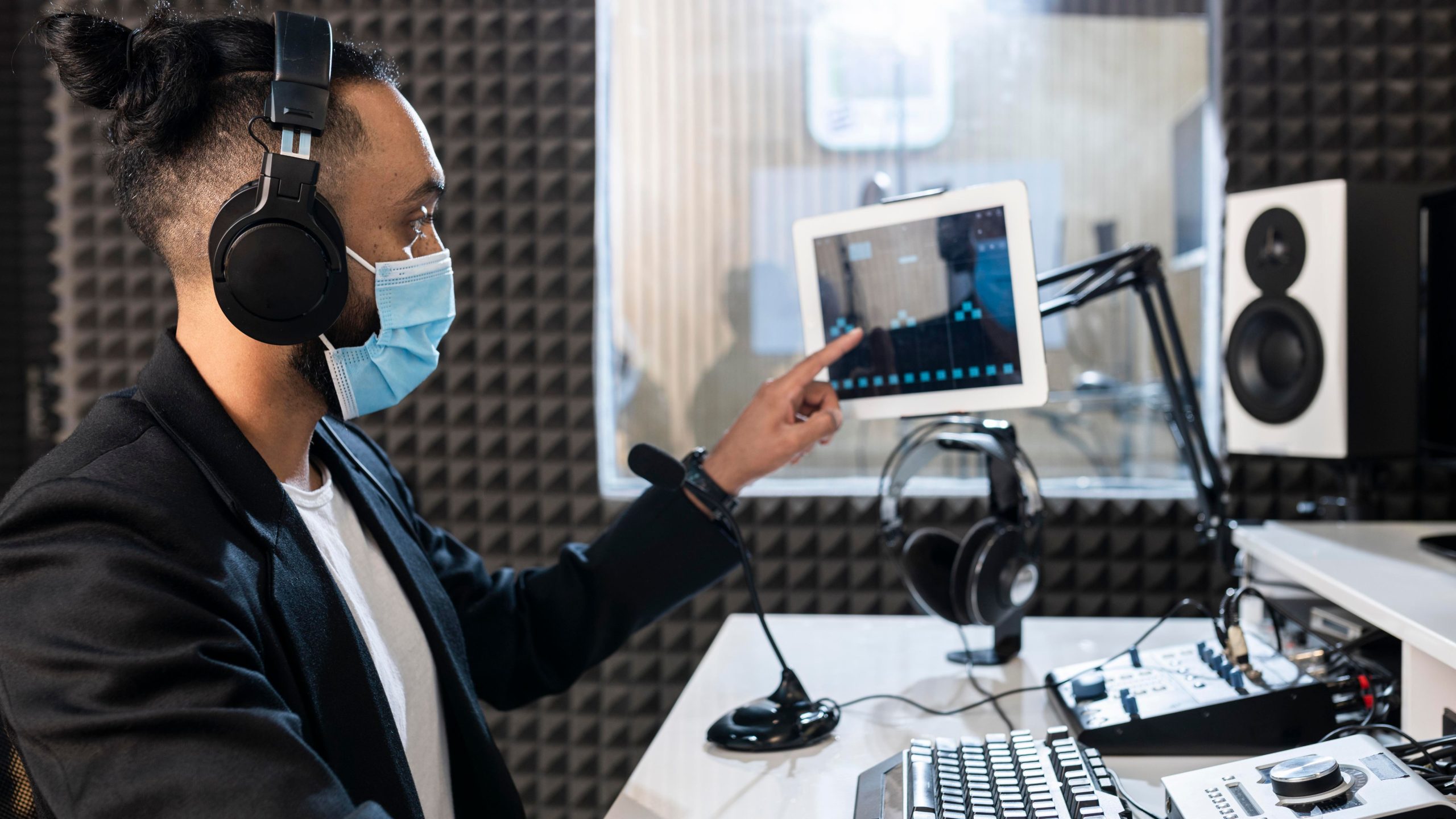
Audio editing is a crucial part of content creation, whether you’re a podcaster, musician, or video producer. It’s essential to use the right tools to ensure that your audio sounds clear, professional, and engaging. In recent years, AI tools for audio editing have made this far more approachable, making it easier for creators to enhance and optimize their audio without a sound-engineering background. These AI-powered tools not only save time but also automate complex tasks that used to require a trained ear and hours of manual work, work that would otherwise eat into the time you’d rather spend actually recording or writing.

This guide covers ten of the strongest AI tools for audio editing available today, from noise reduction and automatic transcription to full restoration suites. Whether you need to clean up a noisy podcast recording, master a music track, or coordinate a remote interview across three time zones, one of these should fit your workflow without forcing you to learn a full digital audio workstation first.
What Are AI Tools for Audio Editing?
AI tools for audio editing are software platforms that use machine learning to automate and speed up the audio editing process. These tools assist with tasks including noise reduction, speech recognition, transcription, and automatic mastering. Whether you’re editing a podcast, a music track, or a video, the right tool can save hours of manual work while keeping output quality high. Some focus on simplifying a specific task extremely well, while others try to cover the entire editing workflow end to end. Here’s a rundown of the ones worth knowing about.
Why Use an AI Tool for Audio Editing?
Audio editing can be time-consuming and technically demanding, especially for creators without formal audio training. AI tools help by automating tasks like noise reduction, transcribing speech into text, evening out audio levels, and even flagging problem sections automatically. Using these tools lets creators spend more time on the actual content and less time chasing down a faint hum in the background of a two-hour recording, which used to require scrubbing through the whole file by hand to even locate.
These tools also tend to make output more consistent. Whether you’re recording a podcast, working on a music project, or editing a video, AI-assisted processing fixes issues like background noise, distortion, and inconsistent volume in a fraction of the time manual editing would take, which matters most when you’re publishing on a weekly schedule and don’t have hours to spare per episode chasing down small inconsistencies by ear.
Key Features Worth Comparing
When comparing AI audio editing tools, a few features separate the genuinely useful ones from the gimmicky ones:
- Noise Reduction: AI-powered noise reduction should automatically remove unwanted background sounds like hums, hisses, or room noise without also flattening the voice underneath it.
- Transcription and Speech Recognition: Automatic transcription converts speech into text, which makes editing, organizing, and repurposing content much faster.
- Automatic Audio Enhancements: Look for tools that handle volume leveling, clarity improvements, and sound balancing without requiring manual adjustment on every clip.
- Voice Cloning: Some advanced tools offer voice cloning, letting you regenerate a small section of audio in the speaker’s own voice rather than re-recording an entire take over a flubbed word.
- Real-Time Collaboration: Useful if you work with a co-host, editor, or remote team who needs to review or adjust the same project.
- Approachable Interface: The strongest AI audio tools stay usable for beginners. A clean, intuitive interface keeps the editing process fast rather than adding a second learning curve on top of the audio work itself.
10 AI Tools for Audio Editing Worth Trying
1. Adobe Audition

Adobe Audition is a strong pick among AI-assisted audio editors thanks to features that let audio professionals work with precision and speed. It uses AI to detect unwanted noise, provide real-time waveform analysis, and enhance audio quality automatically.
Key Features
- AI-powered noise reduction and restoration tools
- Multi-track editing for complex projects
- Automatic speech alignment
- Integrated with Adobe Creative Cloud for a connected workflow
Pros
- Professional-grade features suited to advanced users
- Deep integration with other Adobe tools
- Strong audio restoration capabilities
Cons
- Requires a subscription, which can feel steep for beginners
- The feature set can overwhelm someone new to audio editing
Why it stands out
Adobe Audition stands out for its depth: whether you’re a beginner or an expert, it offers tools that help you refine audio with real precision rather than one-click presets alone.
2. Descript
Descript is an easy-to-use, AI-powered audio editing tool that simplifies editing podcasts, videos, and interviews. It transcribes audio into text, letting you edit the content as though you were working in a word processor. That makes it a strong choice for beginners who want to improve their editing without learning waveform-based tools first.
Key Features
- AI transcription that turns speech into text
- Overdub feature for voice cloning and editing
- Multi-clip editing
- Integrated screen recording for podcast and video creators
Pros
- User-friendly interface that requires no prior experience
- Highly accurate transcription
- Reasonable pricing
Cons
- Limited features on the free version
- Occasional accuracy issues with voice cloning
Why it stands out
Descript combines simplicity and real editing power, which is exactly what makes it approachable for beginners. Editing audio by editing text saves time and opens up editing approaches a waveform view doesn’t make obvious.
3. Auphonic
Auphonic is a cloud-based audio processing tool that uses AI to automatically adjust levels, balance sound, and remove noise. It’s a strong fit for podcasters, radio producers, and anyone who needs fast, high-quality audio restoration without manual tweaking.
Key Features
- Automatic leveling and loudness normalization
- Multi-format audio export
- Noise and hum removal
- Content-aware filtering that adjusts based on the type of audio
Pros
- Easy to use with minimal setup
- Strong noise reduction and restoration results
- Affordable, with a free tier for light users
Cons
- Advanced features are limited on the free plan
- Not built for large-scale production pipelines
Why it stands out
Auphonic focuses specifically on automatic audio restoration, which makes it genuinely useful for creators who need clean audio fast and without deep technical knowledge.
4. Cleanfeed
Cleanfeed is built for remote recording and editing, aimed at interviews, podcasts, and collaborative projects. It focuses on high-quality audio recording and mixing with minimal latency between remote participants.
Key Features
- Real-time audio recording and mixing
- High-quality audio compression
- Remote collaboration for multiple participants
- Browser-based interface with no downloads required for guests
Pros
- Well suited to live and remote recordings
- Strong sound quality and low latency
- No software installation required for participants joining a session
Cons
- Free version has limited features
- Some users report compatibility issues on older systems
Why it stands out
Cleanfeed’s browser-based, no-install approach makes it a genuinely simple pick for remote interview and podcast recording, especially when your guests aren’t technical.
5. Otter.ai

Otter.ai focuses specifically on transcription and content editing rather than audio processing itself. It automatically converts audio files into text and works well for transcribing podcasts, meetings, or interviews, which saves a lot of manual typing.
Key Features
- AI-driven transcription and captions
- Real-time transcription during meetings or interviews
- Speaker identification and timestamping
- Collaboration features for team editing
Pros
- Accurate transcription that needs minimal cleanup
- Integrates with many third-party apps
- Real-time transcription during live sessions
Cons
- Some accuracy issues with complex or overlapping audio
- More useful for transcription than actual audio editing
Why it stands out
Otter.ai earns its place on this list through sheer transcription accuracy and speed, which is a real time-saver for creators who need audio turned into readable text quickly.
6. iZotope RX
iZotope RX is a professional-grade audio editing suite that uses AI to help restore and clean up audio files. It’s especially suited to fixing or enhancing problematic recordings, which makes it a top pick for high-end restoration work. The product line has moved well past the older RX 9 release and is now on RX 12, with Standard, Advanced, and Elements tiers.
Key Features
- AI-powered audio repair tools (de-noise, de-click, de-reverb)
- Advanced spectral editing and restoration
- Dialogue isolation and enhancement
- Batch processing for multiple files
Pros
- Excellent noise reduction and restoration features
- Great for fixing problem audio in post-production
- Powerful, industry-standard tools for professionals
Cons
- Steep learning curve for beginners
- The Advanced tier is a serious investment for anyone just starting out
Why it stands out
iZotope RX is known for professional-level restoration tools that make it one of the strongest options for fixing genuinely difficult audio, the kind of noisy or damaged recording other tools simply can’t rescue.
7. Reaper
Reaper is an affordable, flexible digital audio workstation with powerful core features. It isn’t strictly an AI-first tool, but it supports AI-powered plugins that extend the editing process considerably. Reaper suits users who want a customizable, powerful setup rather than a locked-down interface.
Key Features
- Wide range of supported plugins and tools
- Customizable interface and workflow
- Multi-track editing and automation
- Support for a wide variety of audio formats
Pros
- Affordable for the feature set it offers
- Highly customizable for advanced users
- An active community and strong support resources
Cons
- Steep learning curve for beginners
- Fewer built-in AI features than dedicated AI-first tools
Why it stands out
Reaper stands out for customization and flexibility. It takes more technical know-how to get the most from it, but it rewards that investment with a genuinely powerful editing environment.
8. Hindenburg Journalist Pro
Hindenburg Journalist Pro is built for journalists, podcasters, and storytellers who need clean audio editing paired with narrative-focused features. It uses AI to keep audio levels consistent and simplifies editing specifically for spoken-word, storytelling formats.
Key Features
- Automatic leveling to broadcast standards
- Voice profiler for tailored audio enhancements
- Clipboard tool for organizing and reordering clips
- Multi-platform publishing options
Pros
- Well suited to long-form audio storytelling
- Easy to use, even for beginners
- Built-in publishing features
Cons
- Pricier than tools aimed at beginners
- Not built for music production
Why it stands out
Hindenburg Journalist Pro’s focus on storytelling and ease of use makes it a natural fit for podcasters and journalists who care more about narrative flow than mixing consoles.
9. Audacity with AI Plugins
Audacity, when enhanced with AI plugins, becomes a powerful and free option for beginners. These plugins add features like noise reduction, audio cleanup, and dynamic range compression to this well-known open-source editor.
Key Features
- AI-powered noise reduction plugins
- Multi-track audio editing
- Support for a wide range of audio formats
- Regular updates from an active open-source community
Pros
- Completely free and open-source
- Easy to learn with extensive community support
- Highly customizable through plugins
Cons
- Limited native AI features without adding plugins
- A more basic interface than premium alternatives
Why it stands out
Audacity with AI plugins is one of the best free entry points for beginners who want to start editing audio without spending anything on software.
10. Sonible Smart:EQ 3

Sonible Smart:EQ 3 uses AI to analyze audio and make precise EQ adjustments automatically, aiming for clarity and balance without manual tweaking. It’s particularly useful for music producers and podcasters who want polished sound without spending an hour dialing in a parametric EQ by ear.
Key Features
- AI-powered EQ analysis and adjustments
- Grouping feature for mixing multiple tracks together
- Intuitive interface with real-time adjustments
- Presets tailored for different audio scenarios
Pros
- Excellent for enhancing audio clarity fast
- Saves time through intelligent automation
- Approachable for both beginners and professionals
Cons
- Focused mainly on EQ rather than a full editing suite
- Priced at a premium relative to general-purpose tools
Why it stands out
Sonible Smart:EQ 3’s precision in EQ adjustments makes it a genuinely useful addition to a mixing workflow, especially for anyone who wants professional-quality sound without becoming an EQ expert first.

Matching a Tool to the Job, Not the Hype
The temptation with a list like this is to pick whichever tool has the flashiest AI feature. A better approach is to start from the actual bottleneck in your workflow. If transcription is eating your time, Otter.ai or Descript solves that directly. If your recordings come out noisy no matter how careful you are with the microphone, Auphonic or iZotope RX addresses the root problem instead of masking it. If the challenge is coordinating remote guests, Cleanfeed solves a logistics problem that no amount of post-processing can fix after the fact.
Cost also scales with how far you push into professional territory. Audacity with AI plugins and Otter.ai’s free tier cover a genuinely usable starting point at zero cost. Auphonic and Descript sit in an affordable middle tier that suits most regular podcasters. Adobe Audition, iZotope RX, and Hindenburg Journalist Pro are where the investment starts paying off specifically once your audio work becomes a serious, recurring part of your output rather than an occasional side task.
It’s worth trying more than one before settling. Most of these tools offer a free tier or a trial period long enough to run through one real project, not just a demo file. Editing an actual episode or track through each candidate reveals workflow friction that a features list never will, whether that’s a transcription tool mishearing your specific accent or a noise reduction plugin that leaves a faint artifact on sibilant sounds. A day spent testing two or three tools on real material saves weeks of working around a poor fit later, and it costs nothing but time you were going to spend editing anyway.
Getting the Most From AI Audio Tools
Whether you’re a novice or an expert, using AI-assisted tools for audio editing can meaningfully improve the quality and speed of your work. From noise reduction to professional-grade restoration, these tools cover a wide range of needs across podcasting, music, and video production. Used well, they free up time for the actual creative decisions instead of the repetitive cleanup work around them, which is ultimately the whole point of automating the parts of editing that don’t need a human ear at all.
Frequently Asked Questions
Can AI actually fix bad audio, or does it just hide the problem?
It depends on how bad the recording is. AI noise reduction and de-reverb tools work by separating the target voice from unwanted sound using trained models, which genuinely removes a lot of background noise rather than just masking it. But there’s a limit: a recording made on a phone in a loud restaurant will never sound as clean as one made on a proper microphone in a quiet room, no matter how good the AI processing is. Treat these tools as a way to fix moderate problems, not a substitute for recording cleanly in the first place, since a bad source recording puts a hard ceiling on how good the final result can ever be.
Do I need a powerful computer to run these tools?
Cloud-based tools like Auphonic, Otter.ai, and Cleanfeed run their processing on remote servers, so they work fine on a modest laptop or even a budget Chromebook. Desktop-based tools like iZotope RX, Adobe Audition, and Reaper do their processing locally, and the more advanced restoration features (especially spectral repair on iZotope RX) genuinely benefit from a faster CPU and more RAM, particularly on longer, multi-hour files.
Is a free tool like Audacity with AI plugins good enough for a professional podcast?
For many creators, yes. Audacity with the right AI plugins handles noise reduction, leveling, and basic mastering competently, and plenty of well-produced podcasts are edited entirely in free tools. Where it falls short is workflow speed on more complex, multi-guest episodes, where a dedicated tool like Descript or Hindenburg Journalist Pro saves real time through features built specifically for that format rather than bolted on after the fact.
What’s the difference between transcription tools and full audio editors?
Transcription-focused tools like Otter.ai convert speech to text and help you organize and repurpose content, but they don’t process the audio itself. Full editors like Adobe Audition, Reaper, and iZotope RX manipulate the actual sound: removing noise, adjusting levels, and repairing damaged recordings. Descript sits in between, since it uses transcription as an editing interface for actual audio changes, which is a genuinely different approach from either category.
Should podcasters use one tool or combine several?
Most experienced podcasters combine two or three tools rather than relying on a single one for everything. A typical setup might use Cleanfeed for remote recording, Descript or Auphonic for the main edit and cleanup, and Otter.ai or a similar service for show notes and transcripts. Trying to force one tool to do every job usually means settling for its weakest feature in at least one part of the workflow, whether that’s a mediocre recorder inside an otherwise great editor or a transcription tool bolted onto a recorder that was never built for it.
Interesting Reads
10 Best SEO WordPress Plugin for News Sites