Best Alibaba Alternatives for Global Wholesale and Sourcing in 2026

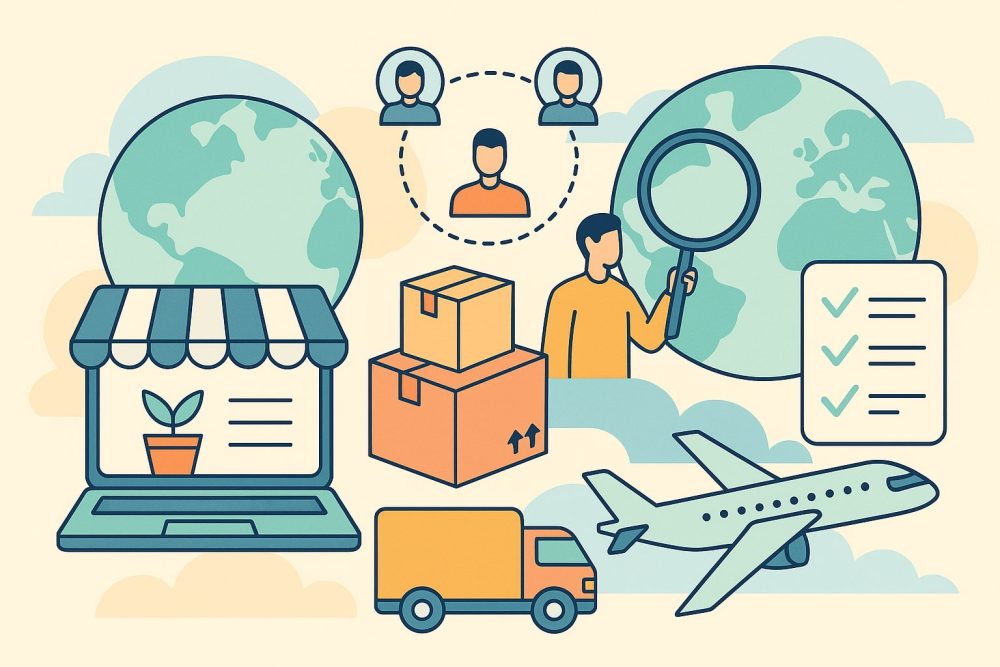
Alibaba has been the default gateway to global wholesale for so long that “sourcing” and “Alibaba” are almost synonymous for a lot of small business owners. It connects buyers with manufacturers and suppliers, primarily out of China, at a scale few platforms can match. But it is not the right fit for everyone, and treating it as the only option can leave real opportunities on the table.

Whether the concern is product quality, shipping times, or simply wanting to see what other supplier pools look like, plenty of buyers and small businesses end up searching for something that fits their specific goals better than a single giant marketplace. This guide walks through ten platforms worth considering, what each one is actually good at, and who should be looking at it first, along with the practical safety habits that matter more than which platform’s logo is on the invoice.
Why Look for Alibaba Alternatives?
Alibaba is a genuine giant in global wholesale, but scale brings its own problems. Buyers regularly run into inconsistent product quality, high minimum order quantities that make testing a new product risky, and supplier reliability that is hard to verify from a listing alone. For small businesses or early-stage startups, committing to a large minimum order on an unproven supplier is a real financial risk.
There are also strategic reasons to diversify. Some companies want to reduce dependence on a single country for sourcing, whether because of shipping delays, tariffs, or general geopolitical risk. Others simply need a platform better suited to their specific industry, or one that integrates more cleanly with the ecommerce tools they already use. All of these are legitimate reasons to look at what else is out there.
What to Expect from These Alternatives
Across the ten platforms below, expect a mix of approaches: some focus on verified suppliers and stronger quality control, some offer smaller minimum order quantities so you can test a product without a large upfront commitment, and others specialize in regional sourcing that cuts down on shipping time and customs complexity. Several also offer direct ecommerce or dropshipping integration that makes actually selling what you source a lot less manual. Each platform has a different combination of these strengths, so the right one depends heavily on what you are optimizing for.
Top 10 Alibaba Alternatives for Global Wholesale and Sourcing
1. Shopify
Shopify is not a wholesale marketplace in the way the rest of this list is, but it deserves a spot because of how it connects merchants to sourcing. Through apps like Spocket, Modalyst, and other supplier integrations, Shopify links store owners to a network of suppliers offering flexible order quantities, dropshipping, and automated inventory syncing. That combination lets entrepreneurs test products and scale a store without holding inventory themselves, while Shopify handles payments, marketing tools, and analytics in the same platform.
Pros:
- Connects to multiple wholesale and dropshipping apps for varied sourcing options
- Flexible order quantities and low upfront cost, which suits startups and small sellers
- Built-in ecommerce tools streamline store management alongside sourcing
Cons:
- Monthly subscription costs add up for smaller sellers over time
- Getting the most out of app integrations takes some technical comfort
Recommendation: Best for entrepreneurs and small to mid-sized businesses who want a branded storefront with flexible, low-risk product sourcing built in.
2. Global Sources
Global Sources connects buyers primarily with verified manufacturers in China, with a strong focus on electronics and high-tech products specifically. Its commitment to supplier verification, quality assurance, and physical trade shows adds a layer of trust that some pure online marketplaces do not offer. Buyers get detailed company profiles, product certifications, and real opportunities for face-to-face meetings, which makes it a preferred platform for businesses sourcing tech goods with compliance requirements.
Pros:
- Strict supplier verification and quality assurance processes
- Deep access to specialized electronics and technology suppliers
- Trade shows and direct communication build genuine trust
Cons:
- Heavily focused on electronics, which limits usefulness in other categories
- Some suppliers carry high minimum order quantities
Recommendation: Ideal for businesses sourcing reliable electronics and technology products from verified suppliers.
3. Made-in-China
Made-in-China.com gives buyers broad access to Chinese manufacturers across industries including machinery, consumer goods, and industrial products. The platform puts real weight behind detailed supplier audits, factory verification, and product customization, which serves buyers who need tailored manufacturing solutions and real quality assurance rather than off-the-shelf goods. It is especially valuable for businesses that want a direct factory relationship and more control over exact product specifications.
Pros:
- Detailed supplier certifications and factory audits
- A wide range of industries with real product customization options
- Direct manufacturer communication supports tailored production runs
Cons:
- The interface can feel complex for new users
- Heavily China-focused, so it does not help with regional diversification
Recommendation: A strong option for importers looking for customized manufacturing with verified factories in China.
4. DHgate
DHgate is a popular choice for small to mid-sized buyers, offering a large catalog of consumer products with low minimum order quantities. It is especially attractive to dropshippers and resellers thanks to flexible purchasing and buyer protection through escrow-style payments. Because a lot of sellers on DHgate are resellers rather than manufacturers, product quality varies more than on a factory-direct platform, so vetting individual suppliers matters more here. Its low barrier to entry makes it a common starting point for entrepreneurs testing a product idea without a large upfront investment.
Pros:
- Low minimum order quantities that suit small businesses
- Buyer protection through escrow-style payments
- Wide product variety across many categories
Cons:
- Product quality can be inconsistent between sellers
- Many sellers are resellers rather than manufacturers directly
Recommendation: Suitable for startups and dropshippers who want low minimum order quantities and a wide range of product choices to test.
5. IndiaMART
IndiaMART is India’s largest B2B marketplace, connecting buyers to a vast network of Indian suppliers across industries like textiles, agriculture, machinery, and chemicals. It offers competitive pricing and flexible order sizes, positioning itself as a real alternative to China-based sourcing rather than just a smaller copy of it. IndiaMART also surfaces user reviews and ratings to help buyers vet suppliers before committing. With India’s manufacturing base continuing to grow, this is a solid option for businesses actively seeking cost-effective diversification.
Pros:
- Access to a large and genuinely diverse supplier base in India
- Competitive prices with flexible order quantities
- Supplier reviews add a meaningful layer of transparency
Cons:
- Supplier quality varies, so careful vetting still matters
- International shipping support can be more limited than on China-based platforms
Recommendation: Ideal for importers looking to diversify sourcing through competitively priced Indian suppliers.
6. ThomasNet
ThomasNet specializes in connecting buyers with North American manufacturers and suppliers, with a focus on industrial parts, components, and services rather than consumer goods. It offers detailed company profiles, compliance certifications, and a genuinely useful RFQ system that cuts down on procurement back-and-forth. This platform suits businesses that prioritize quality, local sourcing, and regulatory compliance, often in industries where exact specifications and standards are non-negotiable.
Pros:
- Verified North American suppliers held to high quality standards
- A powerful search and RFQ system for streamlined procurement
- Strong focus on compliance and regulatory adherence
Cons:
- Limited to North American suppliers, which narrows global options
- Not built for general consumer goods sourcing
Recommendation: A strong fit for businesses that need trusted local suppliers for industrial or custom-manufactured products.
7. TradeIndia
TradeIndia offers a platform similar in spirit to IndiaMART, targeting small and medium-sized Indian enterprises. It provides diverse product categories with flexible minimum order quantities, digital cataloging, and lead-generation tools built into the platform. TradeIndia is a reasonable second option for businesses that want additional sourcing avenues from India, particularly if flexibility and competitive pricing matter more than a single dominant marketplace.
Pros:
- A diverse supplier base across many Indian industries
- Flexible order sizes at competitive prices
- Digital cataloging and lead-generation tools built in
Cons:
- Less comprehensive international shipping support
- Supplier quality can be inconsistent, similar to IndiaMART
Recommendation: Best for buyers seeking Indian suppliers with flexible ordering options beyond a single platform.
8. Wholesale Central
Wholesale Central is a directory-style marketplace connecting US-based retailers and resellers to domestic wholesalers and manufacturers. It puts the emphasis on trusted North American suppliers and quick access to a wide range of products, which cuts down on lead times and the customs complexity that comes with overseas sourcing. It lacks the automated purchasing features of a full marketplace, but for businesses that prioritize fast turnaround and local sourcing, that tradeoff is often worth it.
Pros:
- Access to trusted US-based wholesalers and manufacturers
- Faster shipping and simpler compliance than sourcing overseas
- A wide product range for retailers and resellers
Cons:
- No integrated ordering system; it functions mostly as a directory
- Prices tend to run higher than overseas wholesalers
Recommendation: A good fit for US retailers who want domestic wholesale sources for quick replenishment.
9. EuroPages
EuroPages is a European B2B sourcing platform featuring verified manufacturers and suppliers across a wide range of industries. It puts real emphasis on compliance with European quality standards and certifications. Buyers benefit from shorter shipping times within Europe and closer cultural and regulatory alignment, though prices tend to run higher than sourcing from Asian suppliers. EuroPages suits businesses that specifically need certified products and regional suppliers over the lowest possible unit cost.
Pros:
- Verified European suppliers held to strict quality and compliance standards
- Shorter shipping times within Europe
- Broad coverage across many industries
Cons:
- Generally higher prices than Asian sourcing markets
- Limited to European suppliers
Recommendation: Ideal for businesses that need certified European products and fast regional delivery.
10. AliExpress
AliExpress, Alibaba’s retail-facing sibling, offers a consumer-style marketplace with millions of products from a large number of sellers, with no minimum order quantities required. That makes it especially attractive to dropshippers and small businesses testing products without inventory risk. It includes buyer protection policies and a straightforward, easy-to-navigate interface, though international shipping times can run long, which can hurt customer satisfaction if you are reselling to end customers with tight expectations.
Pros:
- No minimum order quantities, ideal for small test orders
- A wide product selection across many categories
- Buyer protection helps secure transactions
Cons:
- Shipping times can be long, especially internationally
- Product quality varies significantly between sellers
Recommendation: Best for dropshippers and small entrepreneurs seeking low-risk product testing before committing to a bulk order elsewhere.

Quick Comparison
| Platform | Region focus | Minimum order quantity | Best for |
|---|---|---|---|
| Shopify (via apps) | Global | None to low | Dropshipping and branded stores |
| Global Sources | China | Varies, often higher | Verified electronics sourcing |
| Made-in-China | China | Varies by factory | Custom manufacturing |
| DHgate | China | Low | Small-batch testing, dropshipping |
| IndiaMART | India | Flexible | Diversifying away from China |
| ThomasNet | North America | Varies | Industrial and compliance-heavy sourcing |
| TradeIndia | India | Flexible | Additional Indian supplier options |
| Wholesale Central | United States | Varies by supplier | Fast domestic replenishment |
| EuroPages | Europe | Varies | Certified European products |
| AliExpress | China | None | Low-risk product testing |
How to Reduce Risk When Sourcing from a New Platform
Whichever platform you pick, a few habits meaningfully reduce the risk of a bad first order, regardless of region:
- Start with a small test order even on platforms that allow larger ones. A supplier’s sample quality does not always match what ships at volume.
- Verify certifications independently rather than taking a platform badge at face value, especially for anything involving safety, electronics, or food contact.
- Confirm actual lead times in writing, including manufacturing time separate from shipping time; the two get blurred together in a lot of listings.
- Use platform-provided escrow or buyer protection wherever it exists rather than paying a supplier directly outside the platform, even if they offer a discount for doing so.
None of the ten platforms above eliminate sourcing risk entirely. What they offer are different tradeoffs between cost, verification, minimum order size, and shipping speed, and picking the one that matches your actual risk tolerance matters more than picking the one with the biggest catalog. A platform with strong built-in verification, like Global Sources or Made-in-China, reduces your due-diligence burden but usually costs more or carries higher minimum orders; a lighter-touch marketplace like DHgate or AliExpress shifts more of that verification work onto you in exchange for lower minimums and lower prices. Neither approach is wrong, but each demands a different amount of your own time and attention before you place a real order.
Payment Safety Across Different Sourcing Regions
Payment terms are one of the most overlooked risk factors when sourcing from a new region, and they vary more than most buyers expect.
On China-based platforms like AliExpress and DHgate, escrow-style protection is standard: your payment is held until the order is confirmed as received, which gives you real recourse if a shipment does not arrive or does not match the listing. Alibaba itself popularized this model, and most of its direct competitors in the region have adopted something similar for exactly that reason.
Platforms like IndiaMART, TradeIndia, and ThomasNet function more as directories and lead-generation tools than fully integrated marketplaces, which means payment terms are frequently negotiated directly with the supplier rather than processed through the platform. That puts more responsibility on you to set clear terms in writing, use a payment method with some dispute protection such as a business credit card or a letter of credit for larger orders, and avoid full upfront payment on a first order regardless of how established the supplier claims to be.
EuroPages and Wholesale Central sit somewhere in between: better regulatory protection by default given EU and US consumer and business law, but still generally requiring you to arrange payment terms directly rather than through platform-managed escrow. Whichever platform you use, treat the presence or absence of built-in payment protection as a real factor in your decision, not an afterthought you deal with after the order is already placed.
Closing Insight
Relying on a single, all-purpose marketplace concentrates risk and can hide better opportunities elsewhere. When you branch out into additional sourcing venues, starting with small, low-stakes orders, you gain real bargaining power: more responsive lead times, suppliers who actually fit your quality standards, and cost structures tuned to your specific order volume rather than a one-size-fits-all pricing tier. Diversifying this way strengthens every link in your supply chain, so you can pivot quickly, protect margins, and keep customers satisfied no matter how the global sourcing landscape shifts. It also puts you in a stronger negotiating position with your existing suppliers; a supplier who knows they are your only option has far less incentive to compete on price, quality, or turnaround time than one who knows you have a validated backup ready to go.
Interesting Reads:
12 Best iMazing Alternatives for iOS Device Management in 2026
12 Best LeetCode Alternatives for Coding Practice
Best LinkedIn Alternatives to Grow Your Career in 2026
Frequently asked questions
What is the best Alibaba alternative for beginners?
AliExpress or DHgate. Both allow small test orders with no or low minimum quantities, which lets a new seller validate a product before committing to a bulk purchase anywhere else.
How do I diversify away from China-based sourcing specifically?
IndiaMART and TradeIndia are the strongest options for Indian suppliers, ThomasNet and Wholesale Central cover North American sourcing, and EuroPages handles European suppliers. Most businesses that successfully diversify use two or three of these alongside their existing China-based suppliers rather than switching wholesale.
Should I choose the cheapest platform or supplier?
Only if it still meets your quality and reliability bar. A slightly more expensive supplier with verified certifications and a track record is often cheaper in the long run than a low bid that leads to a failed shipment or a product recall.
How many suppliers should I actually work with for one product?
At least two once you move past the initial testing phase. Relying on a single supplier for a core product means a factory shutdown, a shipping delay, or a quality dispute can stall your entire business. Many established sellers run a primary supplier for volume and a secondary, verified backup they have already tested, specifically so a single point of failure never becomes a full stockout.
What is the biggest mistake first-time importers make when switching away from Alibaba?
Skipping the small test order because a new platform feels unfamiliar and they want to get a full shipment moving quickly. The extra week it takes to validate a sample from a new supplier is consistently cheaper than discovering a quality problem after a full container has already shipped.
Final takeaway
The right Alibaba alternative depends on what you are actually trying to solve, whether that is lower minimum orders for testing, regional diversification, or stronger quality verification for a regulated product. Use the comparisons above to shortlist two or three platforms that fit your specific constraints, then validate each one with a real, small order before committing to anything larger. That one extra step, treating a new supplier relationship as a trial rather than a done deal, is what separates sourcing diversification that actually strengthens your business from a switch that just trades one set of risks for another.