Top 10 Best Instacart Alternatives for Convenient Grocery Delivery in 2026

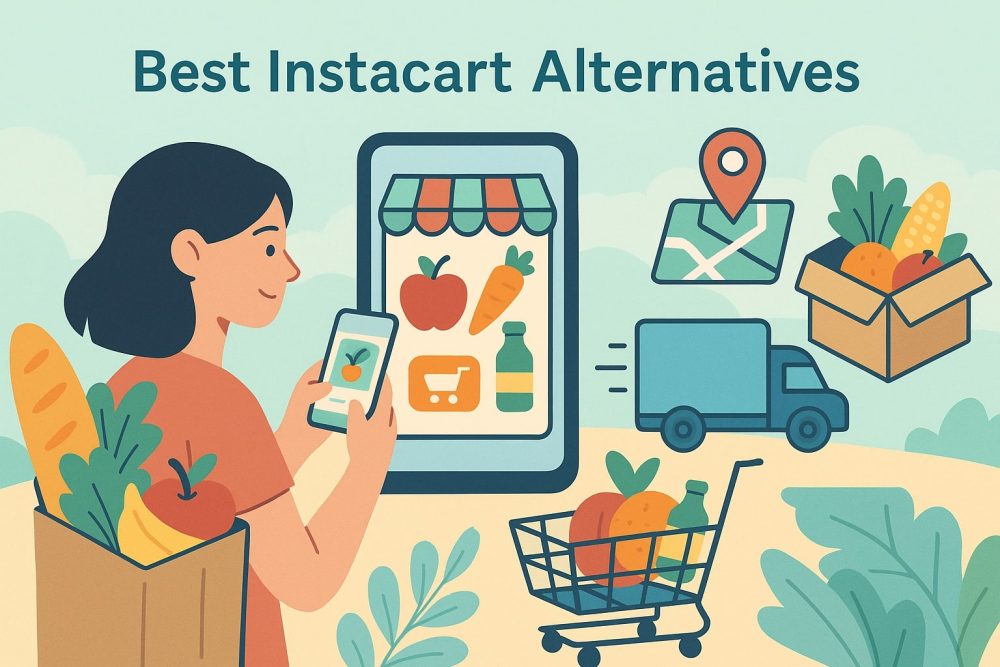
In today’s fast-paced world, convenience is king, especially when it comes to grocery shopping. While Instacart has become a household name for many seeking fast, reliable grocery delivery, it’s not the only option available. Exploring alternatives can help you find better pricing, broader store selections, or delivery options that fit your lifestyle. Whether you want cheaper fees, more personalized shopping, or coverage in an area Instacart handles poorly, there are real, currently operating options worth knowing about, and a couple of names that keep showing up on “best of” lists despite no longer working the way people remember.

Why Look for Instacart Alternatives?
Instacart is popular, yes, but it’s not perfect. Some users experience high delivery fees, limited availability in certain areas, or frustration with product substitutions. If you’re a price-conscious shopper, you may find better deals or lower service fees elsewhere. Depending on where you live, some alternatives partner directly with local or regional stores, or offer services Instacart doesn’t cover as well, like true membership-based bulk buying or ultra-fast convenience delivery.
Whether you want more flexibility, lower costs, or different shopping options, having real alternatives at your fingertips can save you time and money. Here’s what’s actually available right now, current status checked against each company’s own site rather than assumed from an older list.
10 Best Instacart Alternatives
1. Amazon Fresh
Amazon Fresh is Amazon’s grocery delivery service, offering an extensive range of groceries including fresh produce, dairy, meat, and pantry staples. It’s tailored for Amazon Prime members who want to combine their grocery shopping with their existing Amazon purchases, enjoying fast delivery and integration with Amazon’s other services like Alexa. If you live in a city where it’s available, it’s an excellent choice for those who want convenience without hopping between multiple apps.
Pros
- Vast product selection including fresh, organic, and specialty items
- Free delivery for Prime members on orders over a certain amount
- Integration with Alexa and Amazon’s broader ecosystem
Cons
- Available only in select cities
- Delivery fees apply for non-Prime members
2. Shipt
Shipt is a membership-based grocery delivery platform owned by Target. It partners with various local and regional grocery stores to provide users with a broad range of shopping options. Personal shoppers handpick your items, often with the option to communicate substitutions, and deliver the order same day. It’s ideal for shoppers looking for variety and fast delivery without juggling multiple store apps.
Pros
- Covers a wide range of grocery stores including Target and regional chains
- Free delivery on orders over $35 for members
- Same-day delivery options
Cons
- Membership fee required
- Service quality can vary depending on the shopper
3. Walmart Grocery Delivery
Walmart Grocery Delivery offers groceries directly from Walmart stores, combining Walmart’s low prices and wide product selection with home delivery. The service is designed for budget-conscious shoppers who want dependable grocery deliveries or curbside pickup without any membership fees, though Walmart also sells a Walmart+ membership that bundles free delivery with other perks for frequent shoppers.
Pros
- Competitive pricing with rollback discounts
- Reliable delivery and curbside pickup options
- No membership required for basic delivery access
Cons
- Limited availability in some rural areas
- Delivery fees apply unless minimum order requirements are met or you carry Walmart+
4. FreshDirect
FreshDirect is a grocery delivery service focused on fresh, high-quality produce, meat, seafood, and prepared meals, mainly servicing the Northeast U.S. It caters to those who prioritize organic or gourmet products and want the convenience of scheduled deliveries. It’s a premium service, ideal for shoppers who want their groceries curated with quality and freshness in mind.
Pros
- Emphasis on fresh and organic products
- Wide variety of prepared meal options
- Customizable delivery windows
Cons
- Service area limited to the Northeast
- Delivery fees on smaller orders
5. Sam’s Club
Sam’s Club is a membership warehouse club, owned by Walmart, that has built out real same-day and scheduled grocery delivery alongside its bulk in-club shopping. For households that already buy in bulk, it’s a genuine Instacart alternative rather than just a warehouse store, since Plus members get free same-day delivery on qualifying orders over a minimum threshold.
Pros
- Strong bulk pricing on pantry staples, household goods, and fresh items
- Free same-day delivery for Plus members on qualifying orders
- Curbside pickup available at most club locations
Cons
- Requires a paid club membership to shop at all, delivery savings depend on the Plus tier specifically
- Bulk pack sizes aren’t practical for every household
6. Peapod
Peapod is worth a real update rather than a recycled entry: it is no longer the nationwide grocery delivery brand it once was. Peapod pulled out of the Midwest in 2020 and, as of 2022, its parent company Ahold Delhaize restructured the brand into “Peapod Digital Labs,” an internal e-commerce technology arm that now largely powers delivery through its own supermarket banners (Stop & Shop, Giant) rather than operating as a standalone consumer-facing Peapod storefront nationwide. If you’re on the East Coast in a market served by one of those chains, you likely still get Peapod-built delivery technology, just under the supermarket’s own branding rather than the Peapod name you might remember.
Pros
- The underlying delivery technology and logistics are mature and well-tested after decades of operation
- Where available, integrates tightly with a specific regional supermarket chain’s inventory
Cons
- No longer a broad, standalone national brand, coverage is now tied to specific East Coast supermarket banners
- Not a realistic option if you’re outside the Ahold Delhaize footprint
7. Thrive Market
Thrive Market is a membership-based online grocery retailer focused on organic, non-GMO, and specialty dietary products (keto, paleo, gluten-free, and similar categories) shipped rather than same-day delivered. It fills a different niche than same-day delivery apps: a curated pantry-restocking service for households prioritizing specific dietary needs over speed.
Pros
- Deep selection of organic and specialty-diet products, often cheaper than buying the same brands at a regular grocery store
- Carbon-neutral shipping and a values-driven brand that resonates with health-focused shoppers
- A membership fee that’s donated for a low-income family for every paid membership sold
Cons
- Requires a paid annual or monthly membership
- Shipped, not same-day, so it doesn’t replace a same-day grocery run
8. Kroger Delivery
Kroger Delivery services groceries from Kroger stores and affiliated chains like Fred Meyer. The platform offers home delivery and curbside pickup, with frequent digital coupons that can save you money. It’s well-suited for shoppers living in Kroger’s markets who want a straightforward, reliable grocery delivery option with a good mix of fresh and packaged goods.
Pros
- Access to Kroger’s wide selection of groceries and organic options
- Multiple delivery and pickup options
- Frequent digital coupons and discounts
Cons
- Delivery fees unless you subscribe to their delivery membership
- Availability limited to Kroger markets
9. Uber Eats (formerly Postmates)
Postmates is worth updating too: it’s no longer a fully separate app from Uber. After Uber’s 2020 acquisition, Postmates was folded into the Uber Eats ecosystem, and while some markets still show a “Postmates” ordering interface, the delivery network, driver pool, and backend all run through Uber’s infrastructure now. For most people today, ordering grocery or convenience items through this channel means using Uber Eats directly, which now includes grocery and convenience-store delivery alongside restaurant orders.
Pros
- On-demand delivery with fast turnaround, backed by Uber’s large driver network
- Includes convenience stores and, in many markets, alcohol delivery
- One app covers restaurants, groceries, and convenience items
Cons
- Delivery fees can be high for small orders
- Grocery store variety is more limited than a dedicated grocery delivery service
10. Gopuff
Gopuff is a convenience-focused delivery service offering snacks, beverages, household essentials, and over-the-counter medicines. It operates in select urban and suburban areas with fast delivery, often well under an hour, from its own network of local micro-fulfillment centers rather than a traditional grocery store. While it doesn’t provide a full grocery selection, it’s well suited for quick runs to grab essentials or snacks without leaving the house.
Pros
- Fast delivery from dedicated local fulfillment centers
- Flat delivery fee structure in most markets, regardless of order size
- Ideal for convenience items and snacks rather than a full grocery haul
Cons
- Limited grocery variety, not a full supermarket replacement
- Only available in select cities and suburbs
Comparison Table
| Service | Delivery Area | Pricing Model | Key Strengths | Main Drawbacks |
|---|---|---|---|---|
| Amazon Fresh | Select U.S. cities | Prime membership + delivery fees | Large product range, fast delivery, Amazon integration | Limited availability, fees for non-Prime |
| Shipt | Nationwide (select stores) | Membership + free delivery over $35 | Variety of stores, same-day delivery | Membership required, variable shopper quality |
| Walmart Grocery | Nationwide (major cities) | No membership required, or Walmart+ for perks | Low prices, curbside pickup | Limited rural coverage, fees on small orders |
| FreshDirect | Northeast U.S. | Delivery fees on small orders | Fresh, organic, gourmet options | Limited geographic coverage |
| Sam’s Club | Nationwide (club markets) | Paid membership, free delivery on Plus tier | Bulk pricing, same-day delivery for Plus | Membership required to shop at all |
| Peapod | East Coast only, via Stop & Shop / Giant | Varies by supermarket banner | Mature delivery technology | No longer a standalone national brand |
| Thrive Market | Nationwide (shipped) | Paid membership | Organic and specialty-diet selection | Shipped, not same-day |
| Kroger Delivery | Kroger markets | Delivery fees or subscription | Good discounts, multiple pickup options | Limited to Kroger locations |
| Uber Eats (Postmates) | Urban U.S. cities | Delivery fees | Fast, includes convenience & alcohol | Higher fees on small orders |
| Gopuff | Select urban areas | Flat delivery fee | Ultra-fast delivery, convenience items | Limited grocery variety |
How to Choose the Right Grocery Delivery Service for You
With so many options, how do you decide which grocery delivery service fits your lifestyle? Consider these factors:
- Location & Availability: Some services are regional, so check if they deliver in your area before you get attached to one.
- Store Selection: Do you want access to specific local or national stores, or are you fine with whatever a service’s own fulfillment network stocks?
- Delivery Speed: Need groceries within the hour, or is next-day fine? Gopuff and Uber Eats optimize for speed; FreshDirect and Thrive Market optimize for curation.
- Pricing & Fees: Compare membership costs, delivery fees, and product pricing together, a service with no membership fee can still cost more per order once delivery fees stack up.
- Product Range: Are you looking for fresh produce, bulk items, prepared meals, or specialty diet-focused goods?
- User Experience: How easy is the app or website to use, and how good is the customer service when a substitution or a missing item needs sorting out?

Understanding the Real Cost of Delivery Fees
The advertised delivery fee on any of these services is rarely the full story. Most charge some combination of a base delivery fee, a service fee calculated as a percentage of your cart total, and an optional tip that the app often defaults to a specific percentage rather than leaving blank. On a $60 grocery order, a $5.99 delivery fee plus a 5 percent service fee plus a suggested 15 percent tip can add up to nearly $15 on top of the groceries themselves, which is a meaningfully different total than the headline delivery fee suggests on its own.
Membership-based services flip this math around: you pay a flat annual or monthly fee upfront in exchange for waived or reduced per-order fees afterward. Whether that trade is worth it depends entirely on order frequency. A household ordering weekly breaks even on a membership fee fast; a household ordering once a month rarely does, and is usually better off paying per-order fees on a service with no membership requirement at all, like Walmart Grocery Delivery or Kroger Delivery.
It’s also worth checking whether a service’s minimum order threshold pushes you to buy more than you actually need just to avoid a small-order fee. That’s a real cost even when it doesn’t show up as a line item, since it usually means food waste rather than savings.
Substitutions and Quality Control: The Part Reviews Rarely Cover
Every one of these services occasionally runs out of an item you ordered and substitutes something else, and how well each one handles that moment matters more to daily satisfaction than almost any other feature on this list. Shipt and Amazon Fresh both let you approve or reject a specific substitution before the shopper finalizes it, which avoids the classic frustration of a stranger’s guess showing up in your bag instead of what you actually wanted. Walmart’s app defaults to showing you likely substitutes at checkout time rather than requiring a live back-and-forth, which is faster but gives you less control in the moment.
For fresh produce and meat specifically, ask around (or check recent app store reviews) about how a service handles quality complaints, since a bruised avocado or a torn bag of spinach is going to happen eventually with any delivery service, and the ease of getting a refund or credit for it varies more between these platforms than most people expect going in.
A Note on Why Some Grocery Delivery Roundups Go Stale Fast
Grocery delivery is one of the categories where a “best alternatives” list ages the fastest. Brands merge (Postmates into Uber), pivot entirely (Peapod into a B2B tech arm), or restructure their membership model within a year or two, and a listicle written even twelve months earlier can end up recommending something that no longer works the way it’s described. If you’re comparing options based on an older article you found elsewhere, it’s worth confirming directly on the company’s own site that the service still operates the way the article claims before you build a grocery routine around it.
Frequently Asked Questions
Is Postmates still a separate app from Uber Eats? Functionally, no. Uber acquired Postmates in 2020, and the delivery network now runs through Uber’s infrastructure. Some markets still show a Postmates-branded ordering screen, but for grocery and convenience delivery today, Uber Eats is the more reliable name to search for.
Is Peapod still available where I live? Only if you’re in the Northeast within Ahold Delhaize’s supermarket footprint (Stop & Shop, Giant, and related banners), and even then you’re more likely interacting with Peapod’s underlying technology through the supermarket’s own branded app than a standalone Peapod site.
Which of these is cheapest if I don’t want to pay a membership fee? Walmart Grocery Delivery and Kroger Delivery both offer non-membership delivery options, though you’ll pay a per-order delivery fee instead. Compare that fee against a competitor’s membership cost divided by how many orders you place a month to see which actually works out cheaper for your household.
What’s the best option for bulk buying without paying full grocery-store prices? Sam’s Club is the strongest fit here if you’re comfortable with a paid club membership and buying in larger pack sizes; it consistently beats standard grocery delivery apps on per-unit pricing for pantry staples and household goods.
Can I use more than one of these services at once? Yes, and a lot of households do, one membership service for weekly grocery runs and a fast, fee-per-order app like Gopuff or Uber Eats for the occasional last-minute item. Running two services costs more in aggregate than committing to one, but it also means neither service’s coverage gaps become your problem, since you always have a second option if one is out of stock, slow, or simply not covering an item you need that day.
Do any of these services deliver alcohol? Uber Eats supports alcohol delivery in many markets where local law allows it, and some regional grocery chains running their own delivery through Shipt or Instacart-style partnerships do as well. Availability depends heavily on state and local regulation, so check the specific service in your area rather than assuming national availability.
Choosing the Right Grocery Delivery Service
While Instacart is a convenient choice for many, these alternatives offer real advantages that can better match your grocery shopping style, budget, and location, whether it’s Amazon Fresh’s integration, Walmart’s pricing, Shipt’s variety, or Gopuff’s speed. A few names on older “Instacart alternatives” lists, Peapod chief among them, don’t work the way they used to, so it’s worth checking current availability directly on the company’s own site before you commit a weekly grocery routine to one.
Choosing the right service means considering what matters most to you, be it cost, convenience, or product variety. A reasonable way to start is picking two candidates that fit your location and budget on paper, running one real order through each over the same week, and comparing the actual delivered experience rather than the marketing copy. The gap between a service’s app-store rating and how it performs for your specific neighborhood and store selection is often bigger than any single review can capture.
If your comparison shopping extends into sourcing or fulfillment for your own business rather than personal groceries, our guides to Alibaba alternatives and Printful alternatives cover the adjacent B2B sourcing and fulfillment side of the same “don’t rely on one platform” logic.