10 Best WordPress CDN Plugins for Images


If you are looking to speed up your website and optimize image delivery, choosing the right CDN solution for images is one of the highest-leverage changes you can make. Images are typically the heaviest assets on a WordPress page, and a content delivery network distributes them across servers around the world so a visitor in Sydney is not waiting on a round trip to a server in Virginia. With so many options out there, competing on similar-sounding claims, it helps to know which ones actually stand out, and which specific claims are worth being skeptical of before you commit a budget to them.

One clarification worth making before the list: most of the names below are not “plugins” in the strict WordPress.org sense of a single .zip file with all the logic inside it. Cloudflare, KeyCDN, Fastly, Cloudinary, and BunnyCDN are CDN or media-management services that you connect to WordPress through a lightweight plugin, a DNS change, or a small integration snippet, while WP Rocket, Smush, Jetpack, ShortPixel, and Sucuri are genuine WordPress plugins that either include CDN delivery or hook into one of the services above. Both categories solve the same underlying problem, so we cover both, but knowing which kind of product you are signing up for avoids confusion when you go looking for it in the WordPress plugin directory and cannot find it.
What Does a CDN Actually Do for Images?
Before comparing individual products, it helps to understand the mechanism itself. A CDN for images works by caching copies of your image files on servers, called edge nodes, positioned in data centers around the world. When someone visits your site, the image is served from the nearest edge node instead of traveling all the way back to your origin server. This cuts latency, and on image-heavy pages it directly improves Largest Contentful Paint, one of Google’s Core Web Vitals metrics that factors into search ranking.
Why It Matters for a Digital Store
A CDN is more than a performance nicety. Here is why it is worth setting up properly:
- Faster Page Loads: Caching images on global edge servers means visitors get them delivered quickly regardless of where they are located, improving your page’s load time.
- Reduced Server Load: Offloading image delivery to a CDN reduces the strain on your hosting server, so your website can handle more simultaneous traffic without slowing down.
- SEO Benefits: Search engines factor page speed into ranking, and Core Web Vitals specifically reward fast image loading, so a properly configured CDN is a genuine SEO lever, not just a UX one.
- Better User Experience: Faster load times mean less visitor drop-off before a page finishes rendering, which matters directly for conversion on a store selling digital products.
Key Features to Look for
- Global Server Network: More edge locations generally means faster delivery for a geographically spread audience.
- Modern Image Format Support: Automatic conversion to WebP or AVIF, which are meaningfully smaller than JPEG or PNG at equivalent visual quality, without you needing to manually re-export every image.
- Caching and Delivery Rules: The ability to set cache duration and delivery rules by device type improves both speed and bandwidth costs.
- Security Features: SSL support and protection against DDoS traffic aimed at your origin server.
- Straightforward WordPress Setup: A plugin or integration that does not require manually editing DNS records incorrectly and breaking your site’s uptime.
10 CDN Solutions for WordPress Images, Fact-Checked for 2026
1. Cloudflare

Cloudflare connects to WordPress by changing your domain’s nameservers rather than installing a traditional plugin, and its CDN network, with edge locations across well over 200 cities, delivers your images from whichever node is closest to the visitor. It also layers on serious security, including DDoS protection, at no extra cost even on the free plan.
Key Features
- Global network spanning well over 200 cities.
- Image optimization and automatic edge caching.
- A genuinely usable free plan for smaller websites.
- DDoS protection included on every plan tier.
Pros
- Strong free plan for small to mid-sized sites.
- Reliable, well-tested security features.
- Excellent global performance backed by one of the largest edge networks in the industry.
Cons
- Advanced image optimization features sit on paid plans.
- Nameserver-level setup can feel intimidating for a first-time user compared to installing a plugin.
Why It Stands Out: Cloudflare’s combination of a real free tier, a huge edge network, and built-in security makes it the default recommendation for most WordPress sites, digital stores included.
Also Read: 10 Best Cloudflare Alternatives and Top CDN Security Options
2. WP Rocket
WP Rocket is a premium caching plugin, installed directly from a .zip file, that also integrates with third-party CDNs for image delivery rather than running its own network. It focuses on overall site optimization: caching, lazy loading, and CDN integration working together to improve page speed.
Key Features
- Page and browser caching for faster load times.
- Lazy loading and image optimization add-ons.
- Straightforward integration with third-party CDNs like Cloudflare, RocketCDN, or BunnyCDN.
- Cache preloading so the first visitor after a change is not the one waiting on a cold cache.
Pros
- Genuinely user-friendly interface, even for non-technical site owners.
- Strong caching features out of the box.
- Works with a wide range of third-party CDNs rather than locking you into one.
Cons
- Premium plugin, no free version available.
- A CDN itself is still a separate purchase; WP Rocket handles the integration, not the network.
Why It Stands Out: WP Rocket’s caching and CDN integration work together cleanly, which makes it a strong pairing plugin for whichever CDN you choose separately.
3. Smush
Smush, from WPMU DEV, is an image optimization plugin with an optional CDN feature on its paid tier. It compresses and resizes images to reduce their file size before they ever reach a CDN, which matters because a smaller original image is faster everywhere, not just at the edge.
Key Features
- Bulk image optimization across your entire media library.
- Lazy loading for images below the fold.
- CDN delivery available on the Pro tier.
- Lossless compression that avoids visible quality loss.
Pros
- One-click bulk optimization is genuinely easy to use.
- A free version covers the core compression features.
- Compression quality holds up well against paid competitors.
Cons
- CDN delivery specifically requires the paid WPMU DEV membership rather than a standalone low-cost tier.
- The free version’s feature set is noticeably thinner than Pro.
Why It Stands Out: Smush handles the compression half of the problem exceptionally well, which pairs naturally with almost any CDN on this list for the delivery half.
Also Read: 10 Best WordPress Cache Plugin
4. Jetpack by WordPress.com
Jetpack is an all-in-one plugin from Automattic that includes a free image CDN, historically known as Photon, alongside performance, backup, and security features. Its image CDN optimizes and serves images from Automattic’s own global infrastructure at no charge, even on Jetpack’s free tier.
Key Features
- Free CDN for images, no paid plan required for this specific feature.
- Automatic image optimization and resizing.
- Site backup and security features bundled in on paid tiers.
- Straightforward, native WordPress integration since it is built by the WordPress.com team.
Pros
- Genuinely useful all-in-one solution for performance and basic security.
- Simple setup, particularly for anyone already familiar with WordPress.com.
- The image CDN specifically remains free even without a paid subscription.
Cons
- Paid plans are required for backup, security scanning, and other non-CDN features.
- Some users report Jetpack adds noticeable overhead if every module is left enabled.
Why It Stands Out: A genuinely free, no-catch image CDN is rare in this category, and Jetpack’s is backed by Automattic’s own infrastructure rather than a smaller third party.
5. KeyCDN
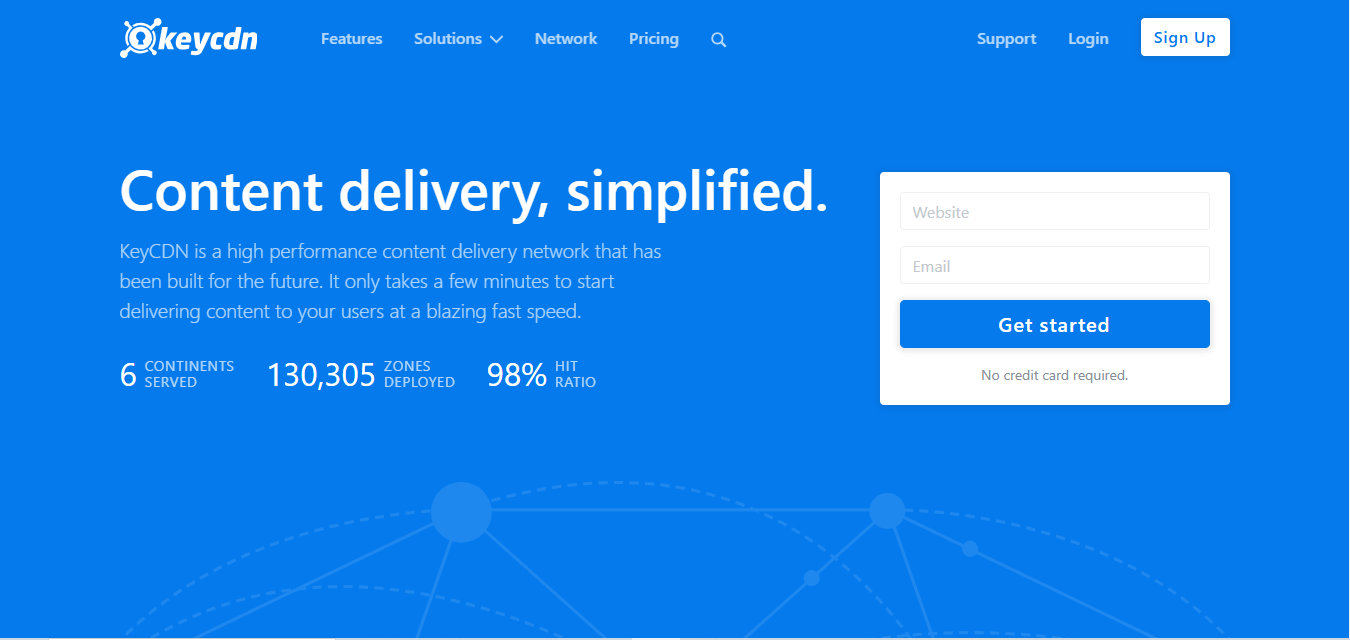
KeyCDN is a straightforward, pay-as-you-go CDN service that connects to WordPress through a small integration plugin like CDN Enabler. It optimizes image delivery and improves load times while keeping the pricing model simple for smaller businesses that do not want a flat monthly commitment.
Key Features:
- Real-time image optimization on delivery.
- Pay-as-you-go pricing based on bandwidth used.
- Straightforward WordPress integration via a lightweight plugin.
- Wide global edge coverage.
Pros:
- Cost-effective for smaller websites with modest bandwidth needs.
- Simple integration compared to nameserver-level setups.
- Easy to set up without deep technical knowledge.
Cons:
- Fewer advanced features than larger competitors like Cloudflare or Fastly.
Why It Stands Out: KeyCDN suits users who need a simple, affordable CDN without committing to a large platform. Its pay-as-you-go model means you are not paying for capacity you do not use.
6. Cloudinary
Cloudinary specializes in image and video management and optimization rather than general-purpose CDN delivery. It provides real-time image transformation and a CDN layer on top, making it a strong fit for media-heavy sites that need more than static caching, such as on-the-fly resizing or cropping.
Key Features
- Automatic image and video optimization, including format conversion.
- Real-time delivery of transformed images via URL parameters.
- Built to scale for media libraries with thousands of assets.
- Extensive CDN coverage through partnerships with major network providers.
Pros
- Advanced transformation features well beyond simple caching.
- Powerful, flexible image and video management tools.
- Real-time resizing removes the need to pre-generate every image size manually.
Cons
- More expensive than a plain CDN once you exceed the free tier’s usage limits.
- The transformation feature set has a real learning curve for non-technical users.
Why It Stands Out: For a store with a large or complex media library, Cloudinary’s on-the-fly transformation saves the manual work of maintaining multiple pre-sized image exports.
7. ShortPixel
ShortPixel is an image optimization plugin with an optional CDN add-on. It automatically compresses and optimizes images as you upload them, improving load times without a visible drop in image quality.
Key Features
- Both lossless and lossy compression options, selectable per site.
- Straightforward WordPress plugin integration.
- Automatic resizing alongside compression.
- Support for the WebP format for browsers that can use it.
Pros
- Offers both free and affordable paid credit-based plans.
- High-quality compression without noticeable visual loss.
- Fast, largely automatic optimization on upload.
Cons
- The free plan’s monthly image credits run out quickly on an active store.
- CDN delivery specifically requires a paid plan rather than being included free.
Why It Stands Out: ShortPixel’s compression quality is consistently well regarded, making it a solid choice for stores that care more about image quality retention than raw CDN network size.
8. Fastly
Fastly is an enterprise-grade CDN provider that connects to WordPress through a plugin or a direct DNS-level integration. It is well known for very fast cache purging and low-latency delivery, which makes it a common choice among high-traffic publishers and larger stores.
Key Features
- High-performance CDN with real-time image optimization add-ons.
- Near-instant purging of cached files, useful when a product image changes and you cannot wait for a TTL to expire.
- Integration options ranging from a plugin to a full custom VCL configuration for advanced users.
Pros
- Excellent fit for websites with heavy, spiky traffic.
- Real-time optimization and near-instant cache invalidation.
- Strong reputation for raw performance among CDN providers.
Cons
- Setup is genuinely more complex than a plug-and-play plugin, particularly for custom configurations.
- Pricing is usage-based and can climb quickly for high-traffic sites without careful monitoring.
Why It Stands Out: Instant cache purging is a real differentiator for a store that updates product images frequently and cannot tolerate a stale cached version showing to customers.
9. Sucuri
Sucuri is primarily a website security platform, with a firewall and malware scanning as its core product, but its firewall tier also includes CDN-style caching that speeds up delivery of images and other static assets as a side benefit.
Key Features
- Full security suite including a web application firewall.
- CDN-style caching for faster delivery of static assets like images.
- Malware scanning and cleanup as part of the same platform.
Pros
- A genuinely combined security and performance solution rather than two separate purchases.
- Straightforward setup for a WordPress site.
- Strong track record specifically for stopping DDoS traffic before it hits your origin.
Cons
- More expensive than a dedicated CDN if performance is genuinely your only goal.
- The product is built around security first, with CDN speed as a secondary benefit rather than the core focus.
Why It Stands Out: For a store owner who wants security and a performance bump handled by one vendor and one invoice, Sucuri is a reasonable single purchase instead of stacking a separate firewall and CDN.
Also Read: 15+ Must Have WordPress Plugins for a High-Performance Website
10. BunnyCDN

BunnyCDN, part of the wider Bunny.net platform, is a lean, usage-based CDN service for WordPress sites. It offers quick, reliable image delivery with a setup process that is friendlier to non-developers than Fastly’s, while still supporting advanced configuration for anyone who wants it.
- Key Features
- Real-time image optimization through Bunny’s separate image processing add-on.
- Automatic caching with configurable rules.
- Usage-based pricing that scales with actual bandwidth consumed.
- Wide global network coverage relative to its low price point.
Pros
- Genuinely affordable for the network size it offers.
- Straightforward integration with WordPress via a plugin or direct pull-zone setup.
- Strong price-to-performance ratio for smaller and mid-sized stores.
Cons
- Advanced configurations, like custom edge rules, need some technical comfort to set up correctly.
- Image-specific optimization is a separate add-on rather than bundled into the base CDN price.
Why It Stands Out: BunnyCDN’s usage-based pricing makes it one of the cheapest ways to get real global CDN coverage for a smaller store, without paying for enterprise capacity you do not need yet.
Comparison Table
| Name of Tool | Best For | Key Features | Pricing |
|---|---|---|---|
| Cloudflare | Global performance and security |
|
Free plan; paid plans historically start around $20/month, confirm current rate |
| WP Rocket | Caching plus third-party CDN integration |
|
Premium plugin, no free tier; check current annual pricing |
| Smush | Image compression without quality loss |
|
Free plan; CDN requires paid WPMU DEV membership |
| Jetpack | Free image CDN plus optional extras |
|
Image CDN free; paid plans add other features |
| KeyCDN | Simple, affordable pay-as-you-go CDN |
|
Pay-as-you-go, bandwidth-based |
| Cloudinary | Media-heavy sites needing transformation |
|
Free tier with usage limits; paid plans scale from there |
| ShortPixel | High-quality image compression |
|
Free credits monthly; paid credit packs for more volume |
| Fastly | High-traffic, spiky-load websites |
|
Usage-based, custom pricing |
| Sucuri | Security-first performance bundle |
|
Basic platform starts at $229/year |
| BunnyCDN | Affordable, usage-based CDN |
|
Pay-as-you-go, priced per GB delivered |

Stacking a Compressor With a CDN, Rather Than Picking Just One
A pattern worth calling out explicitly: several of the tools above are not really competing with each other, they are meant to be stacked. Smush or ShortPixel shrink the image file itself before it is ever served. Cloudflare, KeyCDN, Fastly, or BunnyCDN then deliver that already-shrunk file from the nearest edge location. Skipping the compression step and relying on the CDN alone still helps, but you are paying to transfer a bigger file than necessary on every single delivery, which adds up in both load time and bandwidth cost at scale.
A sensible default stack for a mid-sized EDD or WooCommerce store looks like this: a compression plugin such as Smush or ShortPixel handling images on upload, Cloudflare’s free or Pro tier handling edge delivery and basic security, and WP Rocket or a similar caching plugin tying the two together with page-level caching. That combination covers the large majority of what a dedicated enterprise CDN like Fastly offers, at a fraction of the cost, and it is enough for the overwhelming majority of digital stores that are not running enterprise traffic volumes.
Choosing the Right CDN Setup for Image Optimization
The right combination of tools here can meaningfully improve your website’s performance, delivering faster load times, a better user experience, and a real, measurable SEO benefit through Core Web Vitals. Whether you want a simple, free solution like Jetpack’s built-in image CDN or a more advanced setup involving Cloudflare plus a dedicated compression plugin, there is a combination that fits nearly every store’s budget and traffic pattern. Consider your site’s actual traffic volume and media library size before committing to a paid enterprise tier you may not need yet, and remember that the compression step and the delivery step are separate problems best solved by separate, purpose-built tools rather than one product trying to do both adequately instead of one thing well.
Interesting Reads
10 Best WordPress Cache Plugin
10 Best Cloudflare Alternatives and Top CDN Security Options