How to Monetize a WordPress Business Directory


The Business Case for Directory Monetization
A WordPress business directory is one of the most underrated revenue-generating assets you can build. Unlike a blog that depends on ad revenue or a store that requires physical inventory, a directory generates revenue from the businesses that want to be listed in it. The businesses pay you because your directory sends them qualified leads, and the value of those leads grows as your directory traffic increases.
If you’re running a BuddyPress community with Easy Digital Downloads, you already have the infrastructure for a monetizable directory. The members are there. The community is active. All you need is the right tooling and pricing strategy to turn member profiles into a revenue stream.
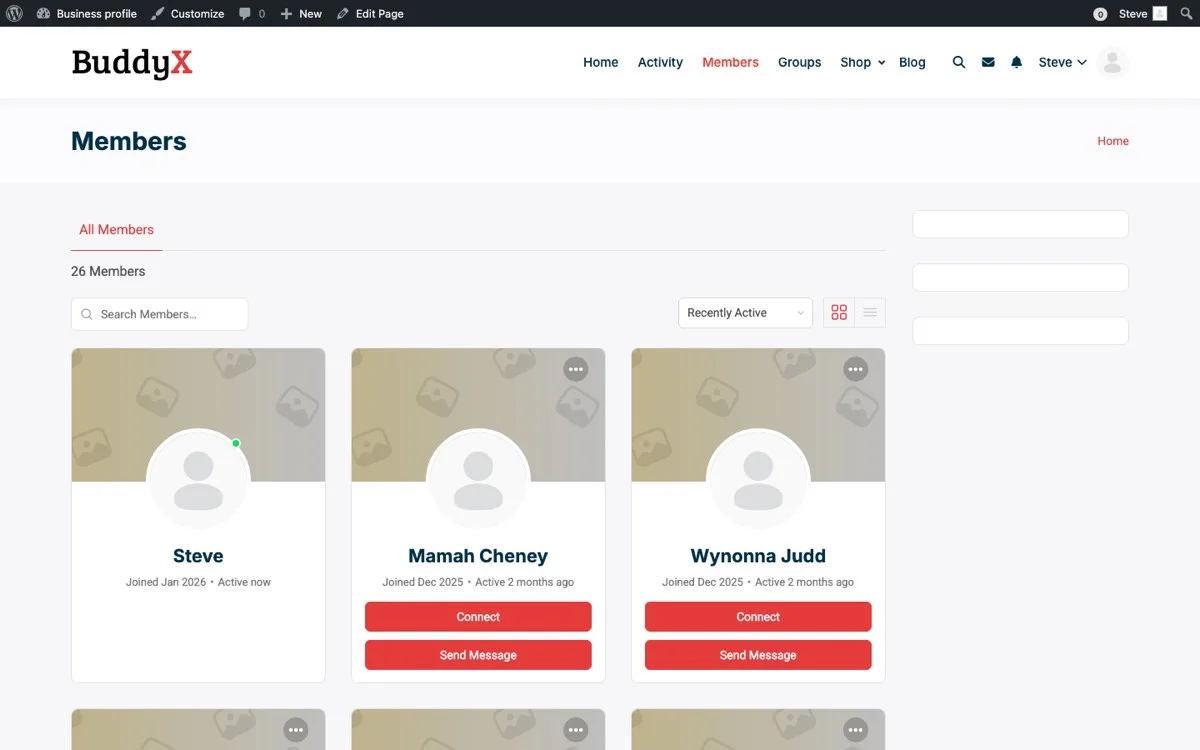
BuddyPress Business Profile provides the directory functionality. Easy Digital Downloads handles the payments. Together, they give you everything you need to build a paid business directory on WordPress.
In this guide, we’ll break down the monetization models, implementation strategies, and revenue projections for running a profitable WordPress business directory.
Directory Monetization Models
Before diving into implementation, let’s examine the proven monetization models for online business directories. Most successful directories use a combination of these approaches rather than relying on a single revenue stream.
Model 1: Paid Listings
The most straightforward model is charging businesses a fee to be listed in your directory. This works best when your directory has established traffic and a reputation for connecting buyers with quality providers.
How it works:
- Businesses pay a one-time or recurring fee to create and maintain a listing
- Payment is processed through Easy Digital Downloads
- Upon payment, the business owner gets access to create their BuddyPress Business Profile
- The listing remains active as long as the subscription is current
Pricing considerations:
- Research what competing directories in your niche charge
- Start lower than you think and increase as traffic grows
- Monthly pricing ($10-50/month) works well for smaller businesses
- Annual pricing ($99-499/year) works better for established businesses and improves your cash flow
Paid listings work best in niches where businesses actively seek directory presence: legal services, medical practices, home services, technology vendors, and professional services.
Model 2: Featured Profiles
Featured profiles allow businesses to pay extra for enhanced visibility within your directory. This is an upsell on top of a standard listing (which could be free or paid).
Featured profile benefits typically include:
- Top placement in search results and category pages
- Highlighted or visually distinct listing card with a “Featured” badge
- Larger profile card with additional information visible at a glance
- Priority in geographic and category-based searches
- Featured placement on the directory homepage
Pricing strategy:
- Featured listings typically command a 2x to 5x premium over standard listings
- If a standard listing is $29/month, a featured listing might be $79-149/month
- Limit the number of featured spots per category to maintain exclusivity and value
- Offer featured placement for specific time periods (1 month, 3 months, 6 months) rather than indefinitely
Model 3: Premium Categories
Some directories charge businesses to be listed in specific high-value categories. This works when certain categories generate significantly more traffic and leads than others.
Example: If your directory covers professional services and the “Web Development” category gets 10x more traffic than “Translation Services,” you can charge a premium for listings in high-traffic categories while keeping lower-traffic categories affordable or free.
This model requires good analytics to know which categories drive the most value, and transparent communication with businesses about why certain categories cost more.
Model 4: Freemium with Upgrades
The freemium model offers a basic free listing to all businesses, then charges for enhanced features. This is often the best model for new directories because it removes the barrier to entry and builds your listing count quickly.
Free tier includes:
- Basic business profile (name, description, category)
- Visible in directory search results
- No reviews or social features
Paid tier adds:
- Full profile with all fields (contact info, hours, location map)
- Review system enabled
- Activity feed posting
- Follower functionality
- Analytics dashboard showing profile views and engagement
The freemium model works because businesses can see their basic listing generating some value, which makes the upgrade decision easier when they want to maximize their directory presence.
Integrating with EDD for Directory Payments
Easy Digital Downloads is the payment backbone of your directory. Here’s how to set up the payment flow for each monetization model.
Creating Directory Products in EDD
For each listing tier, create a corresponding product in Easy Digital Downloads:
- Basic Directory Listing: A recurring product at your base price (e.g., $19/month or $199/year)
- Featured Directory Listing: A premium recurring product (e.g., $79/month or $799/year)
- Category Upgrade: An add-on product for premium category placement
- Annual Bundle: A discounted annual package that includes featured placement and premium categories
EDD’s recurring payments extension handles subscription billing automatically. When a business purchases a listing product, their account is upgraded to the appropriate user role, which in turn enables their BuddyPress Business Profile features.
Payment Flow Architecture
The end-to-end payment flow looks like this:
- Business visits your directory and sees the value of being listed
- They click “Get Listed” or “Upgrade Your Profile” which takes them to an EDD checkout page
- They select their listing tier and complete payment
- EDD processes the payment and assigns the appropriate user role
- BuddyPress Business Profile features are automatically enabled based on their role
- The business is prompted to complete their profile
- Their listing goes live in the directory
This automated flow means you don’t need to manually approve listings or toggle features. The payment triggers everything downstream.
Handling Renewals and Expirations
Subscription management is critical for a directory business. When a subscription renews, nothing changes from the business’s perspective, and their listing stays active. When a subscription expires or is canceled, you have two options:
- Soft expiration: Downgrade the listing to a basic free tier but keep it visible. This preserves SEO value and makes it easy for the business to re-upgrade.
- Hard expiration: Remove the listing from the directory entirely after a grace period. This creates urgency to renew but risks losing the listing permanently.
Most successful directories use soft expiration because it maintains directory content volume while still incentivizing paid renewals for premium features.
Tiered Listing Packages
Packaging your directory listings into clear tiers makes the buying decision straightforward for businesses. Here’s a proven three-tier structure with realistic pricing:
Starter Package ($19/month or $190/year)
- Standard business profile listing
- Up to 3 business categories
- Contact information display
- Basic analytics (monthly profile views)
- Activity feed participation
Professional Package ($49/month or $490/year)
- Everything in Starter
- Featured badge on listing card
- Priority placement in search results
- Review system enabled
- Follower functionality
- Location map display
- Up to 7 business categories
- Detailed analytics (views, clicks, engagement)
- Social media links
Enterprise Package ($99/month or $990/year)
- Everything in Professional
- Homepage featured placement (rotating)
- Top position in category pages
- Unlimited business categories
- Verified business badge
- Portfolio gallery
- Custom branding on profile
- Advanced analytics with lead tracking
- Priority support
The annual pricing at roughly 10 months’ worth of monthly pricing gives businesses a clear incentive to commit for the year, which improves your revenue predictability.
Claim and Upgrade System
One of the most effective growth strategies for a business directory is pre-populating listings and letting businesses claim and upgrade them. Here’s how this works.
Pre-Populating Your Directory
Before launching your paid directory, create basic listings for businesses in your niche using publicly available information. This gives your directory immediate volume and makes it useful for visitors from day one.
Basic pre-populated listings include:
- Business name
- Category
- Basic description from public sources
- Website URL
These basic listings are free and serve as a foundation. They’re clearly marked as “unclaimed” profiles.
The Claim Process
When a business owner discovers their listing in your directory, they can claim it by:
- Clicking the “Claim This Business” button on the listing
- Verifying their identity (email verification, domain verification, or manual review)
- Getting access to edit and enhance their listing
- Optionally upgrading to a paid tier for premium features
The claim process creates a natural sales funnel. The business owner arrives, sees their listing exists, realizes it could be much better with their input, and is presented with upgrade options that make their listing more effective.
Claim-to-Upgrade Conversion
The claim-to-upgrade conversion rate for well-designed directories typically ranges from 15-30%. That means if you pre-populate 1,000 business listings and get 200 claim requests, you can expect 30-60 paid upgrades. At an average of $49/month per upgrade, that’s $1,470-$2,940 in monthly recurring revenue from a single batch of pre-populated listings.
Advertising Within Your Directory
Beyond listing fees, your directory can generate advertising revenue from businesses that want additional exposure.
Directory Ad Placements
Strategic ad placements within your directory include:
- Sidebar ads on search results pages: High-visibility placement when users are actively searching for businesses
- Banner ads on category pages: Targeted exposure to users interested in a specific industry
- Interstitial listings: Paid listings that appear between organic results, clearly marked as sponsored
- Profile page ads: Ads that appear on competitor profiles (use carefully, as this can be controversial)
- Email newsletter sponsorships: Sponsored placement in your directory’s email communications
Advertising Pricing Models
Directory advertising can be priced several ways:
- CPM (Cost Per Thousand Impressions): Charge $5-25 per thousand ad views, depending on your niche
- Flat monthly rate: Charge a fixed monthly fee for a specific ad placement ($100-500/month for niche directories)
- CPC (Cost Per Click): Charge per click on the ad ($0.50-5.00 per click depending on industry)
Start with flat monthly rates as they’re the simplest to implement and manage. As your traffic grows, you can transition to performance-based pricing if it generates more revenue.
Sponsored Listings
Sponsored listings are a hybrid between organic listings and advertising. A business pays to have their listing appear prominently in search results and category pages, similar to how Google Ads appear above organic search results.
How Sponsored Listings Work
Sponsored listings look similar to regular listings but with a “Sponsored” label. They appear at the top of search results and category pages, giving the sponsoring business maximum visibility.
Key differences from featured listings:
- Sponsored listings are temporary (typically weekly or monthly) while featured listings are part of a subscription tier
- Sponsored listings are tied to specific search terms or categories
- Multiple businesses can sponsor the same category, with rotation ensuring fair exposure
- Sponsored listings include detailed performance reporting (impressions, clicks, profile views)
Sponsored Listing Pricing
Price sponsored listings based on category traffic volume:
- Low-traffic categories: $25-50/week
- Medium-traffic categories: $50-150/week
- High-traffic categories: $150-500/week
- Homepage sponsorship: $200-1,000/week depending on total directory traffic
Create sponsorship packages that bundle multiple categories or time periods for a discount. A business that sponsors three categories for a month should get a better rate than one that sponsors a single category for a week.
Subscription-Based Directory Access
Another monetization angle is charging users (not businesses) to access the directory. This works in specialized professional directories where the directory data itself has significant value.
When User-Side Payments Make Sense
Charging users to access your directory works in specific scenarios:
- Recruiting directories: HR professionals pay to search a directory of candidates
- Supplier directories: Procurement teams pay to access verified supplier listings
- Expert directories: Companies pay to find and contact industry experts
- Investor directories: Investors pay to discover investment opportunities
In these cases, the directory serves as a lead generation tool, and the leads are valuable enough that users are willing to pay for access.
Implementing User Subscriptions with EDD
EDD makes it straightforward to gate directory access behind a subscription:
- Create an EDD subscription product for directory access
- Assign a specific user role to paying subscribers
- Configure BuddyPress to show the directory only to users with that role
- Free users see a preview (limited results, blurred contact details) with a prompt to subscribe
The preview-and-upsell approach works well because users can see the directory exists and contains valuable data, but they need to pay to access the full details.
Revenue Projections
Let’s run some realistic numbers for a WordPress business directory in its first two years of operation.
Year 1 Projections (Building Phase)
Assumptions:
- 500 total listings (200 free, 200 Starter, 75 Professional, 25 Enterprise)
- 10 sponsored listing slots sold per month
- 5 advertising placements sold per month
Monthly Revenue Breakdown:
- Starter listings: 200 x $19 = $3,800
- Professional listings: 75 x $49 = $3,675
- Enterprise listings: 25 x $99 = $2,475
- Sponsored listings: 10 x $100 avg = $1,000
- Advertising: 5 x $200 avg = $1,000
- Total Monthly Revenue: $11,950
- Total Year 1 Revenue: $143,400
Year 2 Projections (Growth Phase)
Assumptions:
- 1,500 total listings (400 free, 600 Starter, 350 Professional, 150 Enterprise)
- 25 sponsored listing slots sold per month
- 15 advertising placements sold per month
- 10% price increase across all tiers
Monthly Revenue Breakdown:
- Starter listings: 600 x $21 = $12,600
- Professional listings: 350 x $54 = $18,900
- Enterprise listings: 150 x $109 = $16,350
- Sponsored listings: 25 x $125 avg = $3,125
- Advertising: 15 x $250 avg = $3,750
- Total Monthly Revenue: $54,725
- Total Year 2 Revenue: $656,700
These projections are achievable in mid-size professional niches (legal services, technology vendors, real estate professionals) where businesses already spend money on directory listings and lead generation.
Key Revenue Drivers
The factors that most influence directory revenue are:
- Traffic volume: More visitors means more value for listed businesses, which justifies higher prices
- Listing quality: Comprehensive, well-maintained listings attract more traffic, creating a virtuous cycle
- Niche specificity: Specialized directories command higher listing fees than general ones
- SEO performance: Directories that rank well for industry-specific searches generate the most lead value
- Conversion tracking: Demonstrating ROI to listed businesses increases retention and justifies price increases
Operational Considerations
Running a profitable directory isn’t just about setting up the technology. There are ongoing operational requirements that affect your bottom line.
Content Quality Management
Low-quality listings drag down your entire directory. Implement minimum quality standards for paid listings and regularly audit the directory for outdated or incomplete profiles. Consider offering a profile optimization service as an additional revenue stream: charge businesses a one-time fee to have your team write and optimize their listing.
Customer Support
Listed businesses will need support with profile setup, billing questions, and feature requests. Factor support costs into your pricing. A good rule of thumb is that support costs represent 15-20% of your directory revenue, decreasing as you build self-service documentation and automated onboarding.
Marketing and Growth
Invest a portion of your directory revenue back into marketing to grow traffic and listings. The most effective channels for directory marketing are:
- SEO: Optimize your directory pages for industry-specific searches
- Content marketing: Publish industry guides and reports that link to your directory
- Partnership marketing: Partner with industry associations and publications
- Referral programs: Offer listed businesses a commission for referring new listings
Getting Started with Directory Monetization
Building a monetized WordPress business directory is a legitimate business model that can generate substantial recurring revenue. The combination of BuddyPress Business Profile for directory functionality and Easy Digital Downloads for payment processing gives you a solid technical foundation.
Start with a freemium model to build your listing base, then introduce paid tiers as your directory gains traffic and demonstrates value to listed businesses. Add sponsored listings and advertising as supplementary revenue streams once you have consistent traffic.
The directory business model rewards patience and consistency. It takes time to build traffic and listing volume, but once the flywheel is spinning, directory revenue is highly predictable and grows with each new listing and traffic milestone.
Get BuddyPress Business Profile and start building your monetized WordPress business directory today.