10 Best Software for Competitor Analysis

What Competitor Analysis Actually Means, and Why It’s Worth Doing
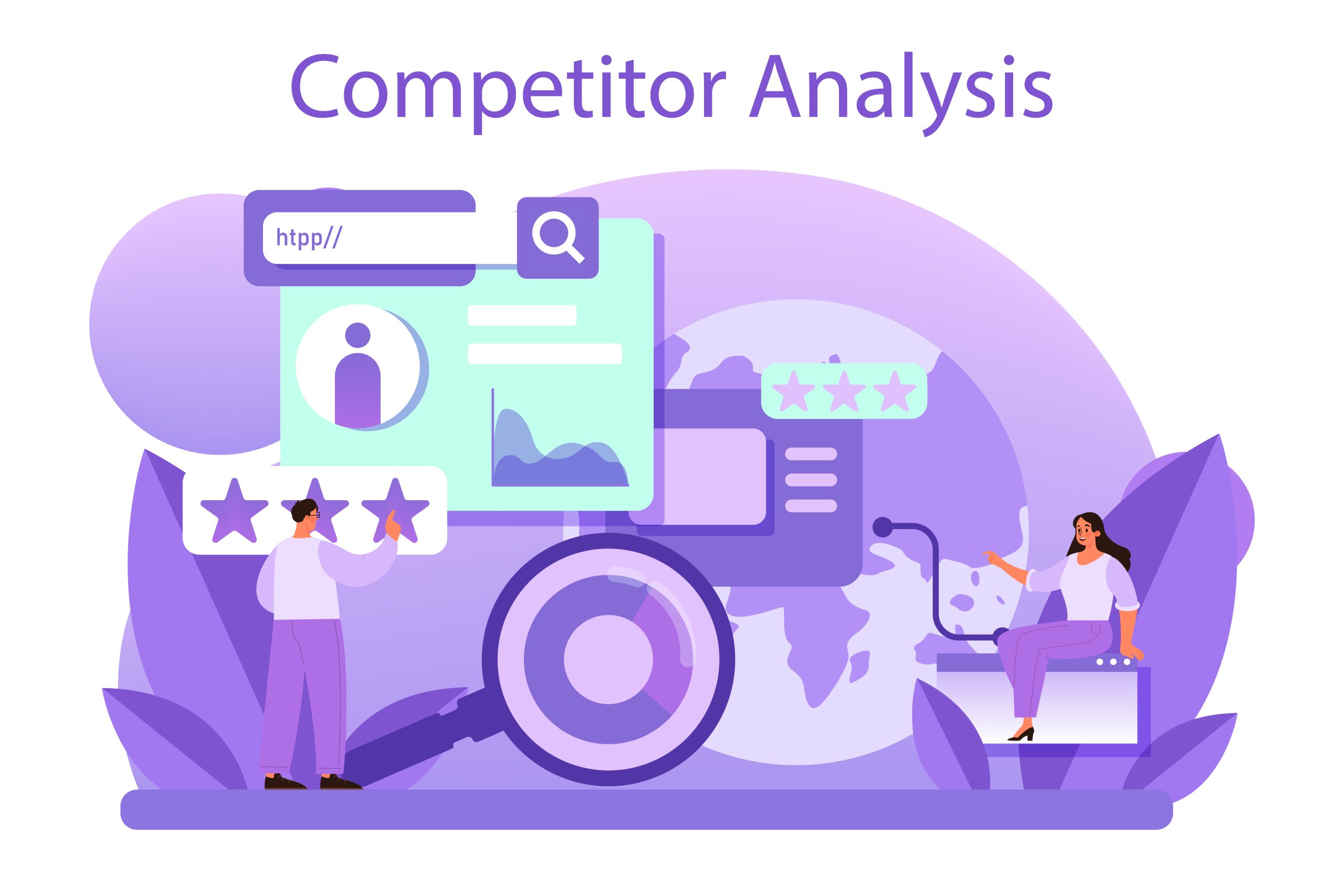
Competitor analysis isn’t about obsessively refreshing a rival’s website; it’s a structured look at their SEO positioning, ad spend, pricing, social strategy, and content performance, aimed at figuring out what’s actually working for them and what isn’t. Done well, it tells you which of their moves to learn from and which mistakes you can skip repeating in your own strategy.
The value shows up fastest when you stop guessing and start measuring. Understanding exactly which keywords a competitor ranks for, which of their ads keep running (a strong signal they’re profitable), or which content formats reliably earn shares gives you a shortcut past a lot of trial and error you’d otherwise have to run yourself. The right software automates the data collection side of this, turning what would be hours of manual digging into a dashboard you check weekly.

How to Actually Pick the Right Tool
Before getting swayed by a flashy dashboard demo, get specific about what you’re actually trying to learn, since the category of question you’re asking largely determines which tool on this list is even relevant to your situation. SEO-focused questions, keyword gaps, backlink profiles, technical site issues, point toward a different category of tool than questions about competitor ad spend, content placements, or social sentiment. Figure out your actual priority question first, then evaluate tools against that specific need rather than a generic feature checklist.
Test the interface yourself before committing to an annual plan. A tool with genuinely deep data but a confusing UI will sit unused after the first month, and the insights you paid for never make it into your actual strategy. The best platform for your team is the one whose output you’ll genuinely act on every week, not the one with the longest feature list.
10 Strong Tools for Competitor Analysis
1. Semrush
Semrush remains the heavyweight in SEO-focused competitor research. Run a domain analysis and it surfaces exactly which keywords a competitor ranks for, how much traffic each keyword drives them, and which paid ads they’re currently running. Beyond keyword intelligence, it tracks backlink profiles, surfaces technology stack details, and runs full site audits. The Keyword Gap tool is particularly useful for spotting terms competitors rank for that you don’t, which tends to point toward some of the most valuable content you can produce next.
2. Ahrefs
Ahrefs goes deepest on backlink analysis of anything in this category. Reverse-engineering which competitor pages earn the most links, and which specific content is driving their organic traffic, gives you a genuinely actionable content and outreach roadmap rather than a guess. It also tracks keyword ranking movement over time, which is useful for spotting a rising competitor before they’re an obvious threat rather than after.
3. BuzzSumo
BuzzSumo shifts the focus away from technical SEO toward content performance specifically. It surfaces which competitor posts actually went viral or drove meaningful social engagement, broken down by likes, shares, and comments across platforms, which helps you spot trending formats and topics before they’re saturated. It also identifies influencers actively amplifying a competitor’s content, useful both for competitive research and for finding partnership opportunities of your own.
4. Crayon
Crayon automates competitive tracking beyond pure SEO, scanning landing pages, product updates, pricing changes, and ad variations continuously rather than requiring you to check manually. When a competitor tweaks their homepage headline or adjusts a pricing tier, Crayon surfaces the change fast enough that you can actually respond to it rather than discovering it months later by accident.
5. Brandwatch
Brandwatch specializes in social listening and sentiment tracking rather than SEO or pricing intelligence. It monitors brand mentions and conversation trends across social platforms, forums, news, and review sites, which tells you not just what competitors are doing but how their actual customers feel about them. That sentiment data is genuinely useful for shaping your own messaging around the specific gaps or frustrations customers voice about a competitor.
Also Read: Best Software for PPC Campaign Management
6. Kompyte
Kompyte, now part of the Semrush family of products, automates competitor tracking with regular updates across websites, social media, and ad platforms, then compiles the changes into sales-ready battlecards. It’s built specifically for the handoff between marketing intelligence and sales enablement, alerting teams to a competitor’s promotional offers, messaging changes, or new campaigns fast enough to actually inform an active deal.
7. Owler
Owler offers a lighter, faster snapshot of the competitive landscape: revenue estimates, funding news, employee counts, and major company events, without the SEO or content depth of the tools above it on this list. It’s particularly well suited to small businesses and startups that want a quick pulse on market movement, funding rounds, executive changes, acquisitions, without committing to a full competitive intelligence platform.
8. Contify
Contify focuses on domain and sector-level intelligence, mining competitor press releases, regulatory filings, news mentions, and product announcements to build a picture of market movement that goes beyond pure metrics. For industries where reputation and thought leadership carry real weight, finance, healthcare, and B2B software especially, Contify blends the qualitative and quantitative sides of competitive research in a way narrower SEO-focused tools don’t attempt.
9. Apptopia
For any business competing on mobile, Apptopia is the specialized option. It tracks competitor app downloads, engagement and retention trends, revenue estimates, and even which technology partners a competitor’s app relies on. SaaS and gaming companies in particular use it to see which features are actually driving downloads and retention for a rival app, which tells you where to focus product development rather than guessing at what’s resonating.
10. Klue
Klue rounds out the list as the strongest option for turning competitive intelligence into something a sales team actually uses in the moment. Its Compete Agent gathers competitive data continuously and pushes deal-specific talking points directly to sellers during active deals, while its win-loss analysis captures buyer feedback through call recordings and interviews to explain why deals were actually won or lost. For organizations where competitive intelligence needs to reach salespeople in real time rather than sitting in a quarterly report, Klue is built specifically for that handoff.

What These Tools Actually Cost
Pricing spans a wide range depending on how deep the tool goes and who it’s built for. Semrush’s entry-level plan runs around $117 a month billed annually, and Ahrefs’ comparable Lite plan sits close to $129 a month, with both scaling up considerably (into the hundreds, and eventually low thousands, per month) for agency-tier access with more seats and higher data limits. BuzzSumo and Owler sit at a lower entry point, with BuzzSumo’s paid plans starting under $200 a month and Owler offering a genuinely useful free tier alongside its paid Pro and Max plans. Platforms built for enterprise sales and marketing teams, Crayon, Brandwatch, Klue, and Contify among them, typically don’t publish self-serve pricing at all and instead require a sales conversation, which usually signals a higher price floor built around annual contracts and dedicated onboarding.
Budget for the tool that matches your team’s actual size and use case rather than the one with the most impressive feature list. A solo consultant or small agency rarely needs Klue’s real-time sales enablement features, while a large sales organization losing deals to a specific competitor may find that exact capability worth a five-figure annual contract. Match the spend to the decision the tool is actually informing, and treat the subscription cost as an investment against a specific, measurable outcome, more ranking keywords captured, fewer competitive deal losses, faster reaction time to pricing changes, rather than a generic line item you renew on autopilot each year without checking whether it’s still earning its keep.
Combining Tools for a Fuller Picture
No single platform on this list covers SEO, content, social sentiment, pricing, app performance, and sales enablement equally well, and most serious competitive intelligence programs end up running two or three tools rather than one. A common pairing looks like an SEO-focused tool (Semrush or Ahrefs) for the content and search side, paired with either a broader tracking tool like Crayon for pricing and messaging changes, or a sales-focused platform like Klue if competitive losses are specifically hurting close rates. Layering in Brandwatch or BuzzSumo makes sense once social sentiment or content virality becomes a genuine strategic question rather than a nice-to-have.
Resist the urge to buy every category at once before you’ve proven out a review habit with even one tool. It’s far more common for teams to under-utilize three subscriptions than to genuinely need all three from day one; add tools as specific, real gaps in your current intelligence become obvious rather than front-loading the whole stack speculatively.
Building a Weekly Habit Instead of a One-Time Report
A single competitive analysis snapshot has a short shelf life; competitors change pricing, launch features, and shift messaging continuously, and a report from three months ago tells you almost nothing useful about what’s happening now. The teams that get real value from these tools build a recurring cadence, typically a weekly or biweekly review, rather than treating competitive intelligence as an occasional research project.
A workable structure looks something like this: one person owns pulling the week’s alerts from whichever tool your team uses, whether that’s Crayon flagging a pricing change or Semrush surfacing a new ranking keyword. That gets summarized into two or three sentences and shared with whoever actually needs to act on it, content, product, or sales, rather than sitting in a dashboard only the person who set up the tool ever opens. Over a few months, that habit builds a genuinely useful institutional memory of how competitors move, which is worth more than any single deep-dive report.
Free and Low-Cost Options Before You Commit to a Paid Platform
Not every team needs a full paid subscription to start. Google Alerts, set up for a competitor’s brand name and key product terms, catches major news and press mentions for free, if with less precision than a dedicated tool. Social platforms’ own analytics, viewing a competitor’s public engagement on their posts, gives a rough sense of what content resonates without needing a specialized tool. And most of the SEO-focused platforms on this list, Semrush and Ahrefs included, offer either a free trial or a limited free tier that’s genuinely useful for an initial competitive snapshot before you commit to a recurring subscription.
Starting free is a reasonable way to validate that competitive intelligence is actually a habit your team will keep up before paying for a more comprehensive platform. If the free tier data doesn’t get reviewed consistently, a paid upgrade won’t fix that; the problem is the process, not the tool.
Where Competitor Analysis Fits Into Actual Business Decisions
SEO and content teams use competitive keyword and content data to prioritize what to write next, filling a gap a competitor ranks for rather than guessing at topics in isolation. Product teams lean on app intelligence tools like Apptopia, or direct feature comparisons, to understand which capabilities are actually driving a rival’s growth versus which are marketing noise. Sales teams benefit most from tools like Klue and Kompyte specifically because the intelligence arrives as a talking point in the moment of an active deal, not as a quarterly slide deck nobody remembers by the time a prospect asks a hard question.
Pricing decisions deserve particular care here. Competitor pricing intelligence is useful context, but matching a competitor’s price purely because a tool flagged a change is a reactive strategy that tends to erode margin over time. Use pricing intelligence to understand market positioning, not as an automatic trigger to undercut whatever a competitor just announced.
Mistakes Teams Make With Competitive Intelligence Tools
Subscribing to a platform and never building a review habit is the most common failure mode, and it’s a pure waste of budget; the tool itself generates no value, only the decisions made from reviewing its output do. Set the review cadence before you buy the tool, not after, so the subscription has an actual home in someone’s weekly workflow from day one.
Chasing every competitor move is the second mistake. Not every pricing tweak or messaging change from a rival deserves a reaction, and teams that treat every alert as urgent burn energy on noise rather than genuine signal. Filter for changes that materially affect your positioning, a major feature launch, a significant price shift, a new competitor entering your specific niche, rather than reacting to every minor homepage copy edit a tool flags.
And relying on a single data source for a major decision is the third. A keyword gap from one SEO tool, a sentiment shift from one social listening platform, neither should single-handedly drive a major strategic pivot. Cross-reference signals from more than one source when the decision actually matters, since any individual tool’s data has blind spots the others might catch.
Staying on the Right Side of Ethical Research
Everything covered in this list operates on publicly available data: published content, public social posts, public pricing pages, public app store metrics, aggregated and organized rather than obtained through anything resembling corporate espionage. That’s an important line to keep clear internally, particularly as teams get enthusiastic about competitive intelligence. Scraping a competitor’s gated content, misrepresenting your identity to access restricted information, or attempting to access non-public systems crosses from legitimate market research into legal and ethical territory no tool on this list is built to touch, and no legitimate competitive analysis program needs to go there to be effective.
Competitor Analysis for a Genuinely Small Catalog
A solo seller with three or four digital products competes very differently than a larger ecommerce brand running hundreds of SKUs, and the competitive intelligence tooling should scale down accordingly rather than defaulting to enterprise-grade software out of habit. For a small catalog, a manual, low-cost approach is often genuinely sufficient: a shared spreadsheet tracking two or three direct competitors’ pricing, a free Google Alert set up for their brand name, and a monthly fifteen-minute check of their public social accounts covers most of what a genuinely small operation actually needs to stay reasonably aware of the competitive landscape around it.
The signal that it is time to graduate to a paid tool is not revenue alone, it is complexity. Once you are tracking more than a handful of competitors, or the manual check starts consistently getting skipped because nobody has time for it, that is when a tool like Semrush or Owler starts paying for itself by automating what a spreadsheet-and-alerts system can no longer keep up with reliably. Until that point, resist the pull to buy a full platform simply because a competitor mentioned using one; a genuinely small catalog rarely needs the depth those tools are built to provide.
Turning the Intelligence Into Actual Decisions
None of this data matters if it stays in a dashboard nobody reviews. Whether that means shifting content strategy toward a keyword gap Semrush or Ahrefs surfaced, replicating a content format BuzzSumo shows is working for a rival, adjusting messaging based on sentiment Brandwatch picked up, or reacting quickly to a pricing change Crayon flagged, the insight only pays off once it becomes part of your actual weekly process rather than a one-time report.
Pick one or two tools that answer your most pressing question, not all ten at once. A small team drowning in dashboards from five different platforms reviews none of them consistently, while a team with one well-chosen tool tied to a weekly review habit actually acts on what it finds. Consistency in reviewing and acting on competitive data matters more than the sophistication of any single platform.
Start with the single question that’s actually costing you business right now, whether that’s lost search rankings, a competitor undercutting you on price, or deals slipping away to a rival your sales team can’t clearly articulate an advantage over, and pick the one tool from this list built to answer that specific question first. Everything else can wait until that first tool has proven its worth in an actual weekly habit.
Interesting Reads:
Best Software for Influencer Marketing