Top 10 Envision Cloud alternatives for salon and Spa Management in 2025

Envision Cloud has been a reasonable default for salon and spa scheduling for years, but “reasonable default” isn’t the same as “best fit for your business.” Owners switch away from it for a handful of recurring reasons: an interface that feels dated next to newer competitors, marketing tools that lag behind what a modern booking platform now bundles in, or a pricing structure that stops making sense once a business grows past a single location. None of that makes Envision Cloud a bad product, it just means the market has moved, and several genuinely strong alternatives now compete for the same salons and spas.
This guide walks through ten of them, what each does particularly well, and who each one actually fits, so you can match a platform to your business instead of picking whichever name comes up first in a search.

What Salon and Spa Management Software Actually Handles
The category covers more ground than a simple booking calendar. A serious platform manages appointment scheduling and staff calendars, processes payments and tips, tracks retail inventory, handles client records and treatment history, and increasingly runs marketing on the business’s behalf through automated email and SMS campaigns. The gap between a basic scheduler and a full platform shows up fastest at busy multi-stylist salons, where double-bookings, missed no-show fees, and disconnected client records turn into real lost revenue.
For a single-chair operator, the requirements are lighter: reliable booking, simple payment processing, and basic reminders often cover it. For a multi-location spa group, the requirements shift toward centralized reporting, staff performance tracking across sites, and inventory that stays in sync across locations. Matching the software to which end of that range your business sits at matters more than chasing the platform with the longest feature list.
Why Businesses Move Off Envision Cloud
The most common complaints aren’t about a single broken feature, they’re about pace. Newer platforms have iterated faster on mobile apps, online booking widgets, and marketing automation, and a business that’s felt Envision Cloud’s interface or feature set stagnate relative to competitors is a business that’s due for a comparison shop. Pricing is the other recurring driver: as a salon adds locations or staff, per-seat or per-location costs on an older platform can climb faster than the value delivered, especially compared to newer entrants competing hard on price to win market share.
None of this means switching is automatically the right call. A stable platform with staff who already know it has real value, and switching costs, retraining staff, migrating client records, re-teaching the booking flow to regulars, are real. The alternatives below are worth serious consideration specifically for businesses already feeling friction with their current setup, not as a reason to switch for its own sake.
What to Weigh Before Choosing a Replacement
Ease of use matters more than feature count for most salons, since staff turnover means new hires need to be productive on the booking system within their first shift, not their first month. Scalability matters if there’s any realistic chance of adding a second location or growing the team meaningfully within the next couple of years, since migrating a growing business’s client history off a platform it’s outgrown is far more disruptive than choosing right the first time. Look closely at integration options too: how well a platform connects to your payment processor, your accounting software, and your existing social media presence often determines how much manual double-entry your front desk deals with day to day. Finally, price the total cost honestly, subscription fees, transaction or commission rates, and any add-on costs for marketing tools or extra locations, since headline pricing rarely tells the whole story.
Ten Strong Alternatives to Envision Cloud
1. Vagaro: The All-in-One Powerhouse
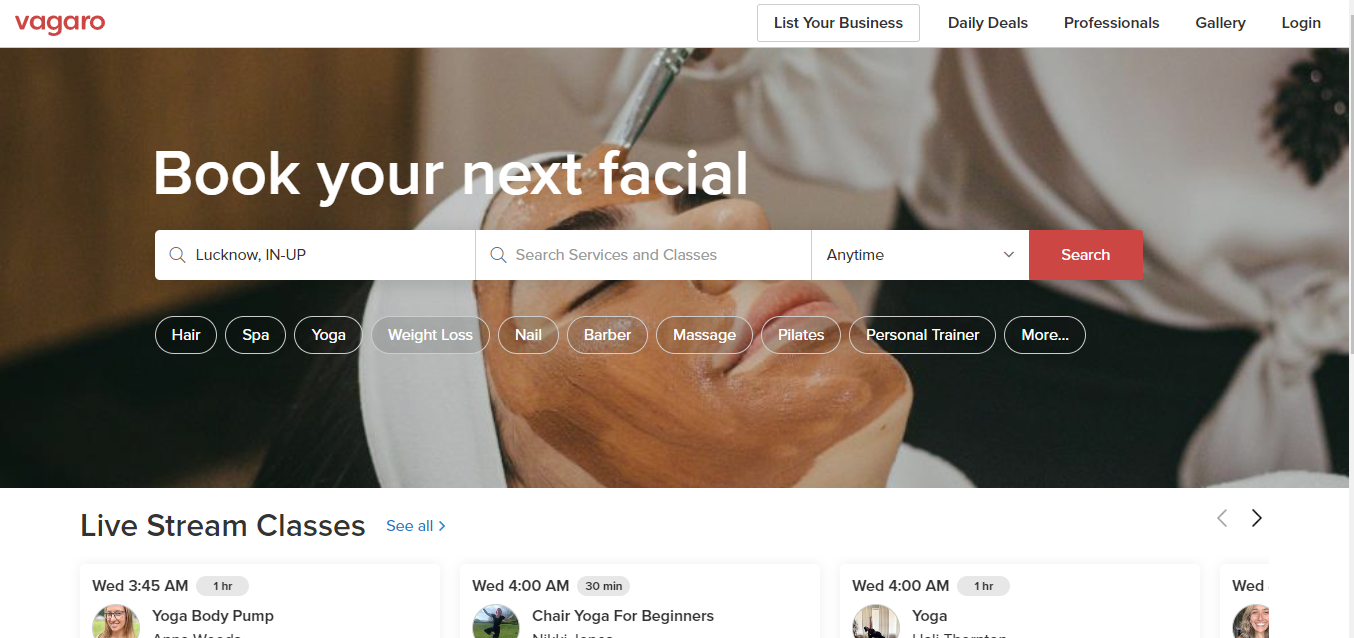
Vagaro built its reputation as close to a complete package: scheduling, point of sale, client management, and marketing automation all live under one login, which cuts down on the number of separate tools a salon has to juggle. Its email and SMS marketing tools are genuinely competitive, and the built-in marketplace, where consumers can discover and book local salons directly through Vagaro’s own app, gives smaller businesses a discovery channel they wouldn’t otherwise have without their own marketing spend.
The tradeoff of an all-in-one platform is that it can feel like more software than a very small operation needs, and the learning curve for staff reflects that breadth. For a growing salon that wants one system rather than five disconnected tools, that breadth is the selling point rather than a downside.
2. Fresha: The Commission-Free Booking Platform
Fresha flips the standard pricing model: no subscription fee for the core booking, client management, and payment processing tools, with revenue coming instead from a small commission on transactions and optional paid add-ons for marketing features. For a new or budget-conscious salon, that structure means the software cost scales down naturally during slow periods rather than sitting as a fixed expense regardless of how busy the shop is.
Its mobile app is genuinely well built for managing a day’s schedule on the go, and the built-in marketplace functions similarly to Vagaro’s, giving salons a discovery channel beyond their own marketing. The commission structure is worth running the numbers on carefully for a high-volume shop, since a percentage of every transaction can end up costing more than a flat subscription once revenue climbs past a certain point.
3. Mindbody: Best for Wellness and Fitness Crossover
Mindbody grew up serving fitness studios and wellness centers before expanding into salon and spa territory, and that heritage shows in how well it handles class scheduling, membership management, and broader wellness offerings alongside standard salon services. For a spa that also runs yoga classes, wellness workshops, or membership-based access to treatments, Mindbody’s feature set maps onto that hybrid business model more naturally than platforms built purely around individual appointment booking.
Its AI-driven business insights and reporting tools help owners spot trends, like which services or staff are driving the most repeat bookings, without manually cross-referencing spreadsheets. Mindbody’s own consumer app also gives businesses exposure to a wellness-focused audience actively searching for exactly this kind of service.
4. GlossGenius: Built for Independent Beauty Professionals
GlossGenius targets a specific and underserved segment well: independent stylists, estheticians, and small studio owners who want their booking page and brand to look genuinely polished without hiring a designer. Its booking pages are noticeably more visually refined out of the box than most competitors, and the branding customization options let a solo professional present a cohesive, premium-feeling client experience.
Automated marketing tools and secure payment processing round out the package, and the mobile experience is built with a single-operator workflow in mind rather than a large multi-staff calendar. For an independent professional building a personal brand, that focus is exactly the point; for a salon managing a dozen stylists, it’s likely more limited than what’s actually needed.
5. Booker by Mindbody: Built for Scaling Businesses
Booker, part of the Mindbody family, sits a step up from a basic scheduler with advanced booking management, marketing automation, and business analytics aimed at salons in active growth mode. Loyalty programs, memberships, and gift card functionality are all built in natively rather than bolted on, which matters for a business trying to build recurring revenue rather than one-off visits.
Its connection to the broader Mindbody marketplace adds an extra discovery channel on top of the platform’s own features, which can meaningfully help a growing salon’s visibility without a proportional increase in marketing spend.
6. Phorest: Growth and Retention-Focused
Phorest leans hard into the retention side of the business, automated appointment reminders, online booking, and a genuinely capable CRM system built around understanding client visit patterns and re-engaging clients who’ve gone quiet. Its built-in reputation management tools, which help salons systematically collect and showcase positive reviews, address a marketing task that many salons otherwise handle inconsistently or not at all.
Social media integration rounds out its marketing toolkit, letting campaigns run directly from client data already stored in the platform rather than requiring a separate marketing tool synced manually.
7. Square Appointments: Best for Small, Budget-Conscious Salons
Square Appointments benefits from Square’s existing reputation in small business payment processing, and for a salon already using Square hardware or accepting Square payments elsewhere, the two connect with very little setup. Its free tier covers genuinely useful booking software, payment processing, and automated reminders, making it one of the lowest-barrier entry points on this list for a small or newly opened salon.
Recurring appointment setup and staff schedule management round out the core feature set, and because it’s built on the same Square account, a salon that later adds retail sales or other Square products gets one unified reporting view across everything.
8. Salon Iris: Feature-Rich and Established
Salon Iris covers a genuinely comprehensive range of operational needs beyond booking: payroll management and inventory tracking sit alongside appointment scheduling, which reduces the number of separate systems a salon needs to reconcile at the end of each month. It’s built to flex across salon sizes rather than targeting one specific segment.
Its reporting tools are a particular strength, giving owners a clearer view of business performance than more marketing-focused competitors typically offer, and its mobile app extends that management capability outside the salon itself.
9. Zenoti: Best for Enterprise and Multi-Location Spas
Zenoti is built for scale in a way the rest of this list mostly isn’t, advanced scheduling, revenue management, and marketing automation designed specifically to work across multiple locations under centralized reporting. Large spa chains and franchise operations are its core audience, and its feature depth reflects that.
AI-powered analytics help multi-location operators spot underperforming locations or services faster than manual reporting would, and its broad third-party integration support makes it a realistic fit for businesses with existing enterprise software already in place. For a single-location salon, Zenoti is likely more platform than necessary; for a regional spa group, it’s built for exactly that scale.
10. Boulevard: The Premium, Design-Forward Choice
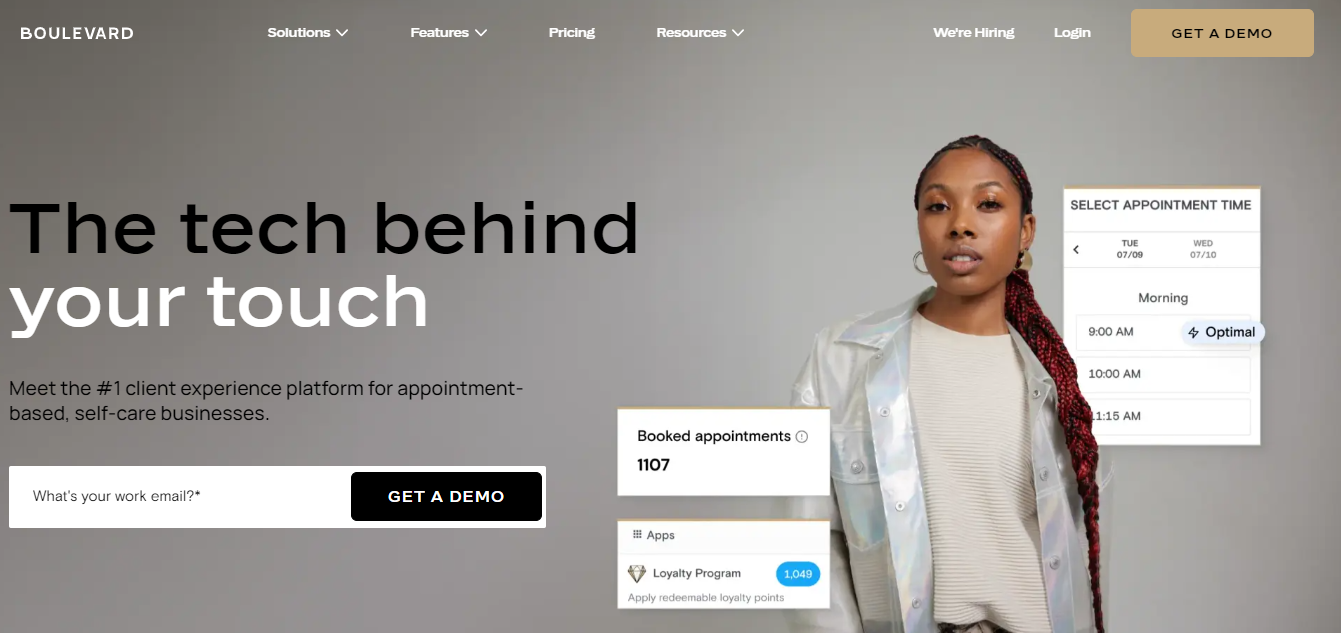
Boulevard positions itself deliberately at the premium end of the market, and the product design backs that positioning up: intelligent scheduling automation paired with a genuinely polished client-facing booking experience that upscale salons rely on to reinforce their brand at every touchpoint, not just in the treatment room.
Personalized bookings, a fast checkout, and capable marketing tools give clients a VIP-feeling experience end to end, which is exactly what premium salon brands need from their software, since a clunky booking flow undercuts a luxury brand faster than almost anything else in the client journey.

What Migrating Actually Involves
Switching platforms is more than flipping a login. Most competitors offer some form of data import for client records and appointment history, but the completeness of that import varies significantly, and it’s worth confirming exactly what transfers automatically versus what needs manual re-entry before committing to a switch. Budget real time for staff retraining too: even an intuitive new platform requires front-desk staff to relearn muscle memory built up over months or years on the old system, and that adjustment period is worth planning around a slower season rather than your busiest week.
Running the new platform in parallel with the old one for a short overlap period, even just a week or two, catches workflow gaps before they become client-facing problems. It’s a small amount of extra administrative overhead that prevents a much bigger headache if the new system handles a specific scenario, split payments, package redemptions, multi-staff bookings, differently than expected.
Reading Pricing Models Correctly
The platforms above split roughly into three pricing approaches, and confusing them leads to bad comparisons. Flat subscription platforms, Vagaro, Mindbody, Booker, Phorest, Salon Iris, Zenoti, and Boulevard among them, charge a predictable monthly fee regardless of how many appointments you book that month, which makes budgeting simple but means a slow month still carries the full software cost. Commission-based platforms like Fresha take a cut of each transaction instead, which scales naturally with revenue but can end up costing more at high volume than a flat fee would have. Hybrid models, Square Appointments among them, blend a free or low-cost core tier with transaction fees on payment processing specifically.
Before comparing sticker prices, estimate your actual monthly booking volume and run the math both ways. A commission model that looks cheap at a glance can quietly cost more than a subscription once a salon is fully booked most weeks, and the reverse is true for a seasonal or lower-volume business where a flat subscription sits idle during slow stretches.
Don’t Skip the Trial Period
Every platform on this list offers some form of free trial or live demo, and skipping that step to save a week is one of the more common regrets salon owners report after switching. A demo environment rarely surfaces the actual friction points: how the booking flow feels with your real service menu loaded, whether your specific payment processor integrates as smoothly as advertised, or how staff react to the new interface during an actual busy shift rather than a quiet test run.
Run the trial with real staff, real client bookings where possible, and your actual service list rather than default demo data. The platforms that look identical in a five-minute sales pitch often diverge sharply once real day-to-day friction shows up, and that gap is exactly what a proper trial period is meant to surface before you commit.
Frequently Asked Questions
Will switching software mean losing my existing client history?
Not necessarily, though the completeness of migration varies by platform. Confirm exactly what data transfers, client contact info, appointment history, purchase history, before committing, and export a full backup from your current system regardless.
Are commission-based platforms like Fresha actually cheaper than subscription models?
It depends on volume. For a lower-volume or newer business, commission-based pricing often costs less than a flat subscription. For a high-volume, established salon, the percentage taken on every transaction can add up to more than a fixed monthly fee would have.
Does a bigger feature list mean a better fit?
Not automatically. A platform like Zenoti offers more depth than most single-location salons will ever use, while a lighter platform like Fresha or Square Appointments may serve a small shop better precisely because there’s less complexity for staff to learn.
How long does a typical migration take?
Plan for two to four weeks for a single-location salon, covering data export, import verification, staff training, and a short parallel-run period. Multi-location businesses should budget longer, since staff training and data verification scale with the number of sites involved.
A Note on Staff Buy-In
The best platform on paper still fails if the people using it every day resent it. Involve senior stylists or front-desk staff in the trial process rather than presenting a decision already made, since they’re the ones who’ll notice friction points an owner comparing feature lists might miss entirely. A booking flow that takes an extra fifteen seconds per client sounds trivial until it’s multiplied across a busy Saturday with a full column of appointments and a line at the front desk.
Staff resistance to a new system is usually less about the software itself and more about the disruption of relearning a workflow that already works well enough. Acknowledging that tradeoff honestly, and giving staff a real voice in the choice, tends to produce a smoother transition than announcing a switch after the decision is already final.
Finding the Right Fit for Your Business
The right salon or spa platform depends on where your business actually sits, not where the marketing copy assumes it sits. A solo stylist building a personal brand has different needs than a five-chair salon focused on retention, which has different needs again from a regional spa chain managing centralized reporting across locations. Match the platform to that reality rather than the feature list that sounds most impressive.
Take advantage of free trials and demos before committing to any of these ten. A platform that looks great in a sales demo can still feel wrong once your actual staff are using it during a real Saturday rush, and that’s the test that matters more than any comparison chart, including this one.
Interesting Reads:
15 Best CRM Tools for Freelancers and Solo Digital Sellers in 2026