The 10 Best Virtual Event Platforms for Digital Engagement in 2025


Remote work and global audiences turned virtual events from a pandemic-era workaround into a permanent part of how businesses run conferences, webinars, and product launches. The platforms behind those events have matured accordingly: better streaming quality, AI-assisted networking, and analytics that go well beyond a simple attendee count.
Picking the right one in 2025 means looking past the marketing copy and checking what’s actually still operating at full strength, since this category has seen real consolidation since its pandemic-era peak. This guide covers ten platforms genuinely worth evaluating, along with one correction to a name that shows up on a lot of outdated “best of” lists.

A Correction Worth Making Upfront: Hopin
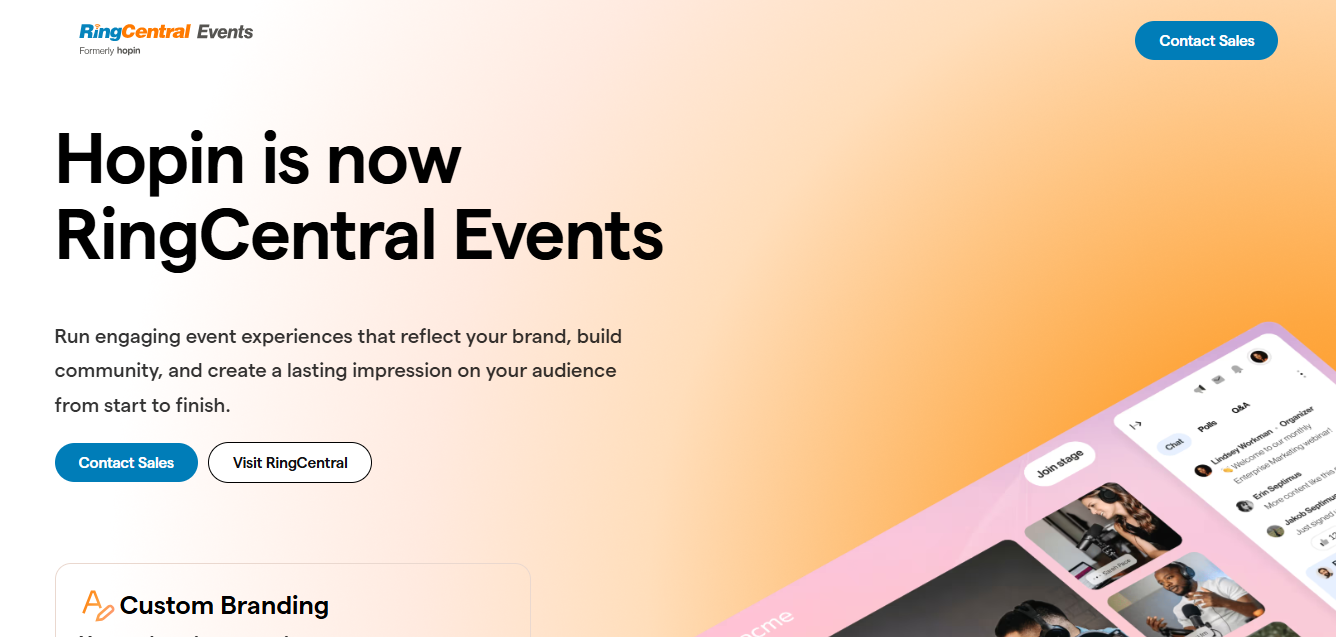
A lot of older “best virtual event platforms” articles still list Hopin at or near the top. That’s outdated. Hopin, once valued at billions of dollars during the pandemic-era virtual events boom, sold its core events business to RingCentral in 2023 as demand for virtual-only events dropped sharply once in-person conferences returned. If you’re researching platforms today, don’t budget time evaluating Hopin as a standalone product, its events functionality now lives inside RingCentral’s events offering, which is a different buying decision than choosing an independent platform. We’ve replaced it below with Bizzabo, a platform that’s held up as a genuine all-in-one option through the same market shift Hopin didn’t survive independently.
What Virtual Event Platforms Actually Provide
These platforms handle the full mechanics of an online event: live streaming, breakout rooms, interactive Q&A, and networking tools that try to replicate the useful parts of an in-person conference (running into the right person, browsing an exhibitor hall, joining a spontaneous conversation) in a digital format. The more advanced ones layer AI-driven matchmaking, gamification, and real-time analytics on top, which is what separates a genuinely engaging virtual event from a webinar with a chat box bolted on.
Why This Category Still Matters in 2025
Even with in-person events back at full capacity, hybrid formats and fully remote events haven’t gone away. Global audiences, budget constraints on travel, and the ability to record and repurpose content for on-demand viewing all keep virtual and hybrid event platforms relevant. The platforms that survived the post-pandemic demand correction tend to be the ones that built genuinely useful tools rather than just riding a temporary spike in bookings.
How to Choose the Right Platform
Start with your event’s actual shape. A large conference with an exhibitor hall needs different tools than a focused workshop built around small-group discussion. Check streaming quality and reliability first, since a platform that looks great in a sales demo but buffers during a live keynote costs you credibility fast. Then evaluate networking tools, customization for branding consistency, and security, particularly if the event handles any payment or sensitive attendee data. Budget realistically too: enterprise-tier platforms price by attendee volume, and costs scale quickly for anything beyond a few hundred registrants.
10 Virtual Event Platforms Worth Evaluating in 2025
1. Bizzabo: The All-in-One Hybrid Event Platform
Bizzabo positions itself as a full event lifecycle platform: registration, virtual and hybrid streaming, networking, and post-event analytics in one system rather than stitched-together tools. It supports large-scale conferences with breakout sessions and interactive elements, and its branding customization keeps event pages consistent with an organizer’s identity rather than looking like a generic template. Attendee analytics give organizers a clear read on what actually drove engagement, useful for justifying the event budget to stakeholders afterward.
2. Airmeet: Engaging Virtual and Hybrid Experiences
Airmeet is built around social lounges, speed networking, and interactive polls, all aimed at recreating the spontaneous connection that happens in hallway conversations at physical conferences. Its AI-driven matchmaking suggests connections between attendees based on shared interests, which meaningfully increases the odds of a useful introduction over a static attendee list. Integration with common marketing tools also makes it easier to fold event data into a broader campaign strategy.
3. Zoom Events
Zoom’s events product builds on the video infrastructure most attendees already know how to use, which lowers the friction of getting people to actually show up and participate. It includes customizable event hubs, ticketing, and attendee tracking. Zoom has reorganized its events and webinar offerings more than once as the market shifted, so confirm current plan structure and feature availability directly on Zoom’s site before budgeting, since packaging details here change more frequently than the underlying reliability of the platform itself.
4. vFairs: Immersive Virtual Exhibitions
vFairs specializes in virtual expos, trade shows, and career fairs, with 3D virtual environments and interactive booths that give exhibitors something closer to an actual trade show floor than a static webinar room. Detailed attendee analytics track which booths and sessions actually pulled engagement, which matters directly to sponsors and exhibitors justifying their spend on the event.
5. Remo: Spatial Networking
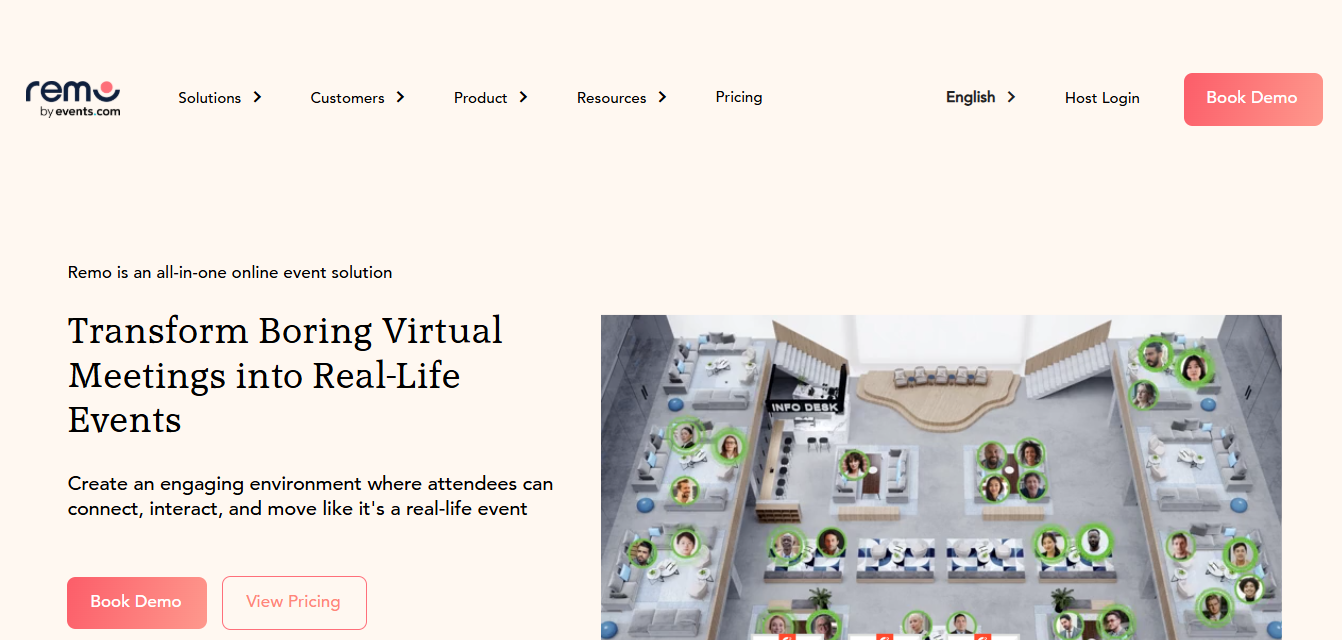
Remo takes a distinctly different approach from webinar-style platforms: attendees move between virtual tables and join conversations directly, which feels closer to walking around an in-person mixer than sitting through a broadcast. Live presentations, Q&A, and interactive whiteboards round out the feature set. It’s a strong fit specifically for workshops, small-group networking events, and team sessions where conversation matters more than a polished keynote stage.
6. Webex Events (formerly Socio)
Webex Events, rebranded from Socio after Cisco’s acquisition, is built for scalability and security, with end-to-end encryption that matters for corporate events handling sensitive information. It supports large conferences and summits with live polling, gamification, and AI-assisted networking layered on top of a genuinely enterprise-grade security foundation.
7. ON24: Webinars and Digital Experience at Scale
ON24 focuses specifically on high-quality webinars and digital content experiences rather than trying to replicate a full trade show floor. Interactive content hubs, personalized attendee journeys, and detailed audience analytics let organizers understand not just who showed up but what they actually engaged with. Its ability to package events into on-demand content extends the value of a single live session well past the original date.
Also read: Running a Free Course Preview Webinar Without an Eventbrite Fee
8. BigMarker: Robust Virtual Conferences
BigMarker handles large-scale virtual conferences with HD streaming, customizable branding, and automation tools that reduce the manual overhead of running a multi-day event. Integration with marketing automation and CRM systems means event data (registrations, attendance, engagement) flows directly into lead generation workflows rather than sitting in a separate reporting silo someone has to manually reconcile.
9. Brella: AI-Powered Matchmaking
Brella is built specifically around networking as the core value proposition, with AI-driven matchmaking connecting attendees based on shared interests and integrated scheduling for booking meetings during the event. For conferences and trade shows where the real value attendees get is who they meet rather than what they watch, Brella’s matchmaking focus is a genuine differentiator over content-first platforms.
10. Hubilo: Personalization-Driven Engagement
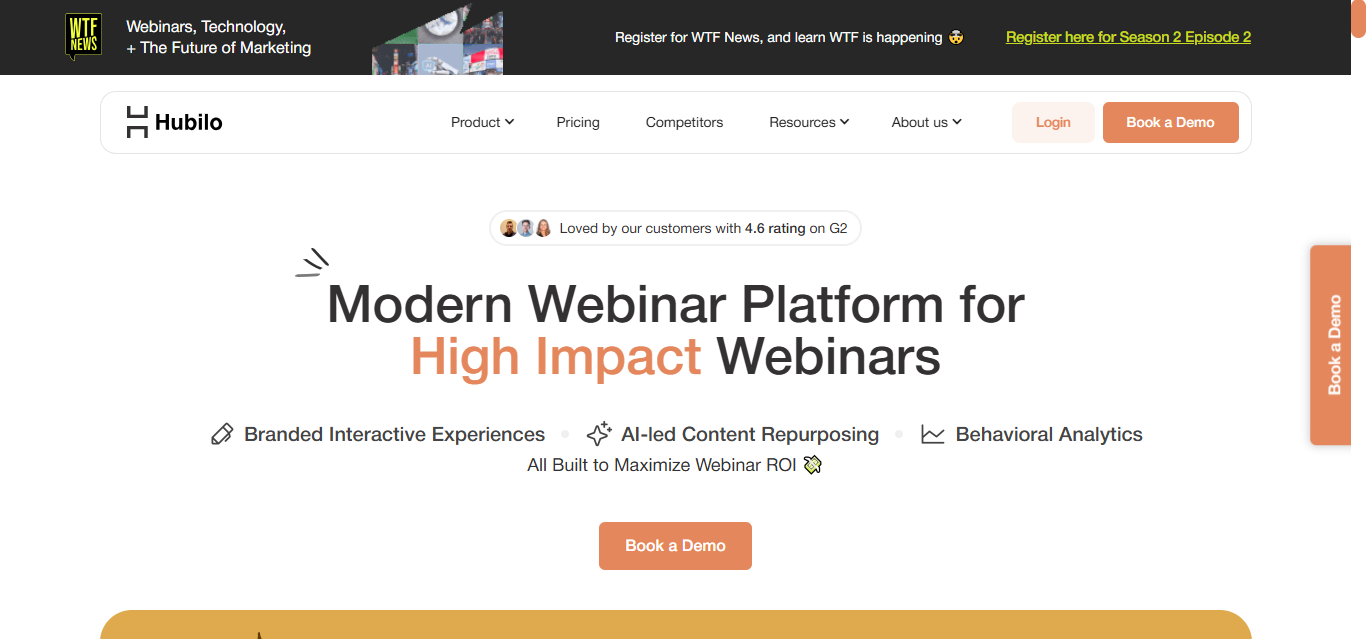
Hubilo prioritizes personalized attendee experiences: gamification, interactive sessions, and AI-driven content recommendations that adjust based on what each attendee has engaged with so far. Real-time engagement analytics help organizers spot which sessions are landing and which aren’t, while the event is still happening rather than only in a post-mortem report.

Quick Comparison
| Platform | Core Strength | Best For |
|---|---|---|
| Bizzabo | Full event lifecycle, hybrid support | Large conferences, complex agendas |
| Airmeet | Social networking, AI matchmaking | Community-driven virtual events |
| Zoom Events | Familiar infrastructure, low attendee friction | Businesses already using Zoom |
| vFairs | 3D exhibition environments | Trade shows, career fairs |
| Remo | Spatial table-based networking | Workshops, small-group events |
| Webex Events | Enterprise security | Corporate conferences, sensitive data |
| ON24 | Webinar depth, on-demand content | Content-first digital experiences |
| BigMarker | CRM/marketing automation integration | Lead-gen-focused conferences |
| Brella | Networking-first matchmaking | Trade shows, B2B networking events |
| Hubilo | Personalized engagement, live analytics | Attendee-experience-focused events |
Related reading: Turning a Product Demo Into a Bookable Event and 10 Secrets for Creating a Thriving Community in 2025
Budgeting for the Right Platform Tier
Enterprise event platforms price primarily on attendee volume and feature tier, and costs scale faster than most first-time organizers expect once you pass a few hundred registrants. Before committing budget, get a quote scoped to your actual expected attendance rather than a generic starting price, and ask specifically what happens if registration exceeds your estimate mid-campaign, some platforms charge overage fees that catch organizers off guard close to the event date. For a smaller event (under 100 attendees, single session, no exhibitor hall), a lighter tool built around webinars may cost a fraction of what a full conference platform charges, without sacrificing anything your event actually needs.
Also factor in the internal time cost of learning a new platform, not just the license fee. A team already fluent in Zoom’s interface may get more real value from Zoom Events despite a smaller feature set than they would from a more powerful but unfamiliar platform that eats up staff hours during setup week. Raw feature count matters less than how quickly your specific team can execute confidently on the platform you choose.
Matching Event Format to Platform Strength
The single biggest planning mistake is picking a platform first and forcing the event format to fit it. Working backward from the format usually gets a better result:
- Large conference with multiple tracks and an exhibitor hall. Bizzabo or vFairs handle the complexity of parallel sessions and sponsor booths without duct-taping together separate tools for each piece.
- Networking-first event where the content is secondary. Brella and Remo both prioritize getting the right people talking to each other over polished production value.
- Recurring webinar series building toward a product launch or course sale. ON24’s on-demand packaging extends a single session’s value across weeks rather than treating it as a one-time broadcast.
- Corporate event handling sensitive internal information. Webex Events’ security posture, backed by Cisco’s infrastructure, is built specifically for that requirement in a way a networking-focused platform generally isn’t.
- Hybrid event with a physical venue component. Airmeet and Bizzabo both support that dual format, but confirm AV integration requirements with your venue’s technical team well before the event date, not the week of.
What Changed in This Market Since the Pandemic Peak
Virtual event platforms raised enormous funding rounds in 2020 and 2021 as every conference, trade show, and corporate gathering moved online overnight. That demand was never going to stay at pandemic-era levels once in-person events resumed, and the market has consolidated accordingly. Hopin’s sale to RingCentral is the most visible example, but it’s not an isolated case; several smaller platforms from that boom either shut down, got acquired, or pivoted their core product entirely.
What that means practically for anyone choosing a platform today: check recent update history, read the vendor’s own public statements about product direction, and be cautious about locking into a multi-year contract with a platform whose growth story was built entirely on 2020-2021 momentum that’s no longer there. The platforms covered above have generally shown they can hold market position past that initial surge, which is a meaningfully different signal than a platform that was simply riding the wave.
Common Mistakes When Choosing a Virtual Event Platform
- Picking based on a feature list instead of a live demo under real conditions. Ask to test the platform with a realistic attendee count before your actual event, not just a two-person sales call.
- Underestimating bandwidth and support needs for the live day. Confirm what technical support looks like during your event window specifically, not just during business hours in a different time zone.
- Ignoring what happens to recordings and data after the event. Some platforms make exporting attendee data and session recordings easy; others make it deliberately difficult to encourage renewal. Check this before signing, not after.
- Choosing a platform that’s clearly winding down. As the Hopin situation shows, this market has consolidated. Check a vendor’s recent update history and public roadmap before committing to a multi-event contract.
Frequently Asked Questions
What happened to Hopin?
Hopin sold its core events business to RingCentral in 2023 after demand for standalone virtual event platforms dropped once in-person conferences resumed at scale. If you see Hopin recommended in an older article, treat that as outdated and evaluate RingCentral’s current events offering or one of the platforms above instead.
Do I need a full conference platform for a single webinar?
No. A single-session webinar doesn’t need exhibitor halls or spatial networking tables. ON24 or a dedicated webinar tool covers that use case at a fraction of the cost and setup time of a full conference platform.
How important is AI matchmaking for a smaller event?
Less important at small scale, where attendees can reasonably browse a full attendee list themselves. AI matchmaking earns its value at larger events, hundreds or thousands of attendees, where manual browsing becomes impractical and a good match genuinely wouldn’t happen without algorithmic help.
Can these platforms handle a hybrid event with both in-person and remote attendees?
Several can, Bizzabo, Airmeet, and Webex Events all support hybrid formats specifically. Confirm the platform’s in-venue streaming and AV integration requirements early, since hybrid setups need coordination with your physical venue’s technical team that a purely virtual event doesn’t.
How far in advance should I book a platform before a major event?
For anything beyond a simple webinar, four to six weeks minimum gives you time to build out event branding, test the registration flow, and run a technical rehearsal with speakers. Large conferences with exhibitor halls or multi-track agendas benefit from starting even earlier, since sponsor onboarding and speaker coordination typically take longer than the platform setup itself.
What should I do if my current platform announces it’s shutting down or being acquired?
Start migration planning immediately rather than waiting for a forced deadline. Export all attendee data, session recordings, and any custom branding assets right away, since acquired platforms sometimes restrict data access during the transition. Line up a replacement platform with enough runway to test it on a smaller event before your next major one depends on it working correctly.
Post-Event Follow-Through Matters as Much as the Live Day
A polished live event that generates no usable data or follow-up content is a missed opportunity most organizers only recognize after the fact. Before the event, decide what happens to recordings, whether they’re gated behind a lead-capture form, published openly for SEO value, or repurposed into shorter clips for social promotion. Attendee engagement data (which sessions ran long past their scheduled time, which sponsor booths got real traffic, which speakers generated the most Q&A activity) is worth reviewing within a week while the event is still fresh, not months later when the team has moved on to the next project.
Platforms with strong analytics, ON24, Hubilo, and BigMarker in particular, make this follow-through easier by surfacing the data automatically rather than requiring manual export and analysis. That’s a real factor to weigh against a platform’s live-day feature set, since the value of an event doesn’t end when the last session closes.
Choosing With the Current Market in Mind
Virtual and hybrid events remain a real part of how organizations connect with distributed audiences, but the platform landscape has genuinely shifted since the pandemic-era boom. Match the platform to your event’s actual shape and budget, verify a vendor is still actively investing in the product rather than winding it down, and test with a realistic attendee load before the day that actually matters. The platforms that survived the market correction earned that by building tools organizers keep choosing, not just riding a temporary spike in demand.
Interesting Reads
10 Secrets for Creating a Thriving Community in 2025