The 3 Best Wild Apricot Alternatives for 2025


Membership management is a critical part of running a successful organization, whether it’s a nonprofit, a professional association, or a local club. Choosing the right software can make the difference between a smooth-running back office and a staff that spends half its week chasing renewal emails by hand. Wild Apricot has been a popular choice for years, but a growing number of organizations are looking for alternatives that offer more flexibility, better pricing, and features that keep pace with what members expect from an online experience in 2025.
Below are three of the strongest Wild Apricot alternatives worth evaluating this year, along with what actually separates them from Wild Apricot rather than just a features checklist. Whether the priority is deeper reporting, stronger fundraising tools, or simply a lower monthly bill, one of these three is likely to fit better than sticking with the status quo.

What is Wild Apricot, and Why Look for Alternatives?
Wild Apricot has long been a go-to membership management platform, helping nonprofits, clubs, and associations run event management, member directories, and automated dues billing from one system. It earned that reputation honestly, but the product hasn’t evolved as fast as some competitors that launched more recently with modern architecture behind them.
The recurring complaints from long-time users center on pricing that climbs quickly as a membership list grows, limited customization on the public-facing website builder, and occasional glitches that support tickets take days to resolve. None of that makes Wild Apricot a bad product, but it does explain why organizations comparing it against newer platforms in 2025 increasingly walk away from the comparison.
Why You Need a Wild Apricot Alternative in 2025
Membership software has to keep pace with what both staff and members expect now: more automation, cleaner integrations with the other tools an organization already runs, and interfaces that don’t feel like they were designed a decade ago. Wild Apricot’s tiered pricing structure and comparatively thin reporting can genuinely hold back an organization that’s trying to grow past a few hundred members without adding headcount.
Switching isn’t just about escaping frustration with the current tool, either. The right alternative should scale with the organization, support deeper customization of member-facing pages, and come with support that responds in hours rather than days when something breaks during a renewal cycle. The three platforms below each solve a different version of that problem.
How to Choose the Best Alternative
Selecting the right membership management software comes down to a handful of practical questions rather than a long feature comparison chart. Does the platform integrate with the accounting and email tools the organization already relies on? Is there a mobile-friendly member portal, or does everything still route through a desktop-only dashboard? And when something goes wrong at 4pm on a Friday before a big event, how fast does support actually respond, not how fast their marketing page claims they respond?
Data security deserves equal weight in that evaluation. Member records, payment information, and donor history are exactly the kind of data a breach makes expensive and embarrassing, so ask any vendor directly about encryption standards and where data is hosted before signing a contract. Scalability matters just as much, since a platform that works well for two hundred members can buckle under poor performance or surprise pricing once a club or association triples in size.
It’s worth asking each vendor for references from an organization similar in size and mission to your own, rather than relying on generic case studies posted on their marketing site. A chamber of commerce with three thousand business members has very different needs than a hobbyist club with eighty members, and a reference customer that matches that profile will tell you more in fifteen minutes than another hour of feature comparisons. With those questions in mind, here’s how the three strongest alternatives actually compare.
1. MemberClicks: A Robust Solution for Associations
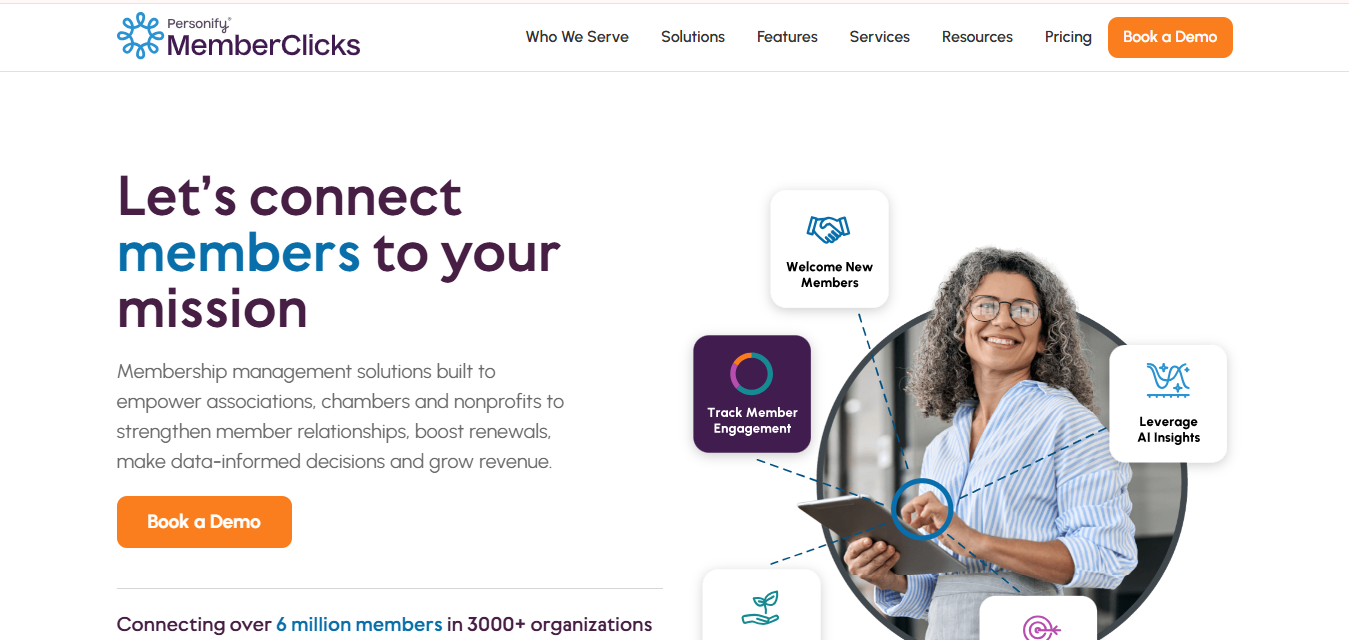
MemberClicks is a membership management platform built specifically for associations, chambers of commerce, and other professional membership groups rather than general-purpose nonprofits. It covers event registration, automated billing, and a customizable website builder that doesn’t require a developer to maintain.
One of its stronger points is integration with learning management systems, which makes it a natural fit for associations that offer continuing education credits or certification programs to members. Beyond features, MemberClicks gets consistently good marks for customer support responsiveness, which matters more than most feature lists once an organization is actually running on the platform day to day.
The interface leans practical over flashy, which staff without a technical background tend to appreciate once they’re the ones logging in daily to manage communications, track engagement, and pull reports for a board meeting. For associations specifically, as opposed to general nonprofits or clubs, MemberClicks is usually the first alternative worth trialing.
Its member directory also supports advanced search and filtering that goes beyond Wild Apricot’s more basic listing, letting members find each other by industry, region, or credential rather than scrolling an alphabetical list. For associations built around professional networking, that searchability alone can noticeably increase how often members log in between renewal periods.
2. Neon One: A Feature-Rich Nonprofit Solution
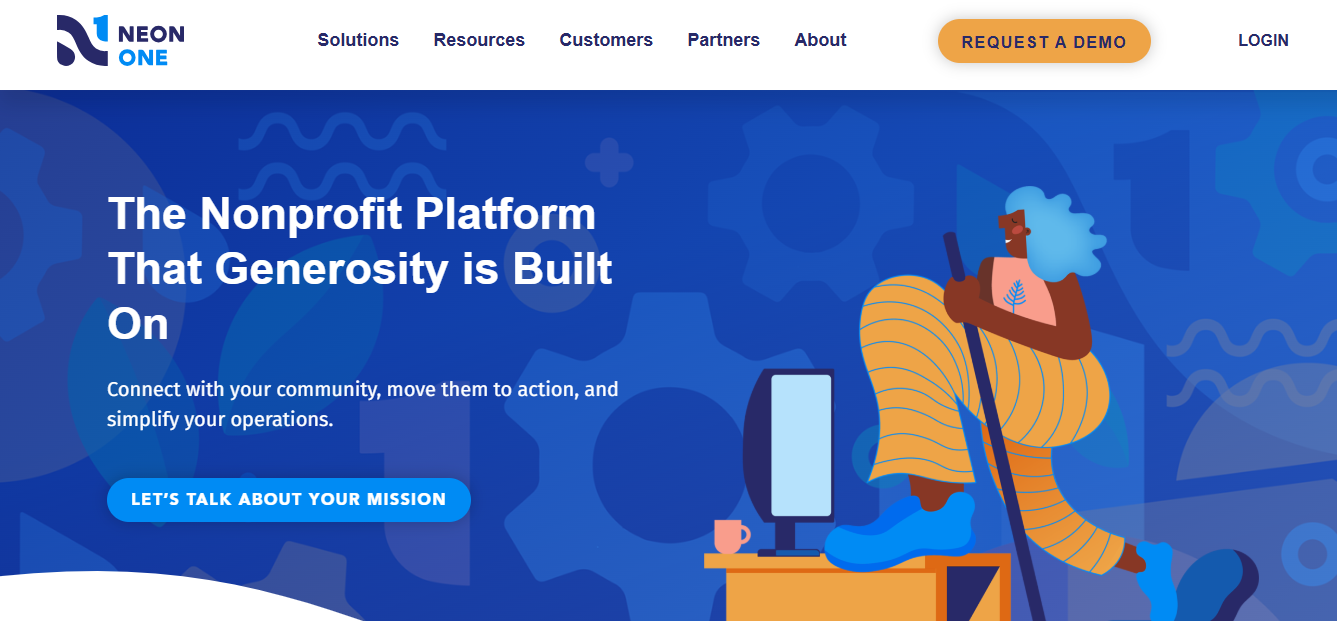
Neon One is built for nonprofits and community-based organizations that need fundraising and membership management working together rather than as two separate systems. It handles fundraising campaigns, donor relationships, and membership engagement from a single CRM, with automation that reduces the manual work of moving a donor from a one-time gift to a recurring member.
Its analytics and reporting go noticeably deeper than what Wild Apricot offers, tracking member behavior, donation trends, and event outcomes with enough detail to actually inform strategy rather than just filling a dashboard with numbers nobody looks at. That data-driven layer is the main reason development directors specifically request Neon One during a platform evaluation.
It also integrates cleanly with QuickBooks and Mailchimp, which matters more than it sounds like for any nonprofit trying to keep financial reporting and donor communications in sync without a staff member manually reconciling two systems every month. Organizations that lean heavily on donations alongside membership dues get the most value here.
Where Neon One asks more of a new user is the learning curve. Because it’s built to handle both fundraising and membership as connected disciplines rather than two separate silos, staff coming from a simpler tool like Wild Apricot should expect a longer onboarding period before the full system clicks. Organizations that invest in that ramp-up time tend to report it paying off within the first full fundraising cycle.
3. GrowthZone: Built for Chambers and Associations at Scale
GrowthZone is association management software aimed at chambers of commerce, trade associations, and membership organizations that have outgrown a simpler tool. It bundles membership tracking, event management, and email marketing with a level of workflow automation that Wild Apricot doesn’t match at a comparable price point.
What sets GrowthZone apart is its background check: it was built by people who ran chambers of commerce themselves, and that shows in features like automated renewal sequences, committee management tools, and a member engagement scoring system that flags who’s drifting toward non-renewal before it happens. That’s a different level of purpose-built than a generic membership tool retrofitted for associations.
GrowthZone’s pricing sits closer to Wild Apricot’s than to enterprise-tier platforms, making it a realistic option for a mid-sized chamber or association rather than only the largest organizations with dedicated IT budgets. Migration support during onboarding is also more hands-on than what smaller vendors typically offer, which matters if the existing member database has years of inconsistent data entry to clean up first.
The mobile app is another point in GrowthZone’s favor, giving board members and staff a way to check event registrations, approve new member applications, or send a quick announcement without being tied to a desktop. For volunteer-run associations where nobody is sitting at a computer full time, that mobile access ends up mattering more day to day than a lot of the back-end reporting features vendors tend to lead with in a sales pitch.
How Pricing Actually Compares
None of these three vendors publish a simple flat-rate price list, and that’s typical for the category rather than a red flag specific to any one of them. Pricing generally scales with membership count, transaction volume, or both, so the number a five-person book club sees during a demo call will look nothing like what a five-thousand-member trade association gets quoted.
Broadly speaking, GrowthZone tends to land closest to Wild Apricot’s own pricing tiers, which makes sense given the overlapping target market of chambers and mid-sized associations. MemberClicks usually runs a bit higher, reflecting its focus on associations that need the education and certification integrations rather than a bare-bones member directory. Neon One’s pricing depends heavily on whether an organization needs the full fundraising CRM or a lighter membership-only tier, so the quote can vary more than the other two depending on which modules actually get turned on. In every case, ask for a quote based on the organization’s real membership count and expected event volume rather than trusting a generic “starting at” number on a pricing page.
Mistakes Organizations Make When Comparing Platforms
The most common mistake is letting one enthusiastic board member’s demo experience drive the whole decision. A platform that looks great in a thirty-minute sales call can behave very differently once the actual membership coordinator is entering two hundred renewals by hand during a busy season. Get input from whoever will use the system daily, not just whoever sat in on the sales pitch.
Underestimating the data migration effort is another recurring problem. Organizations that have been on Wild Apricot for five or more years often have messier records than they realize, duplicate member entries, outdated payment information, event history scattered across different custom fields that changed meaning over time. Budgeting extra time for data cleanup before migration, rather than assuming the new platform’s import tool will sort everything out automatically, avoids a lot of frustration in the first month on a new system.
Finally, some organizations pick a platform based purely on price without accounting for the support quality that comes with it. A cheaper tool with slow support can end up costing more in staff hours spent working around problems than a slightly pricier platform with a support team that actually answers the phone during a live event crisis.
The Future of Membership Management Software
Membership platforms are moving toward more predictive tooling: flagging which members are likely to lapse before the renewal date passes, automating personalized outreach instead of a single generic renewal email, and surfacing engagement trends that used to require a staff member manually cross-referencing spreadsheets. MemberClicks, Neon One, and GrowthZone are all investing in this direction already, which is part of why they keep showing up in head-to-head comparisons against Wild Apricot.
None of that makes today’s decision less important, though. Picking a platform that’s actively investing in these capabilities now means the organization won’t be facing this same evaluation again in two years once the gap between “legacy” and “modern” membership software widens further.
Making the Switch: A Smooth Transition
Switching membership management software sounds daunting, but a methodical approach keeps it from turning into a mess. Start by exporting every essential data set from Wild Apricot, member records, event history, payment records, and confirming the export is complete and backed up before touching anything else. Skipping this step is the single most common reason organizations end up scrambling mid-migration.
From there, write down the must-have features for the new platform based on actual pain points, not a wish list, and test two or three finalists with real (not sample) data before signing anything. Training staff and members on the new system matters just as much as the technical migration. Most of the alternatives above offer onboarding support and video walkthroughs specifically to shorten that adjustment period, so use them rather than figuring it out through trial and error.
Frequently Asked Questions
How long does a typical migration from Wild Apricot take?
For a small to mid-sized organization with clean data, two to four weeks is realistic for a full migration including staff training. Larger associations with years of inconsistent record-keeping, duplicate entries, or multiple legacy systems feeding into the member database should plan for longer, sometimes two to three months, mostly spent on data cleanup rather than the platform setup itself.
Will members notice the switch, or does it happen behind the scenes?
Members will notice, since the login portal, renewal emails, and event registration pages all change appearance. A short heads-up email before the cutover, along with a simple guide for logging in on the new platform, prevents the support ticket spike that catches unprepared organizations off guard in the first week after launch.
Is it worth paying more for GrowthZone or Neon One instead of a cheaper generic tool?
It depends on whether the organization actually needs the specialized features those platforms are built around. A chamber of commerce running committee structures and renewal automation gets real value from GrowthZone’s purpose-built tools. A nonprofit doing minimal fundraising probably doesn’t need Neon One’s donor CRM depth and might be better served by a simpler, cheaper option instead.
Can these platforms run alongside a separate website, or do they require rebuilding the whole site?
All three can operate as an embedded member portal linked from an existing website rather than forcing a full rebuild, though each also offers its own website builder for organizations that want to consolidate everything in one place. Most associations that already have a website they like keep it and integrate the membership platform as a subdomain or embedded portal instead of starting from scratch.
What if the organization only has a handful of staff managing everything?
That’s actually the more common scenario across all three platforms, not the exception. MemberClicks and GrowthZone both built their onboarding processes around small staff teams at chambers and associations, and their automation features exist specifically to reduce the manual work a one- or two-person office would otherwise be stuck doing by hand every renewal cycle.

Bottom Line
Membership management software should simplify daily operations, strengthen engagement, and give staff data they can actually act on. Wild Apricot has been a solid choice for years, but each of these three alternatives now offers more value in a specific direction: MemberClicks for associations that need strong education and certification support, Neon One for nonprofits balancing fundraising with membership, and GrowthZone for chambers and associations that have outgrown a simpler tool.
Picking the right platform comes down to matching it to the organization’s actual size and mission rather than chasing whichever tool has the most features on paper. Whether the priority is customization, fundraising depth, or purpose-built chamber tools, one of these three alternatives should get an organization further than staying on Wild Apricot by default.
If there’s only time to trial one platform before making a decision, match it to what the organization actually is: an association running certification programs starts with MemberClicks, a nonprofit balancing donations and dues starts with Neon One, and a chamber of commerce managing committees and events starts with GrowthZone. Book a live demo with real questions ready rather than sitting through a generic sales pitch, and ask each vendor to walk through the exact workflow the current staff struggles with on Wild Apricot today.
Interesting Reads:
The 10 Best Virtual Event Platforms for Digital Engagement in 2025