

The Trust Gap in Digital Product Sales
Selling digital products comes with a unique challenge that physical product sellers rarely face: your buyers cannot touch, hold, or examine what they are purchasing before they pay. A customer buying a leather jacket can feel the material, check the stitching, and try it on. A customer buying your WordPress theme, online course, or design template has to trust that what they see on the sales page matches what they will actually receive.
This trust gap is the primary reason digital products have higher abandonment rates than physical goods. Buyers hesitate not because they doubt the value of the product category, but because they cannot verify the quality of your specific offering. They have been burned before by digital products that looked polished in marketing materials but turned out to be rushed, poorly structured, or incomplete.
Traditional marketing tactics try to bridge this gap with testimonials, feature lists, and money-back guarantees. These help, but they are all external signals. They tell buyers that other people trust you and that you are confident enough to offer refunds. What they do not do is show the actual substance behind the product.
Behind-the-scenes content changes the dynamic entirely. Instead of asking buyers to trust your marketing, you invite them to watch the work itself. They see the decisions you make, the details you obsess over, the iterations you go through. Trust is no longer an ask. It becomes a natural outcome of transparency.
Digital product sellers who consistently share process content report higher conversion rates, fewer refund requests, and stronger customer loyalty. The reason is straightforward: people who watched you build the product already know what they are getting. There are no surprises, no disappointments, and no buyer’s remorse.
Why “See How It’s Made” Converts Skeptics
The “see how it’s made” effect is well-documented in consumer psychology. Studies on the labor illusion show that people value products more when they can see the effort that went into creating them. A locksmith who opens your door in thirty seconds gets worse reviews than one who takes ten minutes, even though the faster locksmith is objectively more skilled. The visible effort changes the perception of value.
Digital products suffer acutely from invisible effort. Your buyers cannot see the hundreds of hours you spent coding, designing, recording, and testing. They see the finished product and compare it to its price tag without any context for the work involved. A $199 plugin feels expensive until you watch someone spend six weeks building, testing, and refining it.
Behind-the-scenes stories make that invisible effort visible. Each story is a window into a moment of creation: debugging a tricky function at midnight, redesigning a UI element for the fourth time, recording a course module and scrapping it because the audio was not clear enough. These moments humanize your product and anchor its perceived value to real work rather than abstract features.
The conversion impact is particularly strong for premium-priced digital products. If you are selling a $49 template pack, most buyers do not need much convincing. But if you are selling a $499 course or a $299 plugin suite, the price creates a psychological barrier that feature lists alone cannot overcome. Process content reduces that barrier by giving buyers evidence that the price reflects genuine effort and quality.
This principle applies whether you are selling online courses with EDD or distributing premium plugin licenses. The more your audience sees of the work behind the product, the more willing they are to pay for it.
Documenting Your Development Process in Story Format
The best behind-the-scenes content does not require a production team or elaborate planning. It requires a habit: capturing moments as they happen during your normal workflow and sharing them as short, casual stories.
Here is what effective process documentation looks like for different types of digital products:
For Plugin and Software Developers
- Code snapshots: A screenshot of your IDE with a caption explaining what you are working on and why it matters to end users
- Bug hunt stories: Show the process of finding and fixing a bug, from the error report to the working solution
- Testing footage: Quick clips or screenshots of your testing environment, showing how thoroughly you validate before release
- Architecture decisions: Brief explanations of why you chose one approach over another, framed in terms of user benefit
For Course Creators
- Recording setup: Show your recording environment, equipment, and the preparation that goes into each module
- Content planning: Share your outline or curriculum map, showing how carefully you have structured the learning path
- Edit process: Before-and-after clips showing how you refine rough recordings into polished lessons
- Research moments: Screenshots of resources you are studying to ensure your content is accurate and up-to-date
For Template and Design Product Creators
- Design iterations: Show version 1, version 5, and version 12 of a template to demonstrate the refinement process
- Inspiration sources: Share the mood boards, reference designs, and creative briefs that guide your work
- Detail close-ups: Zoom in on specific design decisions like typography choices, spacing adjustments, or color palette selections
- Cross-device testing: Show your templates rendering across different devices and screen sizes
The format for all of these is the same: a single image or short caption, published as a story. No editing, no production, no polish. The rawness is the point. It signals authenticity in a way that produced marketing content never can.
Design Decision Stories That Justify Premium Pricing
Every digital product contains hundreds of invisible decisions. The color you chose, the way you structured the navigation, the framework you selected, the edge case you accounted for. These decisions are invisible to buyers who only see the final product, but they are the difference between a $29 product and a $299 product.
Design decision stories surface these invisible choices and frame them as deliberate quality investments. Here is the pattern:
- Show the choice: “We could have done X, which would have been faster and cheaper”
- Explain why you chose differently: “Instead, we did Y because it gives you [specific benefit]”
- Show the result: A quick screenshot or demo of how Y works in practice
For example, a plugin developer might share a story showing two approaches to data handling. The caption explains: “The easy approach would load all data at once. We wrote a custom pagination system instead, so your site stays fast even with thousands of records.” The accompanying screenshot shows the performance difference.
This type of content does something no feature list can do: it shows buyers that you made their experience better at the cost of your own convenience. That is the definition of premium quality, and it justifies premium pricing in a way that feels earned rather than arbitrary.
Live Build Updates During Development Sprints
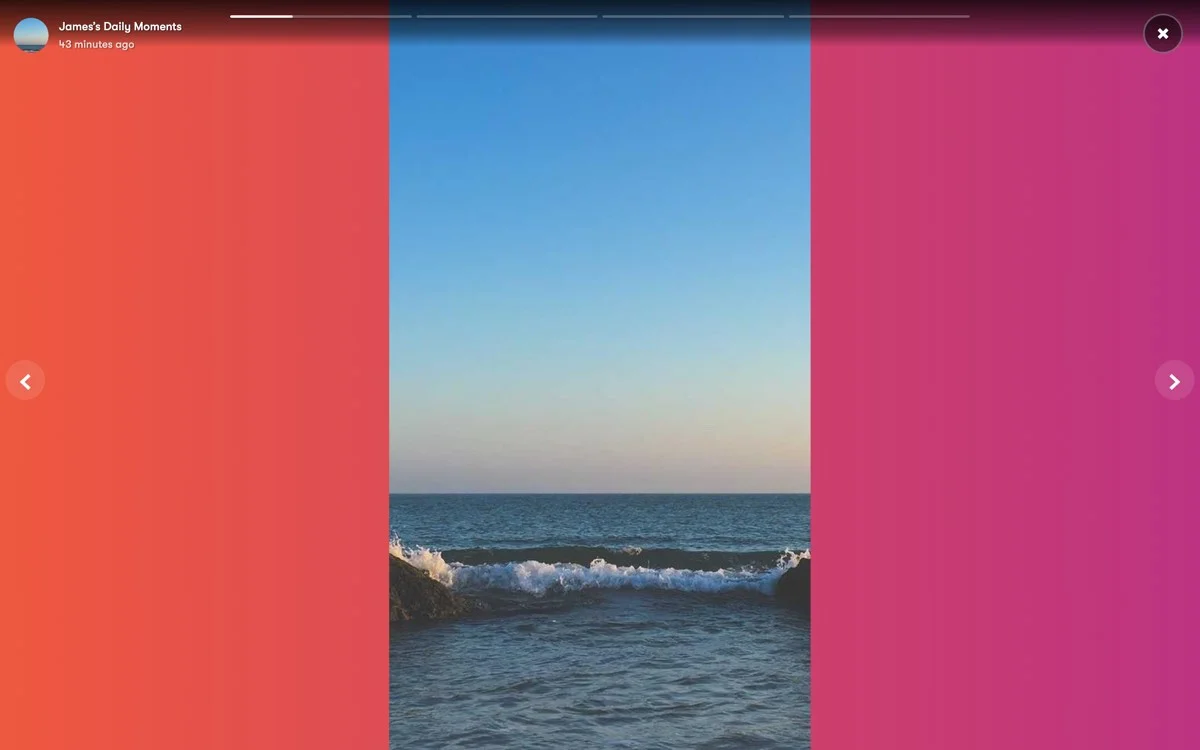
One of the most engaging forms of behind-the-scenes content is the live build update: real-time story posts shared during active development sprints. These stories create a sense of momentum and involvement that static marketing cannot match.
Live build updates work because they tap into the same psychology that makes live streaming compelling. Your audience feels like they are watching something happen in real time, even if they are viewing the stories hours later. The present-tense nature of story content (posted now, expires later) creates urgency and immediacy.
A typical live build sprint shared through stories might look like this:
- Monday morning: “Sprint start. This week we are building the new dashboard. Here is the wireframe.”
- Monday afternoon: “Basic layout is in. Does not look like much yet, but the structure is solid.”
- Tuesday: “Added the data visualization components. Starting to come together.”
- Wednesday: “Hit a snag with the responsive layout. Working on a fix.”
- Thursday: “Fixed the responsive issue. Also improved the color scheme based on accessibility testing.”
- Friday: “Sprint complete. Before and after comparison of what we built this week.”
This kind of content builds anticipation for the finished product while demonstrating the rigor and consistency of your development process. People who follow along feel invested in the outcome. They have watched the product take shape, and they feel a sense of connection to the work that makes them more likely to buy and more likely to become advocates.
Live build updates also provide natural content for weeks when you might otherwise have nothing to post. Every development sprint is a content opportunity. Every bug fix is a story. Every design decision is a talking point.
Turning Process Stories into Permanent Highlights
Stories are ephemeral by design, but the trust they build should not be. The most effective behind-the-scenes strategy combines temporary stories with permanent highlights that new visitors can access at any time.
Here is how to think about the lifecycle of your BTS content:
Phase 1: Live Stories (Temporary)
Post process content as stories during active development. These reach your existing audience and create real-time engagement. The temporary nature makes them feel exclusive and current.
Phase 2: Story Highlights (Semi-Permanent)
Curate the best stories into highlight collections. Group them by theme: “Building the Dashboard,” “Design Process,” “Testing and QA.” These highlights stay accessible on your site for new visitors who discover your product after the original stories expire.
Phase 3: Blog Posts and Case Studies (Permanent)
Compile the most compelling story sequences into blog posts or case studies. A week of build sprint stories becomes a “How We Built Feature X” article. A series of design decision stories becomes a case study on your development philosophy.
This three-phase approach maximizes the value of every piece of BTS content you create. The same moment captured in a quick story serves three purposes across three timescales: immediate engagement, medium-term social proof, and long-term content marketing.
What BTS Content Should and Should Not Include
Transparency has limits. Not every behind-the-scenes moment belongs in your marketing. Here is a practical guide to what works and what does not:
Share Generously
- Work in progress: Unfinished features, rough drafts, early prototypes
- Problem-solving: How you identified and fixed issues
- Quality decisions: Choices you made to improve the user experience
- Tools and workflow: The environment and processes you use
- Milestone celebrations: Reaching feature completeness, passing test suites, shipping updates
Share Carefully
- Mistakes and failures: These build authenticity but frame them as learning moments, not disasters
- Timelines: Share progress without committing to specific dates that might slip
- Customer feedback: Share positive feedback freely, share critical feedback only when paired with your response
Do Not Share
- Revenue figures: Unless your brand specifically centers on income transparency
- Internal disagreements: These undermine confidence in your team
- Competitor criticisms: Focus on your own work, not others’
- Security details: Never reveal authentication mechanisms, server configurations, or vulnerability information
Measuring the Impact of BTS Content on Sales
Behind-the-scenes content affects your sales funnel at multiple stages, and tracking its impact requires looking beyond direct conversion metrics.
Awareness metrics: Story views and reach tell you how many people are seeing your BTS content. Track whether story viewers return to your site more frequently than non-viewers.
Engagement metrics: Replies, reactions, and shares on story content indicate how well your BTS content resonates. High engagement on process content is a leading indicator of purchase interest.
Conversion metrics: Track whether visitors who viewed your story content convert at a higher rate than those who did not. Use UTM parameters on story links to measure direct click-through to product pages.
Retention metrics: Monitor refund rates and repeat purchase rates among customers who engaged with your BTS content versus those who did not. Process-aware customers typically have lower refund rates because they had realistic expectations about the product.
Pricing perception: Survey customers about perceived value. Those who followed your development process typically rate the value-for-money higher than those who discovered the product through ads or search alone.
Understanding these metrics is part of a broader store optimization strategy that ties content efforts directly to revenue outcomes.
Creating BTS Stories with WP Stories
WP Stories is built for exactly this kind of content. It brings the stories format to your WordPress site, giving you a native channel for behind-the-scenes updates that lives on your own platform.
Here is how to build a BTS content strategy with WP Stories:
Set Up Your Story Categories
Organize your BTS content into clear categories: Development Updates, Design Process, Testing and QA, Team Moments. This helps viewers navigate your story content and find the behind-the-scenes content that interests them most.
Establish a Posting Rhythm
Aim for at least two to three BTS stories per week during active development. Post more frequently during sprint weeks or as you approach a launch. Consistency matters more than volume.
Use the Story Bar for Visibility
WP Stories displays your latest stories in a story bar at the top of your site. This means every visitor sees your BTS content, not just those who seek it out. Passive visibility is powerful because it reaches people who would never search for behind-the-scenes content but find it compelling once they encounter it.
Create Highlight Collections
As you accumulate BTS stories, curate the best ones into highlight collections on your product pages. A “How We Built This” highlight reel on your product sales page adds social proof and transparency exactly where it matters most: at the point of purchase.
Link Stories to Product Pages
Every BTS story should include a link to the relevant product page. The connection between process and product should always be clear: “This is what we are building, and here is where you can get it.”
BTS Content as a Competitive Advantage
Most digital product sellers treat their development process as private. They work behind closed doors and only reveal the finished product. This is a missed opportunity. In a market where buyers have dozens of options for any given product category, the seller who shows their work creates a level of trust and connection that feature comparisons cannot match.
Behind-the-scenes content is not a marketing tactic. It is a relationship strategy. Every story you share about your process is an invitation for your audience to invest emotionally in your work. And emotional investment is the most reliable predictor of purchase behavior.
Your competitors are selling features. You are selling a relationship with the people who build those features. That is a fundamentally different value proposition, and it is one that buyers are increasingly drawn to.
Start Sharing Your Process Today
You do not need to wait for a major launch to start sharing behind-the-scenes content. Start today, with whatever you are currently working on. Take a screenshot of your workspace, write a one-sentence caption about what you are building, and post it as a story.
That single story is the beginning of a transparency practice that will compound over time. Each story adds another layer of trust. Each glimpse behind the curtain brings your audience closer to your work and closer to becoming customers.
Get WP Stories and start turning your development process into your most powerful marketing asset. Your buyers do not want polished perfection. They want to see the real work behind the products they buy.