10 Best AI Copywriting Tools In 2025


Most marketers now use an AI writing tool for at least the first draft of something, whether that’s an email subject line, a product description, or an outline for a longer article. The gap between the tools has narrowed a lot since the category exploded, but they still specialize differently: some are built for speed and volume, others for long-form structure, others purely for tightening up sentences you already wrote. Picking the wrong one for the job means fighting the tool instead of writing faster with it.

What AI copywriting tools actually do
These tools use large language models trained on enormous volumes of text to predict and generate the next plausible sentence given a prompt, a tone, and some context about your brand or product. In practice that means you feed one a product description, a rough outline, or a “write me five variations of this headline” request, and it returns draft copy you edit rather than write from a blank page.
The better tools in this category go beyond raw generation. They let you set a brand voice once and reuse it across every piece of content, they integrate with SEO research so the output isn’t just well written but actually targets the right keywords, and some even predict how a piece of copy is likely to perform before it goes live. None of them replace a human editor, but the good ones cut first-draft time down from an hour to a few minutes.
Why the choice matters more in 2026 than it used to
Search engines and readers have both gotten better at spotting generic, unedited AI output, which means the tools that simply spit out the most predictable version of a sentence are producing content that increasingly underperforms. The tools worth paying for now differentiate on how well they help you customize, fact-check, and structure content, not just how fast they generate a wall of text. That’s the lens worth applying to every tool on this list: not “can it write,” since they all can, but “does it help me write something a reader would actually want to finish.”
The ten tools worth trying
1. Copy.ai
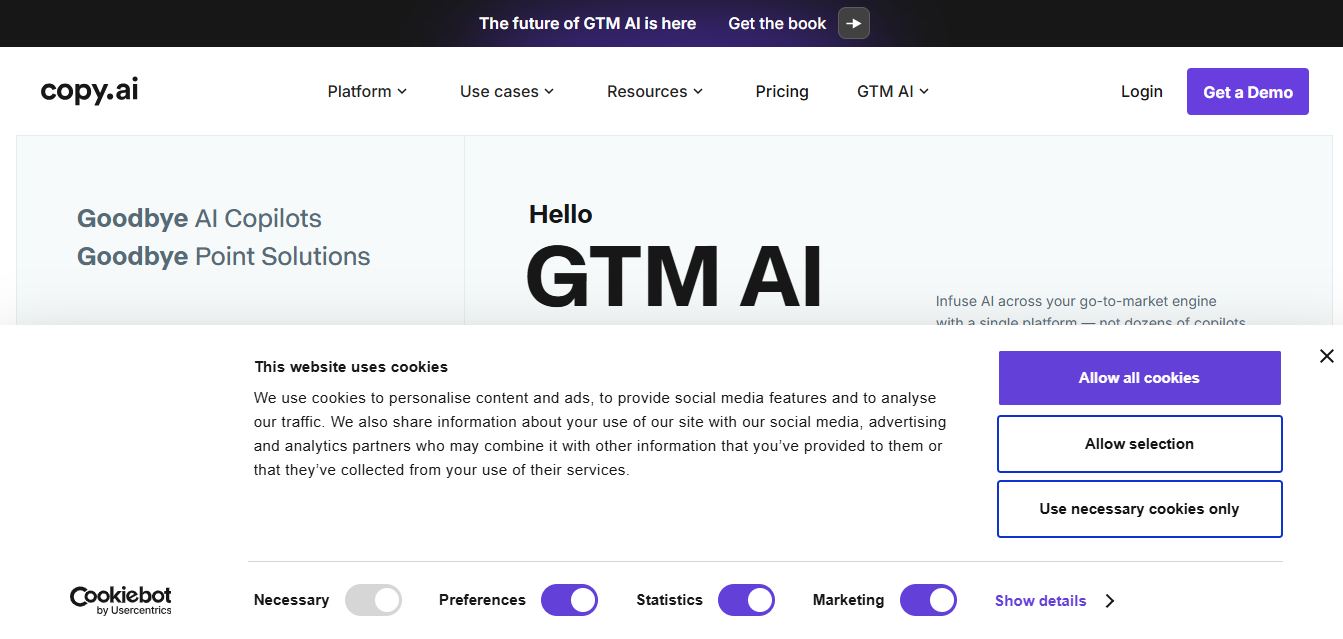
Copy.ai built its reputation on breadth: a large library of templates covering blog posts, ad copy, email sequences, and social captions, all accessible from a simple interface that doesn’t require any prompt-writing skill to get usable output. It works well as a starting point generator, giving you five or six variations of a headline or intro paragraph to react to and refine rather than staring at a blank document. Its workflow automation features have also expanded to chain multiple content steps together, which suits teams producing a high volume of shorter-form marketing copy.
2. Jasper
Jasper (formerly Jarvis) remains one of the strongest options for longer-form content that needs to hold together across multiple paragraphs rather than just produce a punchy one-liner. Its brand voice feature lets a team define a consistent tone once and apply it across every piece of content generated afterward, which matters a lot for agencies writing on behalf of multiple clients with distinct voices. Jasper’s integration with SEO research tools like Surfer helps keep long-form drafts aligned with what’s actually ranking for a target keyword, rather than just producing well-written but untargeted copy.
3. Writesonic
Writesonic leans specifically toward performance marketing: ad copy, landing pages, and email campaigns built around conversion rather than general-purpose writing. Its sales copy generation tends to produce more direct, benefit-led language out of the box than some competitors, which saves editing time for anyone writing straightforward direct-response copy. A built-in paraphrasing tool also helps when you need several distinct variations of the same core message for A/B testing without starting from scratch each time.
4. Rytr
Rytr remains one of the more affordable entries in this category, which makes it a common choice for solo founders and small teams not ready to commit to a higher-priced plan. It covers a wide range of tones and content types, from blog intros to business pitches, and its built-in plagiarism checker adds a useful layer of confidence before publishing generated text. It won’t out-write the more expensive long-form specialists on complex, research-heavy content, but for short, high-volume writing tasks it’s a genuinely solid value.
5. Wordtune
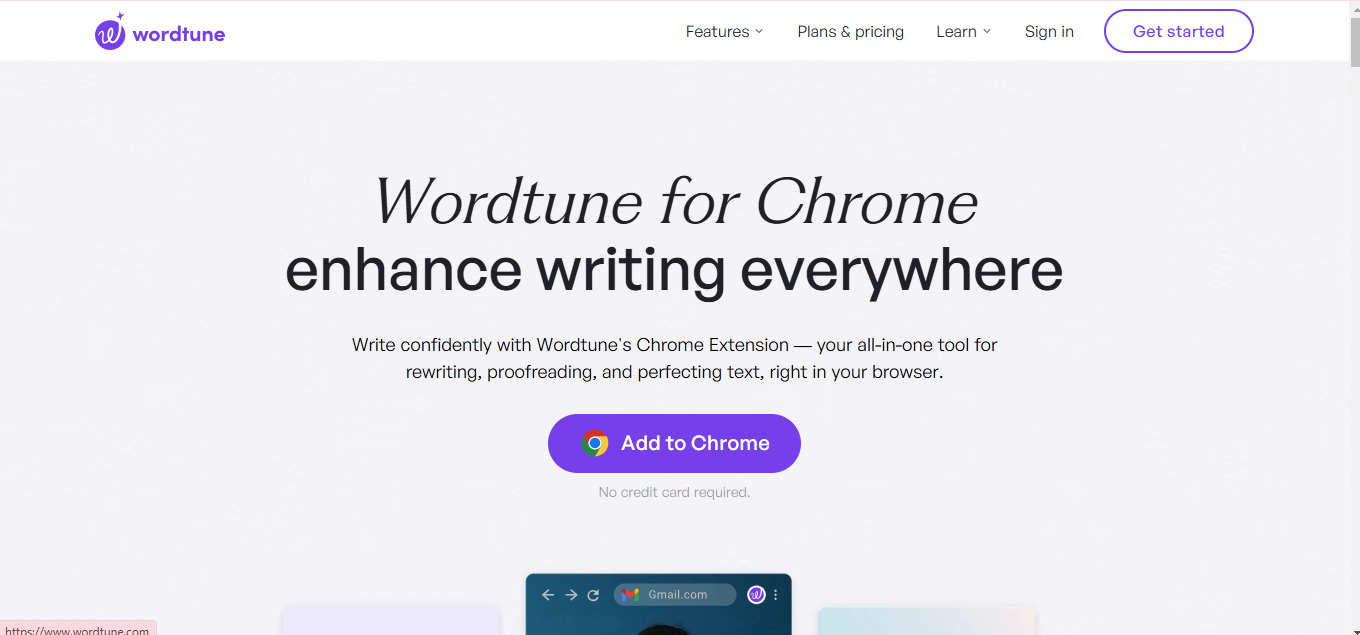
Wordtune isn’t really a generator, it’s a rewriting and editing tool, and that distinction matters. Feed it a sentence you’ve already written and it suggests alternative phrasings that improve clarity, tone, or flow without changing your meaning. This makes it a strong companion tool rather than a replacement for the generators above, useful for tightening up copy after a first draft is already down rather than producing that first draft from nothing.
6. Frase.io
Frase.io is built specifically around SEO content, and it shows in how the tool is structured. It analyzes the top-ranking pages for a target keyword, builds a content outline based on what those pages actually cover, and then helps you write to that outline with AI assistance layered in. For anyone producing blog content with an SEO goal attached, rather than writing purely for brand voice or engagement, Frase tends to save more research time than any of the general-purpose generators on this list.
7. Anyword
Anyword differentiates itself with predictive performance scoring, giving generated copy a score estimating how well it’s likely to perform with a target audience before it ever gets published. This is particularly useful for teams running paid ad campaigns, where testing multiple headline variations against a predicted engagement score can meaningfully cut down on wasted ad spend during the testing phase. It’s less useful for long-form content where “predicted performance” is a fuzzier metric, but for short, high-stakes copy like ad headlines, the scoring genuinely helps prioritize what to test first.
8. Scalenut
Scalenut combines AI writing with content research in a single workflow, aiming at teams that need well-researched, competitive content rather than quick marketing copy. Its keyword clustering and content brief generation help writers understand not just what to write but why a particular structure and set of subtopics is likely to perform, which suits long-form blog content and in-depth guides better than short social copy.
9. Grammarly
Grammarly has evolved well past its original grammar-checking roots into a genuinely capable AI writing assistant with generative features built directly into its browser extension and desktop app. Because it works everywhere you type, not just inside a dedicated content editor, it catches tone and clarity issues across emails, docs, and CMS editors alike, which makes it a useful last-pass tool even for content drafted somewhere else entirely. Its brand tone and style guide features have made it a credible option for teams that want consistency enforcement across everyone who writes for the company, not just a dedicated copywriter.
10. Simplified
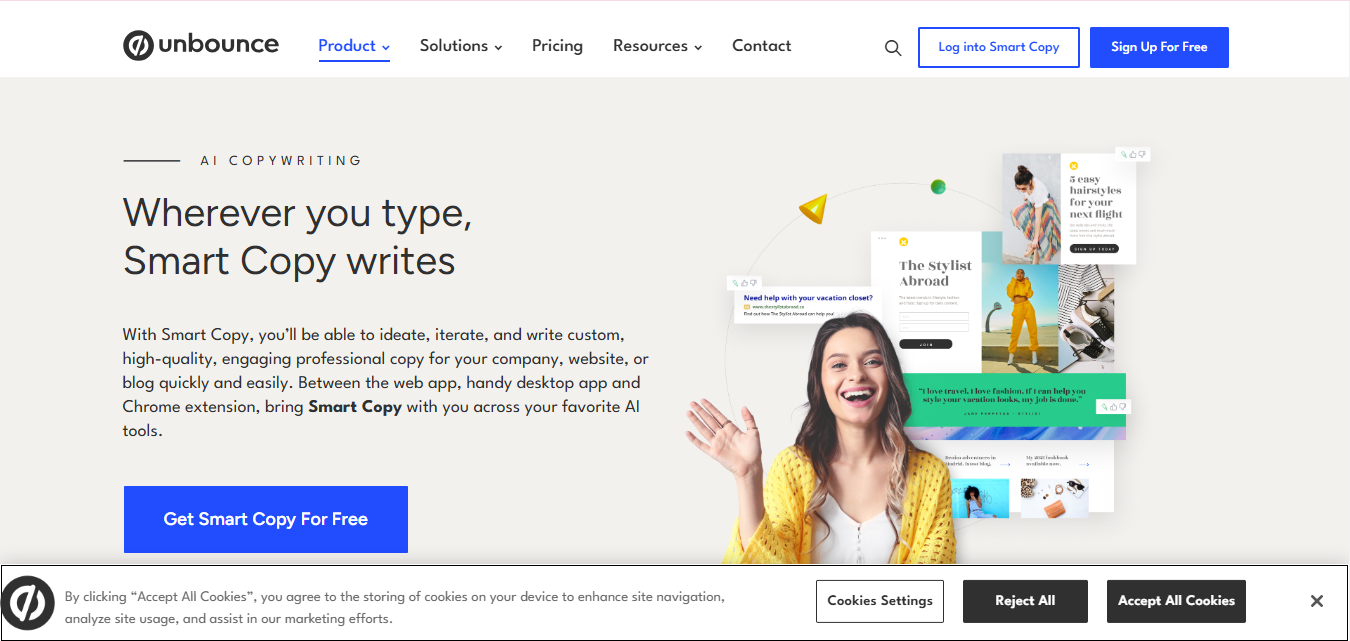
Simplified bundles AI copywriting alongside basic design and social scheduling tools, aiming at small teams and solo marketers who want one platform instead of stitching together a writing tool, a design tool, and a scheduler separately. Its copywriting templates cover the standard range of marketing content, and because it’s paired directly with a design canvas, it’s a convenient pick for anyone producing social graphics with matching captions in the same workflow rather than switching between apps.

How to actually pick one
Start with the type of content you write most, not the tool with the longest feature list. If most of your work is long-form blog content built to rank, Frase or Jasper will save more time than a tool built around punchy ad copy. If you’re running paid campaigns and testing headline variations constantly, Anyword’s predictive scoring is worth the switch. If you already write your own first drafts and mainly need a polish pass, Wordtune or Grammarly will do more for you than a full generator, since you’re not trying to solve a blank-page problem in the first place.
Budget matters too, and it’s worth testing on a free trial with your actual content, not the tool’s demo examples, before committing to an annual plan. A tool that looks impressive generating a sample blog post about a topic it was clearly trained heavily on can perform very differently on your specific, more niche product or industry.
Annual plans usually offer a meaningful discount over monthly billing, sometimes twenty to forty percent, but committing to a year before you know whether a tool actually fits your workflow is a common regret. Run at least one full content cycle, whatever that looks like for your team, a week of blog posts, a month of ad variations, a single product launch, on a monthly plan first. The discount on an annual commitment will still be there once you’ve confirmed the tool earns its place in your process.
Getting better output through better prompts
The single biggest variable in output quality across every tool on this list isn’t which one you pick, it’s how much context you give it. A prompt that says “write a product description for a coffee mug” produces generic, forgettable copy from any of these tools. A prompt that includes the actual product details, who’s buying it, what makes it different from a competitor’s mug, and what tone the brand uses elsewhere produces something usable in far fewer regenerations.
Most of these tools let you save reusable context, a brand voice profile, a set of example sentences, a target audience description, so you’re not rewriting the same background information into every single prompt. Setting this up once, even though it takes an extra twenty minutes during onboarding, pays for itself within the first week of regular use, since it cuts the back-and-forth regeneration cycle down dramatically.
Team workflows and collaboration features
For anyone using these tools solo, collaboration features barely matter. For a marketing team of three or more, they matter quite a bit. Jasper and Copy.ai both support shared brand voice profiles and team workspaces, so a freelance writer brought on for a single project can generate on-brand copy without needing a lengthy briefing document first. Scalenut’s shared content briefs work similarly, letting a strategist build the research and outline while a separate writer executes, with both working from the same source of truth inside the tool rather than passing documents back and forth over email.
If you’re evaluating these tools for a team rather than for yourself, ask specifically about seat-based pricing and whether brand voice settings are shared account-wide or tied to individual users. Some pricing tiers gate collaboration features behind a jump to the next plan, which changes the actual cost comparison between tools more than the headline pricing suggests.
Where these tools fit for specific content types
Product descriptions for an online store benefit from a tool that can hold a consistent format across dozens or hundreds of SKUs, which is where Copy.ai’s template-based bulk generation tends to outperform a more freeform, chat-style tool. Email sequences benefit from a tool that understands sequencing, a welcome email needs a different structure and tone than a cart-abandonment email three days later, which is a strength of Writesonic’s dedicated email templates. Long-form blog content aimed at ranking benefits most from Frase or Jasper’s SEO integrations, since the research and outline stage matters more for that content type than raw generation speed.
Social captions are a slightly different case: shorter, more disposable, and often needing several quick variations rather than one polished piece. Copy.ai and Rytr both handle this well because their template libraries are built around fast iteration rather than a single, carefully-considered output.
Data privacy and intellectual property considerations
Before feeding proprietary product information, unreleased pricing, or confidential client details into any of these tools, it’s worth actually reading the vendor’s data usage policy rather than assuming it works like a private document. Some platforms use submitted content to further train their underlying models unless you specifically opt out, which matters if you’re working with information that shouldn’t end up, even indirectly, informing a model that other customers are also using.
Enterprise and team tiers on most of these platforms offer stronger data handling guarantees than free or individual plans, precisely because business customers ask about this more often. If your content workflow touches anything under an NDA, checking the specific data retention and training policy for whichever tier you’re on is worth the ten minutes it takes, rather than assuming all AI tools handle this the same way.
What AI copy still can’t do well
Every tool on this list struggles with the same category of problem: content that depends on specific, verifiable facts, recent events, or genuine firsthand experience. AI-generated copy about your product’s actual pricing, a customer’s real testimonial, or a statistic from a study published last month needs a human to check it before publishing, because the model doesn’t know what changed after its training data was collected, and it will confidently invent plausible-sounding numbers if you don’t verify them. Treat every AI draft as a first pass that needs a fact-check and a voice pass, not a finished piece, and the entire category performs much better for you.
Copy that requires a genuine point of view, an opinion piece, a founder’s story, a hot take on an industry trend, also tends to read flatter coming out of these tools than content built around templates and structure. AI is at its best compressing research and structure into a fast first draft; it’s at its weakest trying to sound like a specific person with a specific opinion, which is usually the exact ingredient that makes a piece of writing worth reading in the first place.
Where this fits in a broader content workflow
An AI copywriting tool works best as one stage in a larger process rather than the entire process. Outlining still benefits from actual keyword and competitor research, a topic covered in more depth in this rundown of copywriting frameworks worth building your outlines around. And no AI tool replaces the technical SEO work that determines whether a great piece of content ever gets found in the first place, which is worth pairing with a proper toolkit, several of which are covered in this roundup of top SEO tools.
The right AI copywriting tool depends on what you’re actually writing and how much editing time you’re willing to put in afterward. None of the ten above will hand you a finished, publish-ready piece on the first try, but the right one for your workflow will consistently cut the time between a blank page and a solid draft, which is the entire point of using one.
A reasonable way to test-drive a shortlist without wasting a week: pick the two content types you write most often, a product description and a blog intro, say, and run the exact same brief through your top two or three candidate tools. Compare the raw output side by side before any editing, then compare how much editing each one needed to become something you’d actually publish. That second number, editing time saved, matters far more than which tool produced the flashier first draft, and it’s the number that determines whether a subscription is actually worth paying for six months from now.
Interesting Reads:
10 Best Online Image to Text Converter Tools