10 Best AI for Writing Essays


Writing essays takes time, and AI tools have gotten genuinely useful at cutting that time down, whether the job is drafting a first pass, tightening grammar, or paraphrasing a rough section into something clearer. What’s changed since tools like this first got popular is who they’re actually built for. Several of the names that used to top “best AI for essay writing” lists have spent the last two years pivoting hard toward enterprise marketing teams, and at least two products from older versions of this list have been discontinued outright. This update checks each tool against what it actually offers today, not what it offered when this article was first written.

A quick note before the list: if you’re a student, check your school’s AI-use policy before relying on any of these tools for graded work. Policies vary widely between institutions and even between individual instructors, and “the tool didn’t feel like cheating” isn’t a defense most academic integrity boards accept. These tools are genuinely useful for brainstorming, grammar, and paraphrasing your own drafts; using them to submit work that isn’t substantially your own is a different question entirely, and one only your institution’s policy can answer.
What Makes a Good AI Writing Tool for Essays?
The tools worth using for essay work generally do at least one of these well: grammar and clarity correction, paraphrasing and rewriting, or first-draft generation from an outline or prompt. Very few do all three at a genuinely high level, which is why most writers end up using two tools together rather than expecting one to cover everything.
Key Features to Look for
- Grammar and Style Checks: catching errors is table stakes; the better tools also flag clarity and structure problems, not just typos.
- Customization: the ability to adjust tone and formality for different assignment types matters more than raw word count.
- Ease of Use: a tool that requires a tutorial to operate isn’t saving anyone time.
- Plagiarism Detection: a built-in originality check catches accidental over-reliance on a single source before a professor’s plagiarism checker does.
- Actual availability to individuals: several tools in this category have shifted to enterprise-only pricing aimed at marketing teams; check that a personal or student plan still exists before assuming a tool fits your budget.
1. Jasper
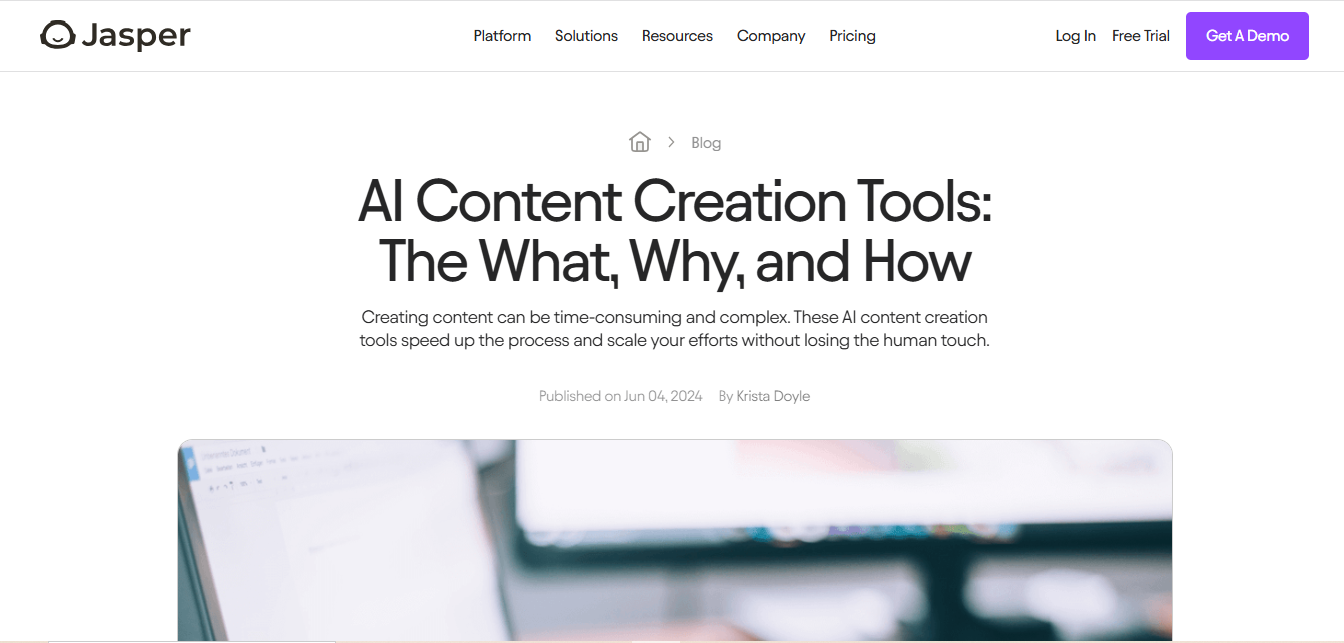
Jasper has repositioned significantly since its early days as a general writing assistant. It now markets itself as an agent workspace built for marketing teams, with over 100 specialized AI agents and a heavy focus on brand voice consistency and AI search visibility (getting cited by tools like ChatGPT and Gemini). The underlying content generation is still capable of long-form essay-style writing, but the product and its pricing are built around enterprise marketing use, not individual students.
Key Features
- Long-form content generation with adjustable tone and brand voice.
- Specialized agent workflows for different content types.
- Multi-language support.
Pros
- Output reads naturally rather than robotically.
- Strong track record with large enterprise clients.
Cons
- Pricing and feature set now skew toward marketing teams rather than individual writers.
- Overkill for someone who just needs help with a single essay.
Why It Stands Out: Jasper’s content quality is still strong, but it’s worth going in knowing you’re paying for a marketing platform that happens to write well, not a dedicated student writing tool.
Also Read: Where is Footer in WordPress?
2. Grammarly
Grammarly remains the most widely used grammar and clarity tool for essay writing, now operating alongside Superhuman under a shared parent company following a 2025 acquisition. The core proofreading product hasn’t lost focus in the process, and it still corrects grammar while helping with sentence structure, clarity, and overall flow.
Key Features
- Real-time grammar, punctuation, and spelling checks.
- Style suggestions and tone adjustments.
- Plagiarism checker for originality.
- Browser, word processor, and desktop integrations.
Pros
- Free tier covers the essentials for most students.
- Reports serving roughly 40 million individual users, so the product is well tested.
- Doesn’t try to write the essay for you, which some instructors consider a meaningful distinction from generation-first tools.
Cons
- Generation features (drafting from scratch) sit behind the paid tiers.
Why It Stands Out: For someone who wants to improve their own writing rather than generate new writing, Grammarly is still the most dependable option on this list.
3. QuillBot
QuillBot remains focused on paraphrasing and summarizing, which makes it useful for reworking a rough paragraph into something clearer while keeping the original meaning intact. It’s owned by Course Hero (now Learneo), and its core product hasn’t drifted from that original focus.
Key Features
- Paraphrasing and summarizing tools with multiple rewrite modes.
- Sentence structure improvements.
- Integrates with Google Docs and Microsoft Word.
Pros
- Affordable pricing plans, with a usable free tier.
- Genuinely helpful for turning an awkward sentence into a clean one.
Cons
- Limited content generation compared to full drafting tools.
- Free version comes with word-count restrictions.
Why It Stands Out: QuillBot is the right pick specifically for paraphrasing and tightening drafts, not for generating an essay from a blank page.
4. Copy.ai
Copy.ai has moved even further from essay writing than Jasper has. It now markets itself as a go-to-market automation platform built for sales, marketing, and operations teams, with workflow automation and thousands of business-tool integrations as the core pitch, rather than general content generation.
Key Features
- Workflow automation across sales and marketing tasks.
- Brand voice and messaging consistency tools.
- Broad integration catalog with other business software.
Pros
- Still capable of generating readable long-form text when used for that purpose.
- Free trial available to test before committing.
Cons
- The product is now built and priced for revenue teams, not students or individual writers.
- Essay writing is a secondary use case at best in the current product.
Why It Stands Out: Worth knowing about mainly so you don’t sign up expecting a simple essay-writing tool and find an enterprise sales platform instead.
5. Writesonic
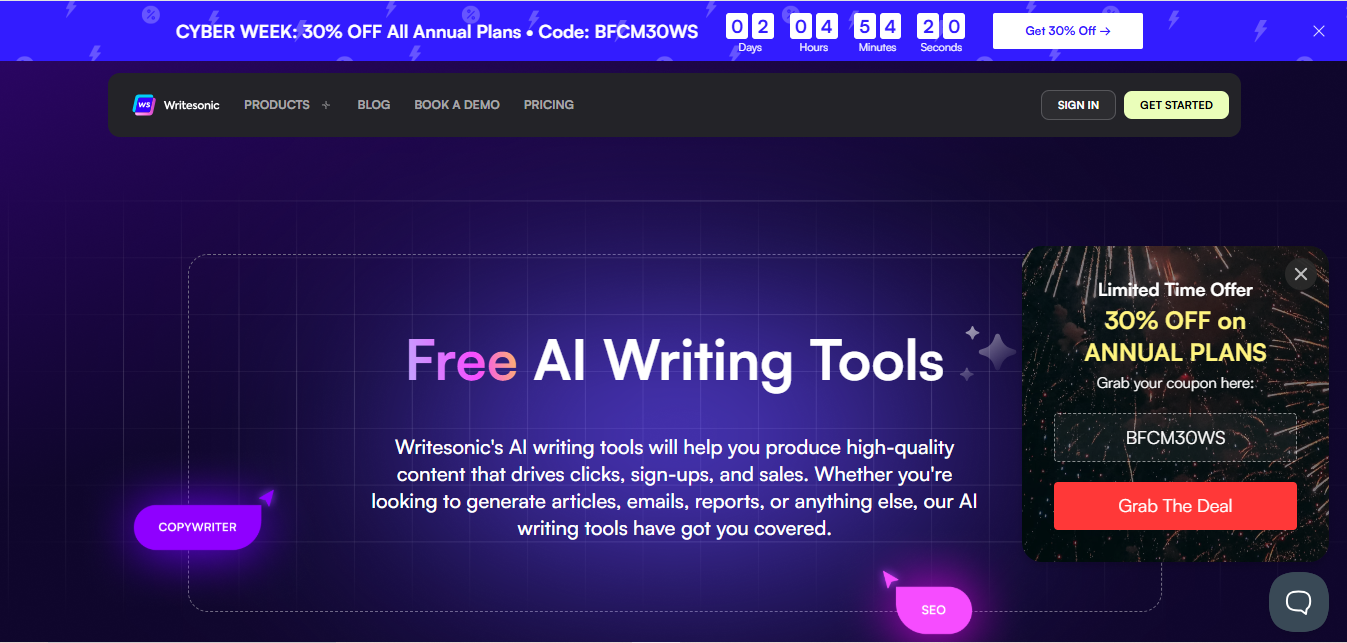
Writesonic has followed the same path as Jasper and Copy.ai, rebranding around “AI search growth” for marketing and agency clients rather than individual essay writing. It still generates content quickly, but the product’s current design targets brands tracking their visibility across AI answer engines, not students.
Key Features
- Fast content generation with customizable tone.
- AI search visibility tracking across multiple platforms.
- Content and citation-building workflows.
Pros
- Still fast for straightforward drafting tasks.
- Established client base among larger brands.
Cons
- Feature set and pricing now aimed at agencies and enterprise marketing, not casual essay writing.
Why It Stands Out: Fine in a pinch for fast drafting, but no longer the individual-friendly essay tool it was originally known as.
Also Read: Important things you should know about the on-demand service marketplace
6. Anyword
An earlier version of this list included “INK Editor,” but inkforall.com now redirects to SmythOS, an AI agent infrastructure platform with no essay-writing features at all; the original SEO writing tool appears discontinued. Anyword is a real, currently active replacement that fills a similar niche: AI-generated content with built-in performance scoring, useful for anyone who wants to compare a few drafted variations before picking the strongest one.
Key Features
- Content generation with predictive performance scoring for each variation.
- Brand voice and messaging guideline management.
- Integrates with ChatGPT, Google Gemini, and Notion.
Pros
- Free tier available to start.
- Useful for comparing multiple phrasing options quickly.
Cons
- Built primarily for marketing copy, so academic essay structure isn’t its core strength.
Why It Stands Out: The scoring feature is genuinely different from a plain content generator, useful for anyone who wants a second opinion on which draft actually reads best.
7. Rytr
Rytr has kept its original positioning as a budget-friendly, individual-focused AI writing tool, which makes it one of the few entries on this list still squarely aimed at the audience this article is written for.
Key Features
- AI-powered content generation across 40+ templated use cases.
- Support for 40+ languages.
- Built-in plagiarism checker.
Pros
- Genuinely free tier: 10,000 characters per month with no credit card required.
- Paid tiers start at $7.50/month, among the cheapest on this list.
- Reports over 8 million users, so it’s well tested at scale.
Cons
- Shorter-form output than dedicated long-form drafting tools; longer essays need more manual stitching together.
Why It Stands Out: Rytr is one of the few tools here that hasn’t chased the enterprise market, and its pricing still makes sense for a student budget.
8. Wordtune
The earlier version of this list included “Peppertype.ai,” which no longer exists as a standalone product; its parent company, now operating as Pepper.inc, has moved entirely to an AI search visibility platform called Atlas with no mention of the original essay-writing tool. Wordtune is a real, currently active alternative built for the same kind of everyday rewriting and clarity work, with over 10 million users and a genuinely free starting tier.
Key Features
- Paraphrasing, rewriting, and tone adjustment (formal/casual).
- Summarization, including of video content.
- Chrome, Edge, and iOS availability.
Pros
- Free to start, no credit card required.
- 4.7-star Chrome extension rating from a large user base.
Cons
- Best suited for sentence-level rewriting rather than generating an entire essay from an outline.
Why It Stands Out: Wordtune fills the gap the discontinued Peppertype.ai left, with a similar focus on quick, accessible rewriting for individual users, and its free tier means there’s no cost barrier to trying it before an essay deadline.
9. ContentBot
ContentBot is still an actively maintained, independent writing assistant, unlike several other names on the original version of this list. It generates content, suggests topics, and offers grammar and style feedback, with newer additions including an AI content humanizer and a PDF chat feature for working directly from source documents.
- Key Features: Content generation, topic suggestions, AI content humanizer, PDF chat for source-document work.
- Pros: Actively updated with new features, subscription tiers starting around $9/month.
- Cons: Output still needs manual editing for polish, and the brand recognition is smaller than the bigger names on this list.
- Why It Stands Out: One of the few smaller, independent tools from the original list that’s actually kept shipping updates rather than pivoting away from individual writers.
Also Read: Different Types of Logo Design
10. AI-Writer
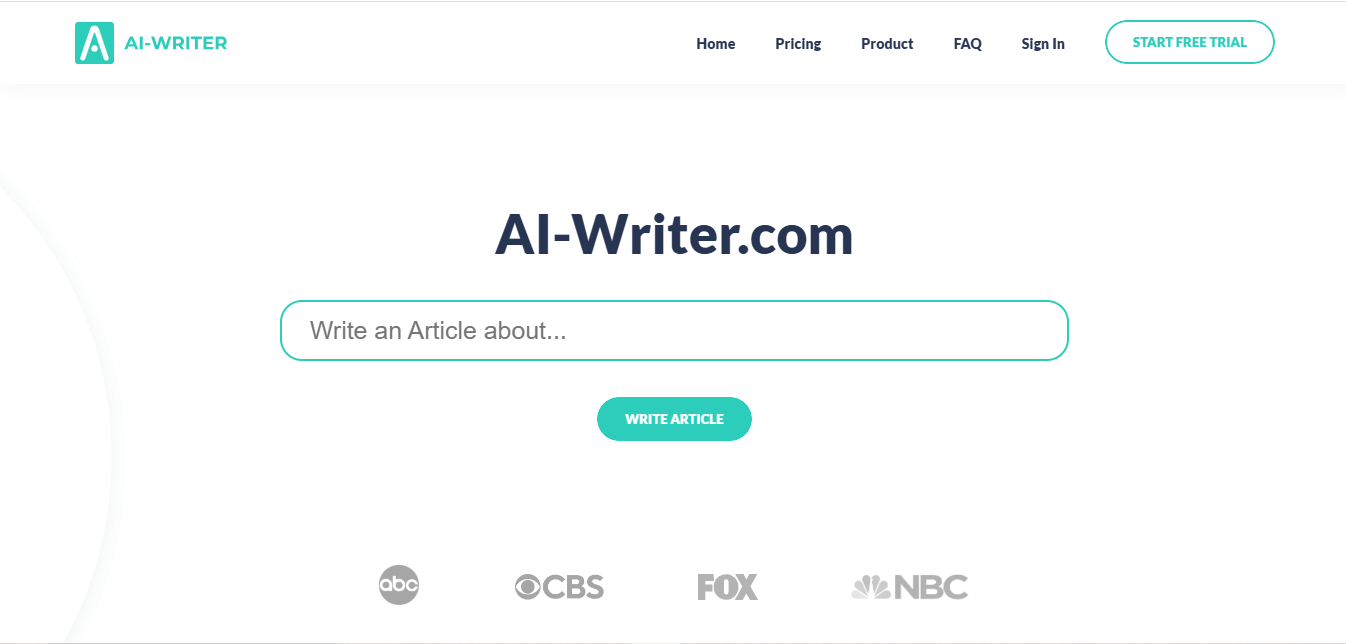
AI-Writer has sharpened its focus considerably since earlier versions of this list. It’s no longer a general essay generator; it now positions itself specifically as a research assistant that draws from a database of over 100 million open science papers and produces properly cited answers in APA, Chicago, Harvard, MLA, or BibTeX format. For research-heavy essays where citations matter, that’s arguably a better fit than a generic writer, though the pricing has moved well upmarket as a result.
- Key Features: Citation-backed research answers, bibliography generation in multiple formats, structured review-paper compilation.
- Pros: Genuinely useful for source-backed academic writing where citations need to be traceable and real.
- Cons: Pricing now runs from roughly $24 to $312 a month, well above the other budget-friendly options on this list.
- Why It Stands Out: The pivot toward verifiable, cited research sets it apart from tools that generate plausible-sounding but unsourced claims, though the cost puts it out of reach for a casual student user.
Comparison Table
| Tool | Best For | Individual/Student Friendly? | Starting Price |
|---|---|---|---|
| Jasper | Long-form generation with brand voice | No, enterprise-focused | Enterprise pricing |
| Grammarly | Grammar, clarity, and style | Yes | Free tier available |
| QuillBot | Paraphrasing and summarizing | Yes | Free tier available |
| Copy.ai | Sales and marketing workflow automation | No, enterprise-focused | Custom/enterprise |
| Writesonic | Fast drafting, AI search tracking | Limited, agency-focused | Custom/enterprise |
| Anyword | Scored content variations | Somewhat | Free tier available |
| Rytr | Budget-friendly generation | Yes | Free, then $7.50/mo |
| Wordtune | Sentence-level rewriting and tone | Yes | Free tier available |
| ContentBot | Generation plus topic suggestions | Yes | From ~$9/mo |
| AI-Writer | Cited academic research answers | Limited, priced higher | From ~$24/mo |

Getting Better Results Out of Any of These Tools
The gap between a mediocre AI draft and a genuinely useful one usually comes down to what goes into the prompt, not which tool gets used. A vague instruction like “write an essay about climate change” produces generic, unfocused output from every tool on this list. A specific instruction, one that names the thesis, the intended audience, the required length, and any sources that must be cited, produces something much closer to a usable first draft.
It helps to think of these tools as drafting assistants rather than finishers. Feed a tool your own outline instead of a bare topic, and ask it to expand each point rather than write the whole piece in one pass. That keeps the argument structure yours while letting the tool handle sentence-level phrasing, which tends to produce writing that still sounds like you rather than a generic AI voice. Running the output back through a second tool, Grammarly or QuillBot after a generation pass from Rytr or Anyword, for example, often catches awkward phrasing that the first tool missed.
It’s also worth reading everything an AI tool produces before submitting it anywhere. These tools occasionally generate confident-sounding claims that aren’t accurate, a known failure mode across the entire category, and a false statistic or misattributed quote in a submitted essay is a bigger problem than any grammar mistake would have been.
How This List Changed From the Original Version
Two entries from an earlier version of this article, INK Editor and Peppertype.ai, no longer exist as the products described. INK’s domain now redirects to an unrelated AI agent infrastructure company, and Peppertype.ai’s parent company has moved entirely to a different product line with no mention of the original tool. Both have been replaced above with real, currently active alternatives that serve a comparable purpose.
Three more entries, Jasper, Copy.ai, and Writesonic, are still active companies but have repositioned away from individual essay writing toward enterprise marketing and AI-search-visibility products since this list was first published. They’re included here with that context rather than removed outright, since their underlying generation capability still works for essay-style writing, but a reader expecting a simple student-friendly tool should know what they’re actually signing up for before starting a trial.
Frequently Asked Questions
Is it okay to use AI tools for school essays?
That depends entirely on your specific institution’s and instructor’s policy, which varies a lot even within the same school. Using a grammar checker like Grammarly is rarely controversial; having a tool generate substantial portions of graded work without disclosure is a very different situation and one worth clarifying with your instructor before you submit anything.
Why have so many of these tools stopped targeting students?
Enterprise marketing contracts pay considerably more per customer than individual subscriptions, and several of the biggest names in this category (Jasper, Copy.ai, Writesonic) have followed that revenue toward larger business clients over the past two years. It’s a rational business decision for them, but it does mean the shortlist of genuinely individual-friendly tools has gotten shorter.
What’s the best free option on this list?
Grammarly, QuillBot, Wordtune, and Rytr all offer usable free tiers without a credit card. For pure grammar and clarity work, Grammarly’s free tier covers most of what a typical essay needs, and pairing it with QuillBot for paraphrasing costs nothing at all.
Do any of these tools guarantee original, plagiarism-free content?
No tool can fully guarantee that, since AI-generated text can still overlap with existing training data in ways a plagiarism checker might flag. Grammarly, QuillBot, and AI-Writer all include some form of originality or citation checking, which reduces but doesn’t eliminate the risk. Running any AI-assisted draft through a separate plagiarism checker before submitting it for a grade is a reasonable extra step.
Choosing the Right Tool for Your Essays
If the goal is polishing your own writing, Grammarly and QuillBot remain the strongest, most individual-friendly choices. If the goal is generating a first draft from an outline on a tight budget, Rytr is the most student-friendly option left standing after Jasper, Copy.ai, and Writesonic all moved upmarket toward enterprise marketing teams. For research-heavy essays where citations need to be real and traceable, AI-Writer’s pivot toward sourced academic answers is worth the higher price if the budget allows it.
Whichever tool you pick, treat the output as a draft, not a finished essay. Read it critically, verify any factual claims independently, and make sure the final piece reflects your own understanding of the material, both because that produces better writing and because it keeps you on the right side of whatever policy your school or employer has in place.
Prices, feature sets, and even entire product lines in this category have shifted meaningfully over the past two years, and there’s no reason to expect that to slow down. Whatever tool ends up on your shortlist, check its current pricing and feature page directly before signing up. A subscription that made sense based on last year’s feature set may not match what the product actually offers today.
Interesting Reads
10 Best WordPress Plugins for Adding Code